ZATSUYOSEN!
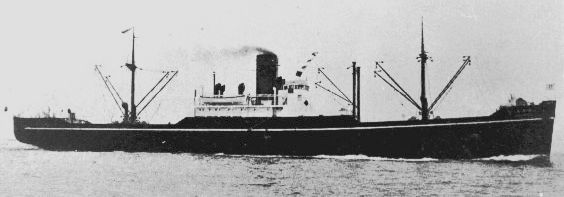 (TOEI MARU prewar)
IJN TOEI MARU:
Tabular Record of Movement
© 2013-2018 Gilbert Casse, Bob Hackett and Peter Cundall
Revision 4
4 November 1936:
Kobe. Laid down by Kawasaki Zosensho K.K. shipyard for Yamamoto Kisen K.K., as a 4,004-tons cargo ship.
13 March 1937:
Launched and named TOEI MARU. [1]
19 June 1937:
Completed and registered in Osaka.
1937:
Uwajima. Assigned to timber transport.
1938:
Requisitioned by the IJA as an Army transport with allotted number 542.
11 November 1938:
Departs Humen, southern China.
13 November 1938:
Arrives at Humen.
15 November 1938:
Departs Humen.
24 November 1938:
Arrives at Huangpu, southern China.
25 November 1938:
Departs Huangpu.
1939:
Released to her owners.
16 July 1941:
Requisitioned by the IJN as a general transport (Ippan Choyosen).
15 October 1941:
Registered in the IJN as an auxiliary transport, (Otsu) category and attached to the Yokosuka Naval District with Yokosuka as homeport under internal order No. 1256. [2]
1 December 1941:
Departs Takao, Formosa (now Kaohsiung, Taiwan).
2 December 1941:
Arrives at Mako, Pescadores.
6 December 1941:
Departs Mako.
7 December 1941:
Arrives at Takao.
9 December 1941:
Departs Takao.
11 December 1941:
Arrives at Kirun, Formosa (now Keelung, Taiwan).
13 December 1941:
Departs Kirun.
16 December 1941:
Arrives at Kobe.
21 December 1941:
Departs Kobe and arrives at Osaka later in the day.
24 December 1941:
Departs Osaka.
25 December 1941:
Arrives at Kure.
29 December 1941:
Departs Kure for Palau with auxiliary transports KANAYAMASAN and NITTEI MARUs. Escorted through Bungo Suido by unknown units of Kure Defence Force.
5 January 1942:
Arrives at Palau, Western Carolines.
7 January 1942:
Departs Palau.
9 January 1942:
Arrives at Davao, Mindanao.
14 January 1942:
Departs Davao.
17 January 1942:
Arrives at Tarakan, Borneo.
21 January 1942: The Invasion of Balikpapan, Dutch Borneo:
At 1700, Rear Admiral (later Vice Admiral) Hirose Sueto's (39) Balikpapan Invasion Convoy
departs Tarakan, Borneo with IJN transports TOEI (4,004 GRT), NANA, ASAHISAN, TATSUGAMI, KANAYAMASAN, SUMANOURA, KUMAGAWA and NITTEI ( with 2nd Construction Unit) MARUs and IJA transports KURETAKE, HAVANA, EHIME, LIVERPOOL, TEIRYU (ex-German AUGSBURG), HITERU, TSURAGU, HANKOW and NISSHO MARUs carrying the
Balikpapan Invasion Force consisting of MajGen Sakaguchi Shizuo’s 56th Mixed Infantry Group (Sakaguchi Detachment) and the Kure No. 2 Special Naval Landing Force (SNLF) escorted by patrol boats PB-36, PB-37, PB-38, minesweepers W-15, W-16, W-17, W-18 and SubChasDiv 31's CH-10, CH-11 and CH-12.
Cover is provided by light cruiser NAKA with DesDiv 2's YUDACHI, SAMIDARE, MURASAME, HARUSAME, DesDiv 9's ASAGUMO, MINEGUMO, NATSUGUMO and DesDiv 24's KAWAKAZE and UMIKAZE. Seaplane tenders SANUKI and SANYO MARUs provide air cover.
Poor weather hampers air reconnaissance by ABDA (American-British-Dutch-Australian) forces, but ABDA Air finally locates the invasion force. Rear Admiral (later Vice Admiral) William A. Glassford's Task Force 5's light cruisers USS MARBLEHEAD (CL-12), USS BOISE (CL-47) and Cdr Paul H. Talbot's DesDiv 59's old destroyers USS PARROTT (DD-218), USS POPE (DD-225), USS JOHN D. FORD (DD-228) and USS PAUL JONES (DD-230) are ordered to stop the invasion force, but USS BOISE runs aground and MARBLEHEAD develops engine trouble. DesDiv 59 is detached and increases speed to arrive at Balikpapan at midnight on January 23rd.
23 January 1942:
Storms protect the invasion force until it is almost to Balikpapan. At 1050 (local time), the convoy is attacked by three enemy aircraft, which are repulsed. At 1625, nine Dutch Martin Model 166 (139WH-3)
(B-10) bombers and four light bombers from Samarinda attack and hit transports NANA and TATSUGAMI MARUs. At 1646, NANA MARU is hit in No. 6 hold by a bomb, splinters from others that land to port alongside the same hold adds to the fires raised. At 1650, No. 5 hold’s aviation gasoline ignites and explodes. Navigation becomes impossible and over the following hours the flames take a firm grip. At 1730 “all hands abandon ship” order is given. Finally, at 2100, after a huge explosion NANA MARU sinks at 01-18S, 117-43E. TOEI MARU arrives safely at Balikpapan, Borneo and proceeds to land the 1st Defense Unit and related equipment.
24 January 1942:
Cdr Talbot's DesDiv 59 arrives from the south. At 0316, they begin their first attack firing their 4-inch guns and launching ten torpedoes at the anchored transports, but all their torpedoes miss. Talbot
orders another attack. At 0330, the USS POPE hits and sinks transport SUMANOURA MARU. Only nine of her crew of navy sailors survive. At 0335, USS PARROTT and USS PAUL JONES hit transport TATSUGAMI MARU with torpedoes in a deep fuel tank, the resultant flooding caused her to sink by the stern, and four of her crew lost their lives. USS POPE and USS PARROTT sink the 2nd Base Force's patrol boat PB-37 with
torpedoes and gunfire.
At 0345, USS JOHN D. FORD sinks transport KURETAKE MARU with gunfire and torpedoes.
188 troops are KIA. Another transport suffers damage from gunfire and torpedoes but remains afloat. At 0332, FORD scores gunfire hits on ASAHI MARU whose hospital ship status is obscured by the darkness. KUMAGAWA MARU suffers slight damage in the engagement. At 0350, Talbot's DesDiv 59, their torpedoes gone, departs southward. The Japanese Force seizes Balikpapan.
5 February 1942:
Departs Balikpapan.
8 February 1942:
Arrives at Tarakan.
11 February 1942:
Departs Tarakan.
12 February 1942:
Arrives at Jolo Island, Philippines.
18 February 1942:
Departs Jolo and arrives at Pata Island later in the day.
19 February 1942:
Departs Pata and arrives at Jolo later that same day.
23 February 1942:
Departs Jolo.
25 February 1942:
Arrives at Davao.
7 March 1942:
Departs Davao.
10 March 1942:
Arrives at Balikpapan.
14 March 1942:
Departs Balikpapan and arrives at Kutai mouth later that day.
15 March 1942:
Departs Kutai mouth and arrives at Sanga-Sanga later in the day.
24 March 1942:
Departs Sanga-Sanga and arrives at Samarinda later that same day.
29 March 1942:
Departs Samarinda and arrives at Luakulu later in the day.
30 March 1942:
Departs Luakulu and arrives at Sanga-Sanga later that day.
31 March 1942:
Departs Sanga-Sanga.
11 April 1942:
Arrives at Haiphong, Indochina.
18 April 1942:
Departs Haiphong.
27 April 1942:
Arrives at Mutsure-Jima. Departs later and arrives at Moji that same day.
2 May 1942:
Departs Moji.
3 May 1942:
Arrives at Kobe.
7 May 1942:
Departs Kobe and arrives at Osaka later that same day.
8 May 1942:
Docks at Kizugawa Senkyo K.K. shipyard for maintenance and repairs.
5 June 1942:
Undocked.
9 June 1942:
Departs Osaka.
10 June 1942:
Arrives at Mutsure-Jima.
11 June 1942:
Departs Mutsure-Jima and joins convoy No. 123 that departed Ujina on the same day, also consisting of auxiliary transports CHOWA and TOYO MARUs, IJA transports SATSUMA, RYUSEI and COLUMBIA MARUs and two
unidentified merchant ships escorted by auxiliary gunboat PEKING MARU.
15 June 1942:
At some point, TOEI MARU is detached from the convoy.
16 June 1942:
Arrives at Kirun.
18 June 1942:
Departs Kirun.
19 June 1942:
Arrives at Takao.
24 June 1942:
Departs Takao.
27 June 1942:
Arrives at Port Campha, Indochina.
29 June 1942:
Departs Port Campha.
3 July 1942:
Arrives at Kirun.
6 July 1942:
Departs Kirun.
13 July 1942:
Arrives at Fushiki, Toyama Prefecture.
17 July 1942:
Departs Fushiki.
21 July 1942:
Arrives at Asase, Karafuto (now Sakhalin).
30 July 1942:
Departs Asase.
5 August 1942:
Arrives at Osaka.
8 August 1942:
Departs Osaka.
9 August 1942:
Arrives at Moji. Departs later that day for Dairen, Manchuria (now Dalian, northern China).
11 August 1942:
Arrives at Dairen.
17 August 1942:
Departs Dairen.
22 August 1942:
Arrives at Nagoya.
25 August 1942:
Departs Nagoya.
28 August 1942:
Arrives at Muroran, Hokkaido.
2 September 1942:
Departs Muroran.
4 September 1942:
Arrives at Chirikoro, Karafuto (now Nerpichye, Sakhalin).
9 September 1942:
Departs Chirikoro.
11 September 1942:
Arrives at Hakodate, Hokkaido.
12 September 1942:
Departs Hakodate.
13 September 1942:
Arrives at Hachinohe, Aomori Prefecture. Departs for Yokohama later that same day.
16 September 1942:
Arrives at Yokohama.
19 September 1942:
Departs Yokohama.
22 September 1942:
Arrives at Wakamatsu, Fukuoka Prefecture.
23 September 1942:
Departs Wakamatsu.
24 September 1942:
Arrives at Ujina, Hiroshima Prefecture.
26 September 1942:
Departs Ujina.
27 September 1942:
Arrives at Fuzan, Chosen (now Pusan, South Korea). Departs later that day for Saeki, Kyushu.
28 September 1942:
Arrives at Saeki.
29 September 1942:
Departs Saeki in convoy “Oki Part 3” also consisting of IJA transport CANBERRA MARU and auxiliary transport YAMAGIRI MARU escorted by destroyers AKATSUKI, IKAZUCHI and minesweepers W-1 and W-3.
4 October 1942:
Arrives at Saipan, Marianas and departs later that day.
6 October 1942:
Arrives at Truk.
8 October 1942:
Departs Truk with auxiliary transport SHINSEI MARU No. 18 having joined the convoy.
12 October 1942:
Arrives at Rabaul, New Britain. Disembarks troops including two companies, 400 men, 24 mortars from the 1st Independent Mortar Regiment.
18 October 1942:
At 2000 transfers 1645 tons fuel to battleship HARUNA.
19 October 1942:
At 0020 completes refuelling HARUNA. At 0800 transfers 1270 tons of fuel oil to battleship KONGO.
20 October 1942:
Departs Rabaul for Palau in an unnumbered convoy also consisting of auxiliary transports CHOKO and YAMAGIRI MARUs and auxiliary gunboat/minelayer IKUSHIMA MARU with unknown escort.
26 October 1942:
Arrives at Palau.
4 November 1942:
Departs Palau in convoy with auxiliary transport YAMAGIRI MARU and possibly others with an unknown escort.
22 November 1942:
Arrives at Yokosuka.
25 November 1942:
Departs Yokosuka and arrives later that day at Yokohama. Departs later that day and returns to Yokosuka.
2 December 1942:
Departs Tokyo and arrives at Yokosuka later that day.
8 December 1942:
Departs Yokosuka in North Convoy No. 61 also consisting of IJA transports YOSHU MARU and UNKAI MARU No. 8, civilian cargo ships (C-AK) HOKUJU and HANASAKI MARUs, government chartered/requisitioned ATAKA (ex Italian ADA), TEIFUKU (ex German R.C. RICKMERS) and ENKYO (ex Italian ENDERTA) MARUs escorted by auxiliary gunboat DELHI MARU.
11 December 1942:
Arrives at Ominato, Aomori Prefecture. The vessels movements at this time were delayed owing to an outbreak of dysentery on board.
17 December 1942:
Departs Ominato and arrives at Muroran later in the day.
20 December 1942:
Departs Muroran and arrives that same day at Ominato.
26 December 1942:
Departs Ominato in convoy No. 7 consisting also of IJA transport MELBOURNE MARU escorted by destroyer USUGUMO.
30 December 1942:
Arrives at Kashiwabara, Paramushiro, Kuriles (now Severo-Kurilsk, Paramushir).
11 January 1943:
Departs Kashiwabara still in convoy with MELBOURNE MARU escorted by USUGUMO. TOEI MARU suffers engine problems and falls behind.
17 January 1943:
At 0500, arrives at Kiska, Aleutians.
19 January 1943:
At 0610 and 1830 attacked by US planes without damage.
22 January 1943:
At 1350 departs Kiska apparently ahead of the other ships.
25 January 1943:
Arrives at Kashiwabara.
30 January 1943:
Departs Kashiwabara.
2 February 1943:
Arrives at Ominato.
6 February 1943:
Departs Ominato and arrives later that day at Muroran.
7 February 1943:
Departs Muroran.
8 February 1943:
At 1730 arrives at Yokosuka. Departs and arrives later that day at Yokohama.
10 February 1943:
Departs Yokohama and arrives later that day at Yokosuka.
18 February 1943:
At 1600 departs Yokosuka.
20 February 1943:
At 0800 arrives at Muroran.
23 February 1943:
Arrives at Paramushiro.
3 April 1943:
At 0500 departs Paramushiro with storeship SHIRASAKI and Naval tanker TEIYO MARU escorted by destroyer IKAZUCHI.
6 April 1943:
At 1730 arrives at Ominato.
9 May 1943:
Departs Ominato and arrives that same day at Muroran.
11 May 1943:
Departs Muroran and arrives at Ominato later in the day.
26 May 1943:
Departs Ominato.
30 May 1943:
Arrives at Shimushu-To, Kuriles (now Ostrov Shumushu).
1 June 1943:
Scheduled to be fitted with one Siemens 75cm searchlight and its related Vickers PVC Type 5 socket under Navy confidential order No. 2780.
9 June 1943:
Fitted with one Siemens 75cm searchlight and its related Vickers PVC Type 5 socket.
13 June 1943:
Departs Shimushu-To.
16 June 1943:
Arrives at Otaru, Hokkaido.
17 June 1943:
At 1200 departs Otaru.
18 June 1943:
At 0800 arrives at Aomori.
24 June 1943:
Departs Aomori and arrives at Ominato later that day. That same day, TOEI MARU is assigned to transport missions in northern area and attached to the Ominato Guard District.
1 July 1943:
Departs Ominato.
2 July 1943:
Arrives at Otaru.
3 July 1943:
Departs Otaru.
6 July 1943:
Arrives at Musashi Wan (Bay), Paramushiro.
9 July 1943:
Departs Musashi Wan and arrives at Kataoka Wan, Shimushu-To (now Zaliv Kozyrevskogo, Ostrov Shumushu) later that day.
18 July 1943:
Departs Kataoka Wan escorted by subchaser CH-36 that detached later that day.
21 July 1943:
Arrives at Otaru.
22 July 1943:
Departs Otaru.
23 July 1943:
Arrives at Aomori.
29 July 1943:
Departs Aomori and arrives at Ominato later that same day.
31 July 1943:
Loads special type landing craft No. 4626 and No. 5150.
1 August 1943:
Departs Ominato and arrives later in the day at Aomori.
2 August 1943:
Departs Aomori.
6 August 1943:
Arrives at Kakumabetsu, Paramushiro escorted by kaibokan HACHIJO.
11 August 1943:
Departs Kakumabetsu and arrives at Kataoka Wan later in the day.
12 August 1943:
Departs Kataoka Wan.
15 August 1943:
Arrives at Otaru.
16 August 1943:
Departs Otaru.
17 August 1943:
Arrives at Aomori.
25 August 1943:
Departs Aomori and arrives at Ominato later that day.
27 August 1943:
Departs Ominato and arrives later in the day at Hakodate.
28 August 1943:
Departs Hakodate.
29 August 1943:
Arrives at Otaru.
31 August 1943:
Departs Otaru.
2 September 1943:
Destroyer KAMIKAZE meets up with ship and escorts vessel.
3 September 1943:
KAMIKAZE is detached.
4 September 1943:
Arrives at Suribachi Wan (now Bukhta Okeanskaya), Paramushiro.
9 September 1943:
Departs Suribachi Wan and arrives at Kataoka Wan later in the day.
12 September 1943:
Sustains minor damage by strafing during an airstrike.
23 September 1943:
Departs Kataoka Wan in convoy with IJA transport HOKUYO MARU escorted by destroyer NOKAZE.
27 September 1943:
Arrives at Otaru.
30 September 1943:
Departs Otaru.
1 October 1943:
Arrives at Ominato.
7 October 1943:
Departs Ominato.
8 October 1943:
Arrives at Otaru.
9 October 1943:
Departs Otaru in a convoy also consisting of IJA transport MELBOURNE MARU and auxiliary transport NITTEI MARU escorted by destroyer NOKAZE.
13 October 1943:
Arrives at Musashi Wan.
31 October 1943:
Departs Musashi Wan.
1 November 1943:
Arrives at Kataoka Wan.
5 November 1943:
Departs Kataoka Wan in a convoy also consisting of auxiliary transport KAIKO MARU, IJA transports TAKASHIMA and MELBOURNE MARUs escorted by destroyer KAMIKAZE.
9 November 1943:
At 0200, arrives at Odomari, Mie Prefecture, loads cement and departs later that day at 1000.
11 November 1943:
At 0600, arrives at Otaru.
15 November 1943:
Departs Otaru.
16 November 1943:
Arrives at Odomari.
20 November 1943:
Departs Odomari.
21 November 1943:
Arrives at Ominato.
23 November 1943:
Departs Ominato.
26 November 1943:
Arrives at Moji.
27 November 1943:
Departs Moji.
28 November 1943:
Arrives at Osaka.
30 November 1943:
Departs Osaka and arrives at Kobe later that day.
2 December 1943:
Enters Mitsubishi Heavy Industries K.K. Shipyard and Machinery Works for extensive repairs.
23 December 1943:
Repairs are completed.
24 December 1943:
Departs Kobe.
25 December 1943:
Arrives at Wakamatsu.
27 December 1943:
Departs Wakamatsu and arrives at Tokuyama, Yamaguchi Prefecture later in the day.
31 December 1943:
Departs Tokuyama.
1 January 1944:
Arrives at Kure.
2 January 1944:
Departs Kure.
3 January 1944:
Arrives at Saeki.
7 January 1944:
Departs Saeki for Palau in convoy O-707 also consisting of IJA transports TOKO, KOFUKU (1920 grt), MANSHU and KENNICHI MARUs and IJN requisitioned cargo ship (B-AK) NEIKAI MARUs escorted by torpedo boat
OTORI, destroyer SHIRANUHI, auxiliary minesweepers TAMA MARU No. 6 and TAKUNAN MARU No. 7. NEIKAI MARU is towing a hyoteki (supply barge).
E 8 January 1944:
TAMA MARU No. 6 and TAKUNAN MARU No. 7 are detached at 28° N.
16 January 1944:
At 1430, arrives at Palau via the western channel.
28 January 1944:
At 1600, departs Palau for Rabaul in convoy No. SO-805 also consisting of auxiliary stores ship HOKKAI MARU, IJA tanker TAKATORI MARU No. 2 and IJA transports TAIEI and TOKO MARUs escorted by subchasers CH-16, CH-34, CH-35 and CH-40 and auxiliary subchasers CHa-47 and CHa-61. In addition,
the convoy is given air cover.
30 January 1944:
At 0150, IJA transport TOKO MARU, carrying troops of the 2nd Battalion, 66th Infantry Regiment, 51st Division and the 4th Field Hospital to Manus Island in the Admiralties, is torpedoed by LtCdr (later
Captain) Slade D. Cutter's (USNA ’35) USS SEAHORSE (SS-304) at 06-20N, 138-08E.
TOKO MARU sinks by the stern taking down 15 crewmen, seven gunners and 457 troops.
1 February 1944:
TOEI MARU, carrying drummed gasoline and ammunition, is sunk by USS SEAHORSE's last torpedoes at 04-24N, 143-15E. 56 crewmen are KIA. LtCdr Cutter makes for Pearl Harbor.
31 March 1944:
Removed from the Navy’s list under internal order No.
508.
Authors notes :
[1] Not to be confused with auxiliary oiler (10,022 GRT ’39)
or IJA transport # 649 (2,324 GRT ’01). Also known as FUJIKAGE MARU.
[2] There were two categories of Zatsuyosen. (Ko) category with an IJN Captain as
supervisor aboard and (Otsu) category without.
Thanks go to Gengoro S. Toda of Japan. Thanks also go to John Whitman of Virginia for troop info.
Gilbert Casse, Bob Hackett and Peter Cundall
Back to
IJN Transports Page

