© 2008-2018 Bob Hackett, Sander Kingsepp and Peter Cundall
Revision 13
1917:
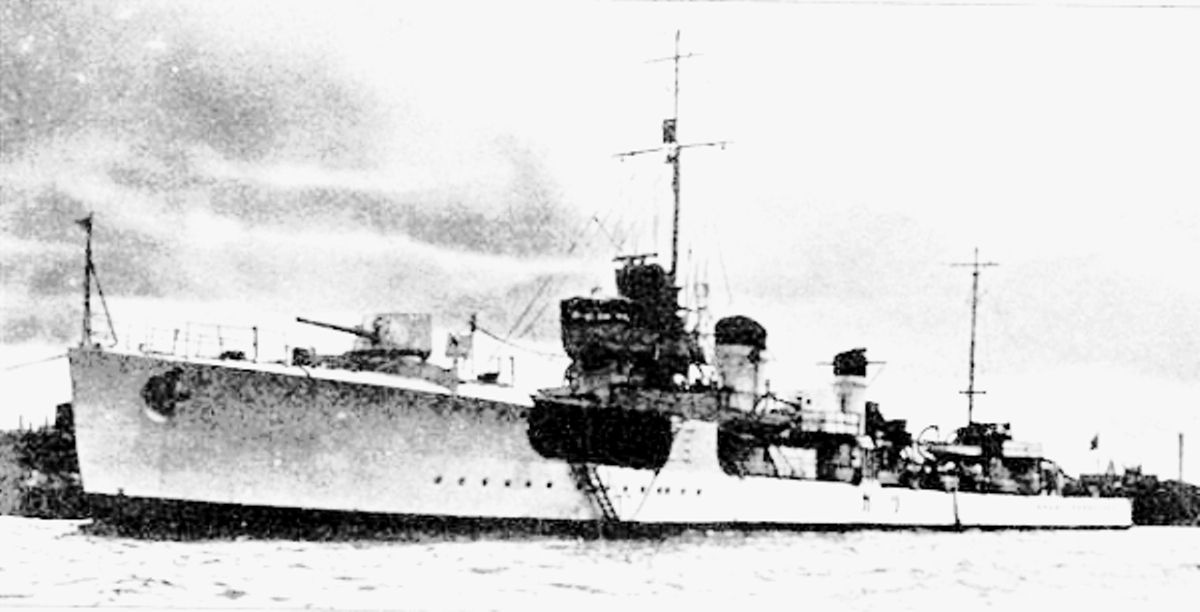
A MOMI-class destroyer is ordered from Ishikawajima Shipbuilding.
24 January 1918:
The destroyer is designated TSUGA.
5 March 1919:
Laid down at Ishikawajima Shipbuilding as the first destroyer built at the Ishikawa yard.
17 April 1920:
Launched.
20 April 1920:
LtCdr (later Capt) Kuge Tanetsugu (33) is appointed Chief Equipping Officer (CEO).
20 July 1920:
Completed and registered in the Sasebo Naval District. Assigned to DesRon 26. LtCdr Kuge is the Commanding Officer.
1 December 1920:
LtCdr (later Rear Admiral) Narita Jiro (36) assumes command.
16 April 1921:
LtCdr (later Capt) Goda Kiichiro (35) is appointed CO.
1 December 1921:
LtCdr (later Rear Admiral) Kashiwagi Ei (36) is appointed CO.
20 September 1922:
LtCdr (later Capt) Takashimada Masaki (35) is appointed CO.
10 November 1925 to 2 December 1926:
Sasebo. Placed in the first reserve for engine repairs. Both funnels are elevated. Lt Kawahara Kinnosuke (39) is appointed the acting CO.
1 December 1925:
Lt (RAdm, posthumously) Sakiyama Shakao (42) is appointed CO.
1 December 1926:
LtCdr (later Vice Admiral ) Hara Chuichi (39) is appointed CO.
1 February 1928:
LtCdr Kawahara Kinnosuke (39) is appointed CO for his second tenure aboard TSUGA.
10 December 1928:
LtCdr Nishimura Yoshiharu (44) is appointed CO.
30 November 1929:
LtCdr (later Rear Admiral) Onishi Keiichi (44) is appointed CO.
20 April 1930:
Lt (later Rear Admiral) Konishi Kaname (44) is appointed CO.
15 April 1931:
Lt (later Rear Admiral) Yamamoto Iwata (46) is appointed CO.
1 May 1933:
LtCdr (later Rear Admiral) Wakita Kiichiro (48) is appointed CO.
15 November 1933:
DesDiv 26 is assigned to DesRon 11. Patrols off the Chinese coast.
15 November 1934:
TSUGA and KURI are directly attached to DesRon 11 HQ. Based at Mako, Pescadores (now Penghu Island), they patrol off the Chinese coast.
31 October 1935:
LtCdr (Capt, posthumously) Todoroki Mansaku (50) is appointed CO.
1 December 1936:
LtCdr (later Capt) Honda Katsukuma (50) is appointed CO.
7 July 1937: The Marco Polo Bridge (The"First China Incident") Incident:
Hun River, Lukuokiao, China. Japanese troops at the bridge fire blank cartridges during night maneuvers. Chinese troops fire back. Later, the Japanese discover a soldier missing. They demand entry to the Peking (Beijing) suburb of Wanping to look for him, but the Chinese refuse. The Japanese shell the city and an undeclared war on China begins.
14 September 1937:
LtCdr (Capt, posthumously) Hogen Sunao (50) is appointed CO.
12 November 1937:
Shanghai is captured.
1 June 1938:
LtCdr (Capt, posthumously) Senba Shigeo (50) is appointed CO.
13 June 1938 - The Battle of Wuhan:
Midway down the Yangtze River. The Japanese make a naval landing at Anqing supported by 100 vessels, including more than 40 destroyers, mine sweepers, naval and river gunboats and blockade boats. TSUGA is in Rear Admiral (later Vice Admiral) Kondo Eijiro’s (36) 11th Sentai with KURI and HASU. The landing force totals about 12,000 men and 80 to 90 guns. The Japanese begin the Battle of Wuhan to annihilate the Chinese Army and force a surrender. The battle rages for over four months and ends in a stalemate.
15 December 1938:
LtCdr Okawara Hajime (50)(former CO of KURI) is appointed CO.
20 July 1939:
Lt (Capt, posthumously) Hashimoto Kanematsu (55) is appointed CO.
15 October 1940:
LtCdr Nishino Shigeru (55) is appointed CO.
November 1941:
TSUGA is in Vice Admiral (Fleet Admiral, postumously) Koga Mineichi’s (34)(former CO of ISE) China Area Fleet in Vice Admiral Makita Kakusaburo's (38)(former CO of KIRISHIMA) Shanghai Area Base Force with old destroyers HASU and KURI.
8 December 1941: Operation "C" - The Invasion of the British Crown Colony of Hong Kong:
TSUGA supports the Japanese assault on Hong Kong.
13 January 1942:
TSUGA arrives at Shanghai.
25 December 1941:
Hong Kong surrenders.
1942:
Assigned to Shanghai Guard Unit until late July. TSUGA’s midships 4.7 mount is landed and replaced with two triple 25mm Type 96 AA mounts.
9 January 1942:
Departs Hong Kong.
13 January 1942:
TSUGA arrives at Shanghai.
30 January 1942:
Departs Shanghai on patrol.
5 February 1942:
Off Tongfushan meets up with KASAGISAN MARU which is with two prizeships HALLDOR (later HARUTA MARU) and ARGUS (later SHINNAN MARU).
6 February 1942:
KURI takes over escort.
13 February 1942:
At 1430 ceases patrols and undertakes an escort mission.
15 February 1942:
At 0330 ceases the escort mission and resumes patrolling.
21 February 1942:
At 1630 departs Wenchow.
26 February 1942:
At 1830 ceases patrolling and begins escorting the 4th Division No. 2 Continent Mo. 1 convoy consisting of BRISBANE, KANKO, SHINTEN, ISSHIN, KOFUKU, HAKUSHIN, KEIKI MARUs and ASAHI MARU No. 2 bound for Lingayen Gulf.
2 March 1942:
Arrives at Kirun escorting the convoy.
8 March 1942:
At 1800 departs Kirun on patrol to Hei Niu Wan and remains patrolling for the rest of the month.
9 March 1942:
At 0850 arrives at Hei Niu Wan. Later departs on patrol.
11 March 1942:
At 1900 returns to Hei Niu Wan.
12 March 1942:
At 1100 departs Hei Niu Wan.
13 March 1942:
At 1105 arrives at Hei Niu Wan. At 1750 departs.
15 March 1942:
Begins to escort 4th Division No.2 Contingent No. 2 Convoy consisting of HAKUSAN, MURORAN and SHINGO MARUs.
16 March 1942:
At 0900 arrives at Kirun. At 1820 departs Kirun for Yuet Ching Wan.
17 March 1942:
At 0945 arrives at Yuet Ching Wan.
20 March 1942:
At 0900 departs Yuet Ching Wan and at 1620 arrives at Hei Niu Wan.
23 March 1942:
At 1445 departs Hei Niu Wan and at 1700 arrives at Yuet Ching Wan.
24 March 1942:
At 1100 departs from off Wenchow to Tinghai (Dinghai). Arrives at Tinghai at 1120.
30 March 1942:
To undertake an escort mission at 27N 122E before returning to Yuet Ching Wan.
31 March 1942:
At 0950 departs Yuet Ching Wan on patrol.
4 April 1942:
At 0730 off Tong Ting Is begins escorting a convoy.
5 April 1942:
At 0300 at 27N 122E ceases convoy escort. At 0845 arrives at Hei Niu Wan.
6 April 1942:
At 0735 departs Hei Niu Wan. At 0910 arrives at Nanchi Shan. At 1650 departs Nanchi Shan and at 1815 arrives back at Hei Niu Wan.
13 April 1942:
At 1325 arrives at Tinghai (Dinghai). Inspects 2 junks.
15 April 1942:
At 1700 departs Tinghai for Tong Ting Is.
16 April 1942:
At 0730 meets up with a two ship convoy consisting of AFRICA and ORIDONO MARUs off Tong Ting Is and begins escorting the ships.
17 April 1942:
At 0700 arrives at Hei Niu Wan.
20 April 1942:
At 0845 departs Hei Nui Wan for Shihpu. At 1715 arrives at Shihpu.
21 April 1942:
At 1400 arrives at Peiyu Shan.
23 April 1942:
At 2100 departs Shihpu.
24 April 1942:
Arrives at Shanghai. At 1530 transfers to Kiangnan yard.
5 May 1942:
Departs Shanghai.
7 May 1942:
At 0635 arrives at Hei Niu Wan after patrolling areas C and D.
8 May 1942:
At 1215 departs Fuyao Tao. At 1715 arrives back at Fuyao Tao.
9 May 1942:
At 0830 departs Fuyao Tao. At 0940 arrives at Peishuang Tao. At 1715 departs and at 1820 arrives at Fuyao Tao.
11 May 1942:
At 0710 departs Fuyao Tao for Yuet Ching Wan. Arrives there and at 1800 departs. At 1845 anchors in nearby Tungtou Strait.
15 May 1942:
At 0700 departs Tungtou Strait (?). At 1905 arrives north channel of undisclosed location.
19 May 1942:
At 1000 departs undisclosed location for Shihpu.
24 May 1942:
At 1200 departs Tinghai (now Dinghai) for Shihpu.
26 May 1942:
At 2145 arrives at Huangtung Strait.
28 May 1942:
At 1540 arrives at Taichow Islands.
30 May 1942:
At 1700 departs from off Taichow Islands.
31 May 1942:
At 1000 arrives at Tinghai (Dinghai).
1 June 1942:
At 1015 departs Tongting Tao.
2 June 1942:
At 1123 joins a convoy headed south consisting of MONTREAL, KONAN, GENOA, BUYO, YONEYAMA and MANSHU MARUs being escorted by auxiliary gunboat TOSHO MARU off the Yangtse estuary.
3 June 1942:
TOSHO MARU completes escort and is detached for Heiniu Bay.
4 June 1942:
At 0830 arrives at Nanchi Shan.
10 June 1942:
Takes part in a landing on Pei Chieh Tao, SE of Wendow with auxiliary gunboats No. 141 (DAIGEN MARU No. 7), No. 142 (NISSHO MARU No. 12), No. 143 (TOSHO MARU), No. 144 (SHINKO MARU No. 1 GO) and salvage tug KASASHIMA.
20 June 1942:
At 0720 departs Shihpu and later at 1945, arrives at Yuet Ching Wan.
22 June 1942:
Departs Yuet Ching Wan and then at 1200 departs Tung Ting Tao and begins escorting convoy TA-303 consisting of NAPLES, OYO and TAIHEI MARUs from Tsingtao bound for Mako.
25 June 1942:
Arrives at Kirun.
29 June 1942:
At 1930 departs Kirun.
2 July 1942:
At 0730 departs Taichow Liehdao. At 1345 arrives at Yuet Ching Wan.
3 July 1942:
At 1700 departs Yuet Ching Wan.
4 July 1942:
At 1800 arrives at Chikuo (Qiqu) Yang.
5 July 1942:
Departs Chikuo Yang.
6 July 1942:
At 0900 arrives back at Chikuo Yang.
7 July 1942:
At 1020 with auxiliary gunboat TOSHO MARU (No. 143) following behind, arrives off Jui An, near Feiyun Chiang.
8 July 1942:
At 0700 both ships depart from off Jui An and at 1130 arrive at Chikuo Yang.
10 July 1942:
At 0800 TSUGA departs Yuet Ching Wan.
14 July 1942:
At 0800 together with salvage tug KASASHIMA, departs from off Feiyun Chiang, S of Wenchow.
16 July 1942:
At 1120 arrives off Chin Kiang (Qing Jiang).
24 July 1942:
TSUGA and auxiliary gunboat DAIGEN MARU No. 7 both engage in minesweeping off Yuet Ching Bay.
29 July 1942:
Departs from off Chin Kiang.
1 August 1942:
Lt Mori Shinichi (59) is appointed CO.
August 1942:
Shanghai. Escorts convoys between Shanghai and Mako, Pescadores.
7 August 1942:
At 0743 arrives at Kirun.
11 August 1942:
At 1800 departs Kirun for Yuet Ching Wan.
12 August 1942:
At 0900 arrives at Yuet Ching Wan.
14 August 1942:
Off Chin Kiang.
15 August 1942:
At 1015 departs Yuet Ching Wan escorting an Army convoy.
16 August 1942:
At 0715 arrives at Shanghai.
18 August 1942:
At 1600 departs Shanghai.
19 August 1942:
Arrives at Dayu Shan.
20 August 1942:
At 0730 departs Dayu Shan. At 1320 arrives at Heiniu Wan.
25 August 1942:
At 1330 departs Heiniu Wan. At 1630 arrives at Yuet Ching Wan.
26 August 1942:
At 1840 departs Yuet Ching Wan to TEISHUN MARU disaster site.
27 August 1942:
At 0730 arrives at Fuyan Tao.
28 August 1942:
At 0800 departs Heiniu Wan and at 2230 arrives at Chikuo Yang.
30 August 1942:
At 1600 departs Chikou Yang with auxiliary gunboat SHINKO MARU No. 1 GO.
1 September 1942:
At 1200 arrives at Fuyan Tao with auxiliary gunboat SHINKO MARU No. 1 GO (No. 144).
2 September 1942:
At 0720 departs Fuyan Tao. At 1420 arrives at Yuet Ching Wan. At 1620 departs Yuet Ching Wan and at 2030 arrives at Taichow Liehdao.
3 September 1942:
At 0500 departs Taichow Liehdao and at 1230 arrives at Tinghai.
5 September 1942:
At 0920 departs Tinghai and at 1745 arrives at Shanghai.
14 September 1942:
At 0800 departs Shanghai on patrol.
15 September 1942:
At 0940 arrives at Heiniu Wan.
16 September 1942:
At 2010 arrives at Fuyan Tao.
23 September 1942:
At 1330 departs Fuyan Tao. At 1540 arrives at Taichow Liehtao, and departs there at 2250.
24 September 1942:
At 1045 arrives at Fuyan Tao.
25 September 1942:
At 1805 arrives at Chikou Yang.
27 September 1942:
Arrives at Kirun. Takes on stores.
1 October 1942:
At 1810 departs Kirun to LISBON MARU disaster site.
2 October 1942:
At 1400 arrives near disaster scene.
4 October 1942:
At 0100 arrives at Shihpu.
5 October 1942:
At 1030 departs Shihpu on a [ASW?] sweep.
6 October 1942:
At 1030 arrives back at Shihpu.
9 October 1942:
At 0500 departs Shihpu and at 1830 arrives at Shanghai and remains there throughout November, presumably drydocked.
30 November 1942:
At 0900 departs Shanghai escorting a ship headed south towards Fuyan Tao.
18 December 1942:
Arrives at Shanghai.
21 December 1942: No. 6 Go Transportation Operation:
Convoy No. 35 assembles at Shanghai to transport the IJA’s 6th Infantry Division via Truk to Guadalcanal (after the decision is made to evacuate Guadalcanal, the convoy’s destination is changed to New Guinea).
The convoy consists of troop convoy Parts A, B and C. Part A consists of TEIYO, MYOHO MARUs and SHINSEI MARU No. 1; Part B consists of OIGAWA, KENKON, KYOKUSEI and PANAMA MARUs and Part C consists of MEIU, SOMEDONO, SURABAYA and SHINAI MARUs. Second-class destroyer HASU departs Shanghai for New Guinea escorting Part A and second-class destroyer KURI departs escorting Part B. TSUGA remains at Shanghai.
25 December 1942:
At 1600 Part C departs Shanghai consisting of MEIU, SOMEDONO, and SHINAI MARUs escorted by TSUGA (SURABAYA MARU later in part C departs later).
28 December 1942:
Arrives at Mako. TSUGA is detached. The ship then meets up with an incoming convoy consisting of TEIRYU, MACASSAR, SURABAYA and SHINRYU MARUs.
29 December 1942:
TSUGA departs Mako on patrol.
5 January 1943:
Parts A and B depart Mako, Pescadores. The old China Area Fleet second-class destroyers are now long detached and are replaced by the Southwest Area Fleet’s destroyers HOKAZE and NAGATSUKI tasked to escort the convoy to 136 degrees E longitude. The escort is further augmented by destroyer SHIRAYUKI, subchasers CH-2 and CH-11 and auxiliary gunboat CHOAN MARU No. 2.
8 January 1943:
TSUGA arrives at Shanghai.
28 January 1943:
Departs Shanghai on patrol. Spends most of February on patrol.
1 February 1943:
At 0950 departs Fuyao Tao. At 1035 arrives at Incog Islands.
2 February 1943:
At 0945 departs Incog Islands and at 1430 arrives at Qiqu Yang.
4 February 1943:
Departs Qiqu Yang and later that day arrives at Fuyao Tao.
7 February 1943:
Departs Fuyao Tao and later that day arrives at Taichow Liehtao.
9 February 1943:
Departs Taichow Lihtao and at 1435 arrives at Heiniu Wan.
10 February 1943:
Departs Heiniu Wan and later that day arrives at Fuyao Tao.
13 February 1943:
Departs Fuyao Tao. Off Tong Ting Is meets up with Second Part of convoy No.230 consisting of tankers MANJU MARU, OGURA MARU No. 2, cargo ship SHINWA MARU and two unidentified ships.
14 February 1943:
The convoy escort ceases. Later that day TSUGA arrives at Shipu.
15 February 1943:
Arrives at Tinghai.
18 February 1943:
Departs Tinghai and later that day arrives at Shipu. At Shipu stored by auxiliary storeship BANSHU MARU No. 16.
24 February 1943:
Departs Shipu to meet up with a convoy. Later that day arrives at Heiniu Wan.
27 February 1943:
Departs Heiniu Wan for Shanghai.
28 February 1943:
Arrives and anchors off Woosung.
4 March 1943:
At 1000 departs Shanghai. At 1900 arrives at Paiteimen.
5 March 1943:
At 0800 departs Paiteimen and at 1645 arrives at Taichow Liehtao.
6 March 1943:
At 0800 departs Taichow Liehtao and at 1700 arrives at Fuyao Tao.
8 March 1943:
At 1745 departs Fuyao Tao.
9 March 1943:
At 1230 arrives at Taichow Liehtao.
12 March 1943:
At 1545 arrives at Heiniu Wan.
15 March 1943:
Lt Hirata Masaaki (58) is appointed CO. At 1800 departs Heiniu Wan.
17 March 1943:
At 0845 arrives at Yuet Ching Wan.
20 March 1943:
At 0700 departs Yuet Ching Wan and at 1545 arrives at Shipu.
21 March 1943:
At 1800 departs Shipu.
22 March 1943:
Arrives at Shanghai.
28 March 1943:
At 1200 departs Shanghai on patrol.
29 March 1943:
At 0630 arrives at Taichow Liehtao
30 March 1943:
At 0800 departs Taichow Liehtao and at 1700 arrives at Fuyao Tao.
8 April 1943:
At 0750 departs Fuyao Tao and at 1430 arrives at Yuet Ching Wan.
11 April 1943:
At 0805 departs Yuet Ching Wan.
12 April 1943:
At 1030 arrives at Tinghai.
14 April 1943:
At 1330 departs Tinghai. Near Tung Ting Tao begins escorting SHOZAN MARU (ex CHEKIANG).
18 April 1943:
At 2350 in position 22-10N 121-15E, meets up with auxiliary gunboat SHINKO MARU No. 1.
21 April 1943:
Arrives at Kirun.
22 April 1943:
Departs Kirun on patrol.
E 28 April 1943:
Off Wenchow takes over from KURI escorting No. 10 Go Army convoy consisting of RYOYO and KOZAN MARUs. The ships sail at 11 knots.
30 April 1943:
The convoy arrives at Takao.
2 May 1943:
Departs Takao on patrol.
5 May 1943:
At 1430 arrives at Heiniu Wan.
6 May 1943:
At 0645 departs Heiniu Wan for Shanghai.
7 May 1943:
Arrives at Shanghai.
9 May 1943:
Departs Shanghai. At 1000 departs Woosung escorting a convoy consisting of BISAN (ex British MING SANG), TAMAHOKO and CHEFOO MARUs. The convoy stops briefly at Amoy.
E 11 May 1943:
CHEFOO MARU is detached for Kirun (Keelung).
12 May 1943:
At 0845 arrives at Mako with TAMAHOKO MARU.
14 May 1943:
At 0730 departs Mako on patrol.
16 May 1943:
At 1745 arrives at Shanghai.
18 May 1943:
At 1320 arrives at Kiangnan and is drydocked for the rest of the month.
13 June 1943:
Departs Shanghai on an escort mission escorting MAYA MARU to Mako.
15 June 1943:
Arrives at Mako.
18 June 1943:
Departs Mako on patrol.
22 June 1943:
Off Tungting Tao meets up with convoy TA-303 en route from Tsingtao to Mako and consisting of NAPLES, OYO and TAIHEI MARUs.
25 June 1943:
Takes over escort of CHEFOO MARU to Mako after CHEFOO MARU collided with an damaged destroyer KURI.
7 July 1943:
Arrives at Tinghai (now Dinghai).
14 July 1943:
Arrives at Shanghai.
18 July 1943:
Departs Shanghai escorting a convoy (presumably TA-703 listed below).
22 July 1943:
At 0600 TSUGA is reported escorting convoy TA-703 consisting of six unidentified merchant ships and due to arrive at Mako at this time.
24 July 1943:
Actual arrival date at Mako.
25 July 1943:
Departs Mako on patrol.
3 August 1943:
Arrives at Shanghai.
7 August 1943:
Departs Shanghai escorting convoy Ta-706 consisting of 6 unidentified merchant ships from Woosung to Mako.
11 August 1943:
Arrives at Mako.
13 August 1943:
Departs Mako escorting a convoy (possibly convoy No. 292 consisting of KUNISHIMA, KOSHIN, HAKUBASAN MARUs and six unidentified merchant ships bound for Mutsure).
17 August 1943:
Ceases escort role and undertakes patrols.
19 August 1943:
Off Nanji Shan joins convoy TA-808 from Woosung consisting of eight unidentified merchant ships escorted by destroyer HASU. At Mao Yu Tao ceases escort.
21 August 1943:
Arrives at Shanghai.
25 August 1943:
Departs Shanghai escorting convoy Ta-506 from Woosung consisting of six unidentified merchant ships, bound for Mako. Later that day between 1500 and 1800 auxiliary gunboat DAIGEN MARU No. 7 joins the convoy.
28 August 1943:
Arrives at Mako.
30 August 1943:
Departs Mako escorting an unknown convoy.
3 September 1943:
Arrives at Tinghai.
6 September 1943:
Departs Tinghai escorting an unknown convoy.
10 September 1943:
Arrives at Mako.
11 September 1943:
Departs Mako on patrol.
17 September 1943:
Arrives at Kirun.
20 September 1943:
Departs Kirun on patrol. Possibly meets up with KURI.
30 September 1943:
Arrives at Shanghai.
4 October 1943:
At 1900, TSUGA departs Woosung, China for Mako escorting convoy Ta-406 consisting of ROZAN, SHOZAN, YULIN, CHEFOO, TSUKUBA and SETSUZAN MARUs. Shortly after departing they are met by auxiliary gunboat HOKOKU MARU that escorts the convoy until 2250. The ships hug the continental coastline.
7 October 1943:
Arrives at Mako.
9 October 1943:
Departs Mako on patrol.
14 October 1943:
Arrives at Kirun.
16 October 1943:
Departs Kirun on patrol.
21 October 1943:
Meets up with a convoy and begins escort duties.
22 October 1943:
Ceases escort mission and resumes patrolling.
24 October 1943:
Arrives at Shanghai.
27 October 1943:
Departs Shanghai on patrol.
6 November 1943:
TSUGA is escorting Convoy No. 505 from Japan to Takao consisting of SHISEN and SENYO MARUs. SHISEN MARU is detached for Kirun (Keelung) together with TSUGA. SENYO MARU is bound for Takao.
7 November 1943:
The rest of the convoy arrive safely at Takao. TSUGA departs Kirun escorting a convoy.
11 November 1943:
Arrives at Takao.
14 November 1943:
TSUGA departs Takao, Formosa escorting the "F" convoy consisting of RIO DE JANEIRO MARU and an unidentified merchant ship. En route TSUGA is detached.
17 November 1943:
TSUGA arrives at Shanghai.
18 November 1943:
The convoy arrives at Moji.
20 November 1943:
May have briefluy escorted convoy YUKI No. 1 sailing from Woosung to Takao.
21 November 1943:
Transfers from Shanghai to Woosung.
23 November 1943:
Departs Woosung escorting a convoy.
26 November 1943:
Arrives at Takao.
4 December 1943:
Arrives at Shanghai.
9 December 1943:
Departs Shanghai on patrol.
21 December 1943:
Arrives at Mako.
22 December 1943:
Departs Mako on patrol.
27 December 1943:
Arrives at Kirun and departs later that day on patrol.
4 January 1944:
Arrives at Shanghai. Drydocked.
22 January 1944:
Departs Shanghai on patrol.
24 January 1944:
Breaks off patrols and begins escorting a convoy.
26 January 1944:
Arrives at Takao.
27 January 1944:
Departs Takao and arrives at Mako where drydocked.
3 February 1944:
Departs Mako on patrol.
11 February 1944:
In response to a distress call from SATSUMA MARU under air attack off Pashan So, TSUGA and auxiliary gunboat SHINKO MARU No. 1 GO depart Taichow Liehtao. They arrive too late to save the vessel, but rescue the survivors.
12 February 1944:
Arrives at Woosung.
16 February 1944:
Arrives at Kirun (Keelung)
19 February 1944:
TSUGA departs Kirun (Keelung) for Takao, Formosa escorting a convoy consisting of TAIRYU and CHIKUZEN MARUs. At 1320 that afternoon, the convoy is bombed and strafed by two aircraft that sink TAIRYU MARU. Seven crewmen are KIA.
At 1315, USN codebreakers intercept a message in plain language from TSUGA that reads: "Am engaging enemy aircraft.” At 1320, they intercept another message that reads: “TAIRYU MARU was bombed by enemy aircraft and sank 20 miles north of Kuku Point. (25-25N, 121-30E).”
20 February 1944:
Arrives back at Kirun.
22 February 1944:
Departs Kirun escorting a convoy.
23 February 1944:
Ceases convoy escort and commences patrolling.
29 February 1944:
Meets up with a convoy and begins escort duties.
1 March 1944:
Lt Kuniya Masanobu (64) is appointed CO.
2 March 1944:
HASU and TSUGA arrive at Kirun escorting a convoy (likely TA-202).
3 March 1944:
HASU and TSUGA depart Kirun escorting a convoy.
4 March 1944:
Arrive at Takao.
7 March 1944:
At 0900 TSUGA departs Takao with destroyer HASU, minelayer NIIZAKI and an unidentified warship escorting convoy TAMO-08 consisting of SEIAN, WAZAN, MEXICO, MIZUHO, TONEGAWA, ADEN, MITSUKI MARUs and two unidentified merchant ships. The convoy sails at 8 knots.
8 March 1944:
Arrives at Kirun.
13 March 1944:
Departs Kirun. The convoy splits into two parts after departing port. HASU and TSUGA detach and arrive at Shanghai. TSUGA spend the rest of the month on training exercises around Shanghai.
17 March 1944:
The first part of TAMO-08 arrives at Moji.
18 March 1944:
The second part of TAMO-08 arrives at Moji.
22 April 1944:
Departs Shanghai on patrol.
24 April 1944::
Begins an anti submarine sweep.
25 April 1944:
Concludes the anti submarine sweep and heads to a disaster scene to undertake rescue operations then begins an escort mission.
30 April 1944:
Arrives at Woosung.
4 May 1944:
Departs Shanghai escorting convoy TA-404.
10 May 1944:
Detaches from convoy and begins patrolling.
12 May 1944:
Arives at Shanghai.
15 May 1944:
Departs Shanghai escorting convoy TA-505.
17 May 1944:
Arrives Takao. TSUGA then departs Takao with destroyers HARUKAZE and ASAKAZE, kaibokan CD-11, auxiliary subchaser CHa-75, auxiliary minesweeper MISAGO MARU No. 8, auxiliary gunboat HUASHAN (KAZAN) MARU and auxiliary minelayer CHOAN MARU escorting convoy TAMA-18 consisting of TETSUYO, NICHIZUI, MAYASAN, SHINNO and ASO MARUs.
18 May 1944:
A submarine contact is reported.
20 May 1944:
A further submarine contact is reported. The convoy seeks shelter at North San Fernando anchorage.
21 May 1944:
Late afternoon. Departs North San Fernando.
23 May 1944:
Arrives at Manila.
28 May 1944:
At 1300, TSUGA departs Manila with patrol boats PB-102 (ex-USS STEWART, DD-224) and PB-104, subchaser CH-38 and auxiliary netlayer KOREI MARU escorting convoy H-27 consisting of SHINNO, KOHOKU, KOSEI, MURORAN, SHIROGANESAN, TAIYU, TEIYU (ex-Italian CARIGNANO) and JUZAN MARUs.
3 June 1944:
At 2044, arrives at Banka anchorage, NE Celebes.
4 June 1944:
At 0555, departs Banka anchorage.
8 June 1944:
At 1617, arrives at Wasile, Halmahera, Moluccas.
11 June 1944:
TSUGA departs Kau Bay, Halmahera with patrol boat PB-104, subchasers CH-21 and CH-38, auxiliary netlayer KOREI MARU and auxiliary gunboat KAZAN MARU escorting convoy H-27 (return) consisting of AKAGISAN, KOAN, SORACHI, SHIROGANESAN, YOZAN and TAIYU MARUs and YOSHIDA MARU No. 3.
12 June 1944:
TSUGA and CH-38 are detached for Davao.
14 June 1944:
TSUGA departs Davao towards the Philippine Sea refueling point with the 1st Supply Force oilers HAYUSUI and NICHIEI, KOKUYO and SEIYO MARUs and destroyers HATSUSHIMO and SHIRATSUYU.
15 June 1944:
90 miles SE of Surigao Strait. SEIYO MARU collides with and sinks SHIRATSUYU.
16 June 1944:
At about 1000, at 11-00N, 130-00E, the 1st Supply Force completes a rendezvous with Vice Admiral Ugaki Matome's (40) (former CO of HYUGA) aborted Operation "Kon" Task Force's Bat Div 1's YAMATO, and MUSASHI, Cru Div 5's HAGURO and MYOKO, DesRon 2's light cruiser NOSHIRO and Des Div 4's OKINAMI, SHIMAKAZE, ASAGUMO, MAIKAZE and MICHISHIO and DesRon 10's YAMAGUMO and NOWAKI. Ugaki's force is refueled promptly, then Ugaki's force and the 1st Supply Force head north to join Vice Admiral Ozawa Jisaburo's (37) (former CO of HARUNA) First Mobile Fleet's Main Body.
At 1650, Ugaki's force and the 1st Supply Force rendezvous with Ozawa. The 1st Supply Force begins to refuel the Mobile Fleet.
17 June 1944:
At 2000, the refueling is completed. At this time, the First Mobile Fleet is at 12-15N, 132-45E. The 1st Supply Force stands by to rendezvous with the the 2nd Supply Force's oilers GENYO and AZUSA MARUs enroute from Guimaras. All six oilers then depart the area for a designated standby point at 14-40N, 134-20E.
20 June 1944: - The Battle of the Philippine Sea: :
TSUGA and destroyers HIBIKI, YUNAGI, and HATSUSHIMO escort the 1st Supply Force’s NICHIEI MARU. They are attacked by LtCdr J. D. Blitch's seven Grumman "Avenger" TBF torpedo-bombers, 12 Curtiss "Helldiver" SB2C dive-bombers and 16 Grumman "Hellcat" F-6F-3 strafers from Task Force 58's USS WASP (CV-18).
SEIYO MARU and HAYASUI are hit by bombs. Destroyer YUKIKAZE scuttles SEIYO MARU. Three crewmen are killed. The 2nd Supply Force's oiler GENYO MARU is also damaged by bombs and later scuttled by destroyer UZUKI. TSUGA is undamaged. Later that day, NICHIEI MARU departs the area for Okinawa with the 1st Supply Force.
26 June 1944:
Departs Guimaras Bay escorting tankers MANEI, YUHO and EIHO MARUs with kaibokan KANJU and MIYAKE and submarine chasers CH-38, CH-49 and CH-58.
27 June 1944:
Arrives at Zamboanga, Philippines.
CH-38 is apparently detached.
28 June 1944:
Departs Zamboanga still in convoy.
30 June 1944:
Arrives at Tawi Tawi.
1 July 1944:
Departs Tawi Tawi still in convoy with tankers EIHO MARU and TSURUMI joining at this point. Later that day, anchors in Ligitan Channel.
2 July 1944:
Departs Ligitan Channel. Later that day, anchors off Tarakan. TSUGA is detached.
3 July 1944:
Joins up with battleship FUSO as an additional escort en route to Tarakan.
July 1944:
Escorts several tankers from Balikpapan to Manila.
25 July 1944:
At 0400, TSUGA departs Manila for Takao with escort carrier KAIYO, destroyers AKIKAZE and HATSUSHIMO and minesweeper W-28 escorting convoy MAMO-01 consisting of transports GOKOKU and ASAMA MARUs.
27 July 1944:
At 1400, arrives at Takao.
4 August 1944:
Arrives at Sasebo. Later, TSUGA returns to China.
16 August 1944:
At 1835, TSUGA departs Woosung, China for Naha, Okinawa with sister HASU and gunboat UJI escorting convoy No. 609 consisting of KAZUURA, TSUSHIMA and GYOKU MARUs. The convoy is carrying about 6,000 troops of the 62nd Infantry Division and over 900 horses for its Field Heavy Artillery. KAZUURA MARU carries 2,409 soldiers and 440 horses, TSUSHIMA MARU carries 3,339 soldiers and 449 horses and GYOKU MARU carries 3,175 soldiers and 40 horses.
19 August 1944:
Arrives at Naha.
22 October 1944:
At 1700, TSUGA departs Foochow, China for Takao, Formosa with HASU escorting a convoy consisting of KORI GO, TATSUJU, TOUN and WAKATAKE MARUs.
23 October 1944:
NNW of Mako, Pescadores. At 0336, Cdr (later Rear Admiral-Ret/MOH) Richard H. O’Kane’s (USNA ’34) USS TANG (SS-306) attacks the convoy. O’Kane torpedoes and damages TOUN MARU that catches fire. At the time of attack the ship was carrying 297 Landing troops of whom 131, five passengers, 12 gunners and 16 crewmen are KIA, with the ship a total loss. Next, O’Kane torpedoes and sinks TATSUJU MARU. Two troops and five crewmen are killed. WAKATAKE MARU spots the half-surfaced USS TANG 400 yards ahead and tries to ram, but O’Kane goes hard to port, evades and then torpedoes and sinks WAKATAKE MARU at 24-49N, 120-26E. 128 shock (invasion) troops (out of 220), seven passengers (out of 12), 11 gunners and 30 crewmen are killed and the cargo of 16 small boats is lost.
24 October 1944:
USS TANG torpedoes and sinks KORI GO at 24-42N, 120-21E. One crewman is KIA.
25 October 1944:
While attacking another convoy, USS TANG is sunk in shallow water by a circular run of her last Mark-18 torped. LtCdr O'Kane and eight of his crew survive. They are captured and transported as POWs to Formosa and then Japan.
30 October 1944:
TSUGA departs Kirun escorting convoy TAMO-27 consisting of TEIKA (ex-French CAP VARELLA) and DAIKO, EIYO and UNZEN MARUs and seven unidentified merchant ships escorted by destroyers HASU, kaibokan DAITO, CD-25 and cable ship TSURUSHIMA.
5 November 1944:
TAMO-27 arrives at Moji.
2 December 1944:
LtCdr Yoshida Toshio (62) assumes command.
15 January 1945:
Off Mako. Carrier planes of Vice Admiral (Admiral posthumously) John S. McCain’s (USNA 06) Task Force 38 attack and sink TSUGA at 23-33N, 19-33E. LtCdr Yoshida is KIA. He is promoted Commander, posthumously.
Other crew losses are unknown.
10 March 1945:
Removed from the Navy List.
Author's Notes:
Thanks go tothe late John Whitman of the USA for info on CNO intercepts of Japanese messages and to Gilbert Casse of France.
-Bob Hackett, Sander Kingsepp and Peter Cundall
Back
to the Second Class Destroyers Page