© 2009-2017 Bob Hackett, Sander Kingsepp and Peter Cundall
Revision 4
25 January 1938:
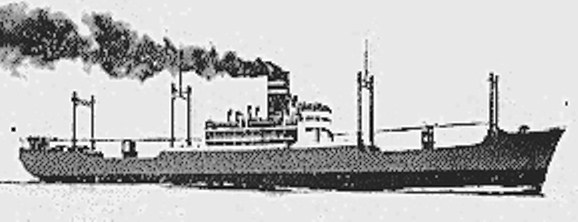
Kobe. Laid down at Mitsubishi’s shipyard as a 6,345-ton cargo ship for Tatsuuma Kisen K.K., Nishinomiya. 18 January 1939:
Launched and named TATSUHARU MARU. 15 April 1939:
Completed. Placed in service on runs from Kobe to Keelung and Takao, Formosa. 3 August 1941:
Requisitioned by the IJN. 5 September 1941:
Rated an auxiliary large minelayer and registered in the Maizuru Naval District. That same day, begins conversion at the Osaka Ironworks. 20 September 1941:
Captain Higuchi Ichitada is posted Commanding Officer. 14 October 1941:
The conversion is completed. 1941:
Assigned to the Combined Fleet’s Third Fleet in the 17th Minelayer Squadron. 29 November 1941:
Departs Terajima Straits for Southwest Pacific. 1942:
Atttached to the Southwest Fleet’s Second Base Force in the 17th Minelayer Squadron. 22 January 1942:
Davao. Auxiliary gunboat OKUYO MARU comes alongside and takes on coal from TATSUHARU MARU. Later, the ship sails to Balikpapan. 23 February 1942:
Departs Davao for Tarakan escorted by minelayers KAMOME and TSUBAME. At 2200, TSUBAME and KAMOME detach and return to Davao. 10 March 1942:
Reassigned to Vice Admiral (later Admiral) Takasu Shiro's (35) (former CO of ISUZU) 2nd Southern Expeditionary Fleet in the 22nd Special Base Force based at Balikpapan, Borneo with minesweepers W-15 and W-16. 9 May 1942:
At 1200, departs Mako, Pescadores for Sasebo with convoy No. 206 consisting of SHINSEI, TATSUWA, SENSAN, NANYO, KEIFUKU, TAISHO, KINUGAWA, MEIYU and WAYO MARUs escorted by old destroyer SANAE and minelayer TSUBAME. 13 May 1942:
Arrives at Sasebo. 25 August 1942:
Registered in the Maizuru Naval District as an auxiliary transport. 31 August 1942:
Arrives at Pontianak, Borneo. 2 September 1942:
Arrives off Bandjermasin, Borneo. 4 September 1942:
Departs Bandjermasin. 5 September 1942:
Arrives at Balikpapan. 16 September 1942:
Departs Balikpapan, Borneo. 19 September 1942:
Arrives at Davao, Philippines. 25 September 1942:
Departs Davao. 2 October 1942:
Arrives at Mako, Pescadores. 7 October 1942:
Departs Mako. 11 October 1942:
Arrives at Sasebo. 17 October 1942:
Departs Sasebo. 19 October 1942:
Arrives at Osaka. 21 October 1942:
Departs Osaka. 23 October 1942:
Arrives at Maizuru Navy Yard. 27 October 1942:
Begins conversion to a naval transport. 28 December 1942:
Completes the conversion. Departs Maizuru. 30 December 1942:
Arrives at Moji. 6 January 1943:
Departs Moji. 9 January 1943:
Arrives at Tokyo. 10 January 1943:
Departs Tokyo. 20 January 1943:
Arrives at Wake Island. 24 January 1943:
Departs Wake Island. 20 January 1943:
Arrives at Tarawa, Gilbert Islands. 31 January 1943:
Departs Tarawa. 1 February 1943:
Arrives at Mili. 7 February 1943:
Departs Mili. 12 February 1943:
Arrives at Truk. 2 March 1943:
Departs Truk in a convoy also consisting of auxiliary transports KIMISHIMA MARU, auxiliary watertanker ASAYAMA MARU, auxiliary storeships HOKO MARU (1,504 GRT) and TENYO MARU NO. 2 GO, auxiliary transport YAMASHIMO MARU and IJA transport MIKAGE MARU No. 20, escorted by destroyer YUNAGI, and submarine chasers CH-11 and CH-12. At some point CH-11 is detached. 5 March 1943:
ASAYAMA MARU is detached and proceeds to Saipan. KIMISHIMA MARU and YUNAGI are detached at 11-18N, 142-38E. KIMISHIMA MARU later arrives at Fais, Eastern Carolines. 11 March 1943:
Arrives at Yokosuka. 13 March 1943:
Loads 4,500 tons of coke and approximately 1,000 tons of trade and miscellaneous goods, 30 automobiles, 20,000,000 Yen of war notes and five warrant officer passengers. Departs Yokosuka. 15 March 1943:
Arrives at Muroran, Hokkaido. 23 March 1943:
Departs Muroran. 26 March 1943:
Arrives at Kobe. 29 March 1943:
Departs Kobe. 30 March 1943:
Departs Moji in convoy No. 142 also consisting of five unidentified merchant ships escorted by the destroyer SHIOKAZE. 5 April 1943:
Arrives at Takao, Formosa (Taiwan). 8 April 1943:
Departs Takao. 11 April 1943:
Arrives at Manila. 14 April 1943:
Departs Manila. 19 April 1943:
Arrives at Menado, Celebes (Sulawesi). 22 April 1943:
Departs Menado. 26 April 1943:
Arrives at Macassar, Celebes. 30 April 1943:
Departs Macassar. 1 May 1943:
Arrives at Pomalaa (Celebes main nickel port). 25 May 1943:
Loads 7,000 tons of nickel ore and 46 passengers. 2 June 1943:
Arrives at Manila. 6 June 1943:
Departs Manila. 9 June 1943:
Arrives at Takao. 12 June 1943:
Departs Takao in U Convoy also consisting of KOHO and YAMATO MARUs and tankers SEIAN and KOSHIN MARUs and three unidentified merchant ships escorted by the torpedo boat at SAGI. The convoy sails at 12 knots. 17 June 1943:
Arrives at Moji. 18 June 1943:
Arrives at Niihama, Japan. 23 June 1943:
Departs Niihama. 24 June 1943:
Arrives at Moji. 25 June 1943:
Departs Moji. 30 June 1943:
Arrives at Dairen, Manchuria. 2 July 1943:
Departs Dairen. 8 July 1943:
Arrives at Muroran. 11 July 1943:
Departs Muroran. 13 July 1943:
Arrives at Maizuru. 18 July 1943:
At 1000, departs Maizuru in convoy with NANKAI MARU escorted by the minelayer NARIU. Because of a submarine threat in the Sea of Japan, YURIJIMA joins TATSUHARU and NANKAI MARUs at Hinomisaki and escorts them west. 19 July 1943:
At 1030, YURIJIMA detaches and heads towards Saeki. Later arrives at Mutsure. 25 July 1943:
Departs Moji in convoy No. 180 also consisting of tankers JAMBI, KUROSHIO and NICHINAN (5175 gt) MARUs escorted by the patrol boat PB-2. 30 July 1943:
Arrives at Takao. 1 August 1943:
Departs Takao in Rin Toku convoy also consisting of tankers NICHINAN MARU (5175 gt) and KUROSHIO MARU. 7 August 1943:
Arrives at Singapore. 11 August 1943:
Departs Singapore escorted by the minesweeper W-7. 15 August 1943:
Arrives at Car Nicobar, Andaman Islands. 21 August 1943:
Departs Car Nicobar still escorted by minesweeper W-7. 24 August 1943:
Arrives at Singapore. 28 August 1943:
Departs Singapore in convoy with KOGYO MARU escorted by the torpedo boat KARI. The convoy carries a Naval Construction Unit destined for Car Nicobar, Andaman Islands, Indian Ocean. 29 August 1943:
Arrives at Penang. 3 September 1943:
Departs Penang. 6 September 1943:
Arrives at Sabang, Sumatra. 10 September 1943:
TATSUHARU MARU and an unidentified ship depart Sabang escorted by kaibokan SHIMUSHU. 13 September 1943:
Arrives at Singapore. 16 September 1943:
Departs Singapore. Arrives at Bintan, NEI. 17 September 1943:
Departs Bintan. 18 September 1943:
Arrives at Singapore. 19 September 1943:
Departs Singapore in convoy Sa-11 also consisting of HOKKAI MARU (joined from St Jacques), tanker GOYO MARU and transport KACHIDOKI MARU (ex PRESIDENT HARRISON) without escort. At some point TATSUHARU MARU detaches. 28 September 1943:
Arrives at Takao. 2 October 1943:
At 1200 (ETD) departs Takao via An Ping with NACHISAN MARU. Sails via Amoy. 8 October 1943:
Arrives at Moji. 9 October 1943:
Departs Moji. 11 October 1943:
Arrives at Fushiki. 14 October 1943:
Departs Fushiki. 16 October 1943:
Arrives at Muroran. 18 October 1943:
Departs Muroran. 20 October 1943:
Arrives at Kawasaki. 22 October 1943:
Departs Kawasaki. 22 October 1943:
Arrives at Yokohama. 29 October 1943:
Departs Yokohama. 1 November 1943:
Arrives at Moji. 3 November 1943:
At 1430 departs Moji in convoy No. 111 also consisting of FUJIKAWA, OMINE, YUHO, DAIHO, FUKUYO, TOHO, SHINKYO and AKAGANE MARUs and two other unidentified merchant ships escorted by the kaibokan SADO. 8 November 1943:
Arrives at Takao. 12 November 1943:
Departs Takao in convoy No. 777 also consisting of KYOKKO MARU and four unidentified merchant ships escorted by the torpedo boat TOMOZURU. 15 November 1943:
At 0930 in position 14-52N 119-56E KYOKKO MARU is torpedoed and sunk by LtCdr (later Captain) Henry G. Munson's (USNA '32) USS CREVALLE (SS-291). The ship was carrying 81 soldiers (hospital orderlies), medical supplies, foodstuffs and 300,000 yen. Two crewmen and eight soldiers are killed. 16 November 1943:
Arrives at Manila. 22 November 1943:
At 1745, TATSUHARU MARU departs Manila in convoy H-6 consisting of CHINKAI, RYUSEI, FUJIKAWA and NANREI MARUs escorted by patrol boat PB-103. E 24 November 1943:
Off Legaspi, NANREI MARU is detached from the convoy. 26 November 1943:
HAMBURG MARU joins the convoy. 29 November 1943:
At 0815, arrives at Kau, Halmahera. 5 December 1943:
At 0500 departs Kau in a unnumbered convoy also consisting of KOA and AMAGISAN MARUs escorted by auxiliary submarine chaser SHONAN MARU No. 17. 7 December 1943:
Arrives at Ambon, Moluccas. 12 December 1943:
Lands the 201st Construction Unit and materials. Departs Ambon. 16 December 1943:
Arrives at Macassar. 20 December 1943:
Departs Makassar at 11 knots escorted by auxiliary submarine chaser CHa-112. 26 December 1943:
Loads bauxite ore at Bintan. 27 December 1943:
Departs Bintan. Arrives at Singapore. 30 December 1943:
Departs Singapore in convoy (possibly designated T convoy) also consisting of Naval tanker OSE (ex Dutch GENOTA), the designated escort and tankers NAMPO, NICHIRIN and NICHINAN MARUs. 3 January 1944:
At 0210 in 08-10N 112-43E while sailing line astern with OSE leading, the convoy is attacked by an unidentified submarine with two torpedoes missing the fourth ship in the line. 8 January 1944:
Arrives at Takao. 10 January 1944:
At 1000 departs Takao in T convoy consisting also of tankers NAMPO, NICHINAN, NICHIRIN MARUs and escorted by Naval tanker OSE. 15 January 1944:
Arrives at Moji. 16 January 1944:
At 0900 arrives at Moji and then departs later that day. 17 January 1944:
Arrives at Niihama. 21 January 1944:
Offloads bauxite ore and departs Niihama. 22 January 1944:
Arrives at Hikoshima. Enters dock at Mitsubishi Heavy Industries Shimonoseki shipyard. Additional armament is installed and undergoes system repairs. 4 February 1944:
Assigned to transport duty. 7 February 1944:
Arrives at Moji. 9 February 1944:
Departs Moji and later that day arrives at Miike. 12 February 1944:
Departs Miike. 14 February 1944:
Arrives at Kure. Loads volatile oils. 22 February 1944:
Departs Kure. 23 February 1944:
Departs Kure and later that day arrives at Kobe, then departs. 25 February 1944:
Arrives at Yokohama. Loads airplanes, tanks and other weapons, ammunition, machine and large materials. 1 March 1944:
Departs Yokohama in convoy No. 3301A consisting also of BINGO and KEIYO MARUs escorted by kaibokan OKI and auxiliary submarine chaser TAKUNAN MARU No. 8. 4 March 1944:
Arrives at Chichi Jima. 5 March 1944:
At 0800, departs Chichi-Jima for Truk in convoy "Higashi Matsu 1A" consisting of TATSUHARU, BINGO and KEIYO MARU escorted by kaibokan MANJU and OKI and auxiliary subchaser TAKUNAN MARU No. 8. 12 March 1944:
An IJN patrol plane from Truk discovers an enemy submarine. MANJU separates from the convoy and heads to the reported spot and drops depth charges unsuccessfully. At 1200, the convoy, less MANJU, arrives at Truk. 17 March 1944:
At 2345 depart Truk in a convoy to Mereyon and Saipan consisting also of BINGO, and IKUSHIMA MARUs and possibly others escorted by CH-28, CH-31 and CH-32 and auxiliary minesweepers SEKI MARU No. 3 and FUMI MARU No. 2. 21 March 1944:
Arrives at Saipan. 24 March 1944:
At 0700, departs Saipan in convoy HIGASHI MATSU No. 2 (return) consisting of storeship SOYA, TAKUNAN, NACHI, AWA, DAITEN, MIHO, BINGO, RYUKA, TAKAOKA, HIBI, TAMAHOKO, TATSUHARU, TAJIMA and SHINFUKU MARUs escorted by destroyers NOWAKI and ASAKAZE, kaibokan MANJU, subchasers CH-17, CH-31, CH-32 and minelayer KYOSAI. 1 April 1944:
At 1000, the convoy arrives at Yokohama. 3 April 1944:
Departs Yokohama. 6 April 1944:
Arrives at Moji. 13 April 1944:
Departs Moji. 14 April 1944:
Arrives at Kobe and later departs. 17 April 1944:
Arrives at Tokyo. 22 April 1944:
Departs Tokyo and later that day arrives at Yokohama. 25 April 1944:
Departs Yokohama and later that day arrives at Tokyo. 28 April 1944:
At 0600, TATSUHARU MARU departs Tokyo in the "Higashi Matsu" Convoy No.7 (outbound) consisting of MITAKESAN, ASAHISAN, OKINAWA, YAMATAMA, BINGO, MEIRYU, MOJI and MIHO MARUs bound for Saipan; ASAKA MARU and landing ships T.128 and T.150 for Palau; KOSHIN and BOKUYO MARUs for Yap and TAITO MARU for Chichi-Jima. The convoy is escorted by kaibokan NOMI, CD-12, CD-18, CD-22 and submarine chasers CH-16 and CH-18. 7 May 1944:
Arrives at Guam. 8 May 1944:
Departs Guam. 11 May 1944:
Arrives safely at Saipan. 17 May 1944:
TATSUHARU MARU departs Saipan for Tokyo in convoy No. 4517 consisting of ASAHISAN, YAMATAMA, SHOZAN, BINGO, MEIRYU, ENOSHIMA, MINO and MIHO MARUs escorted by destroyer ASANAGI, kaibokan CD-18, CD-24, torpedo-boat OTORI, SHONAN MARU No. 8 and TAKUNAN MARU No. 10. Soon after departing, YAMATAMA MARU runs aground and is detached from the convoy. 22 May 1944:
160 miles NW of Chichi-Jima. At 0327, flagship ASANAGI, steaming about a mile ahead of the formation, is torpedoed aft by LtCdr (later Rear Admiral-Ret) Bafford E. Lewellen‘s (USNA '31) USS POLLACK (SS-180) at 28-12N 138-50E. She becomes unnavigable and goes dead in the water. Fires break out aft and she lists to starboard. At 0405, she rolls over and sinks taking down 82 men. 24 May 1944:
Arrives at Yokosuka about 1730. 26 May 1944:
Departs Yokosuka and arrives at Yokohama that same day. Later that day, departs Yokohama. 29 May 1944:
Arrives at Muroran. Loads 5,850-tons of coal. 1 June 1944:
Departs Muroran. 4 June 1944:
Arrives at Kawasaki. Unloads coal. 7 June 1944:
Departs Kawasaki. 8 June 1944:
Arrives at Yokosuka. Loads 400-tons of materiel and embarks 13 military passengers. 9 June 1944:
Departs Yokosuka and arrives at Yokohama. 10 June 1944:
Departs Yokohama. 13 June 1944:
Arrives at Kobe. Loads 470-tons of materiel. 17 June 1944:
Departs Kobe. 18 June 1944:
Arrives at Kure. Loads 800-tons of materiel and embarks 411 passengers. 21 June 1944:
Departs Kure. 22 June 1944:
Arrives at Yawata. Loads fuel and coal. 23 June 1944:
Departs Yawata and then at 1700 Moji for Miri Borneo with torpedo boats TOMOZURU and HATO, minelayer NUWAJIMA, kaibokan CD-9 and auxiliary gunboats PEKING and KAZAN (HUASHAN) MARUs escorting convoy MI-09 consisting of SAIHO, SAINEI, CHILE, SHIOMOTSU, CHIYODA, SHUNTEN, SHIROUMA (HAKUBA), NORFOLK, KINRYO, KENSEI, UGA, TEIKA (ex French CAP VARELLA), AMAHI, BINGO, NATSUKAWA, EIYO, MISAKI, NIKKO, HIROTA, YOKO and KYOKUZAN MARUs, KYOEI MARU No.3, KYOEI MARU No.10 and two other unidentified merchant ships. E 27 June 1944:
MISAKI, AMAHI and TEIKA (Ex French CAP VARELLA) MARUs with NUWAJIMA are detached and later that day arrive at Kirun. 29 June 1944:
At 1300, arrives at Takao. YOKO MARU is detached.TATSUHARU MARU Disembarks 208 military passengers. Loads fresh water, coal and food. Embarks 192 civilian passengers. 30 June 1944:
At 1300, departs Takao. 3 July 1944:
At 2000, arrives at Manila. TATSUHARU MARU and kaibokan CD-9 are detached as is SAIHO, SAINEI, CHILE, NATSUKAWA, BINGO, EIYO, NIKKO, MISAKI MARUs, KYOEI MARU No. 3, KYOEI MARU No. 10, and the two unidentified ships. TATSUHARU MARU disembarks 20 military passengers, lands war materiel and military cargo and loads 105 bags of mail. 7 July 1944:
Departs Manila. 9 July 1944:
Arrives at Cebu. 14 July 1944:
Waits for a convoy to be assembled, then departs Cebu. 16 July 1944:
Arrives at Davao. Disembarks 15 military passengers and one civilian. Lands war materiel and mail. 25 July 1944:
At 0155, TATSUHARU MARU departs Davao for Zamboanga, Philippines in convoy Z-258 consisting of AZUCHISAN, OYO, RYUKA and KITAGAMI MARUs and KYOEI MARU No. 2, HISHI MARU No. 2 and LST No. 127 escorted by kaibokan CD-6, CD-16, minesweeper W-30, subchasers CH-13, CH-49 and CH-58, auxiliary subchaser KYO MARU No. 12, auxiliary netlayer TOKACHI MARU, auxiliary netlayer TOKO MARU No. 1 GO and auxiliary submarine chaser MISAGO MARU No. 2. The convoy is provided air cover. Later this day, T.127, RYUKA MARU and TOKO MARU NO. 1 GO and MISAGO MARU No. 2 are detached for Sarangani Bay. 27 July 1944:
At an unknown point OYO MARU detaches. At about 0100, LtCdr (later Captain) Bladen D. Claggett's USS DACE (SS-247) attacks the convoy and sinks tanker KYOEI MARU No. 2. Five crewmen are KIA. At about 1400, the convoy is attacked by aircraft in the Pilas Channel, but suffers no damage. At 1830, the convoy arrives at Zamboanga. One civilian passengers disembarks. 30 July 1944:
Departs Zamboanga. 31 July 1944:
Arrives at Bongao. 7 August 1944:
Departs Bongao in unnamed single ship convoy escorted by patrol boat PB-2 and submarine chaser CH-4 and later that day arrives and anchors in the Trusan Ligitan. 8 August 1944:
Departs Trusan Ligitan and later arrives at Tarakan. Disembarks 23 military passengers. Embarks four civilan passengers. 9 August 1944:
The convoy is joined off Karang Betang by converted tanker SEIAN MARU and at 0425 departs Tarakan. 10 August 1944:
Departs Karang Betang and arrives at Sangkulirang Bay, East Borneo. 11 August 1944:
Departs Sangkulirang Bay. Arrives at Balikpapan. Disembarks 43 military 292 civilian passengers. Unloads materiel and military mail. Loads 50-tons of war materiel and 25 military passengers. 13 August 1944:
At 0648 PB-2 departs Balikpapan escorting TATSUHARU MARU bound for Surabaya. 18 August 1944:
Departs Surabaya. 25 August 1944:
Arrives at Bintan. 26 August 1944:
Departs Bintan. 27 August 1944:
Arrives at Singapore 28 August 1944:
Unloads 53-tons of materiel and takes on fresh water. 5 September 1944:
At 1300, TATSUHARU MARU departs Singapore for Miri, Borneo in convoy SHIMI-10 consisting of URAL, HOKKI, TENSHIN, SHOEI (2764 gt), OMINE, KYOEI and IMAHARU (ex Dutch De KLERK) MARUs and SHINSEI MARU No. 1, KYOEI MARU No. 6 and NANSHIN MARU No. 18 escorted by auxiliary minesweepers CHOUN MARU No. 6, CHOUN MARU No. 7 and TOSHI MARU No. 2. 8 September 1944:
At 0530, arrives at Kuching, Borneo. 9 September 1944:
Departs at midnight. 11 September 1944:
At 1230, arrives at Miri. 15 September 1944:
At 1500, departs Miri for Manila, Philippines convoy MIMA-11 consisting of TACHIBANA, URAL, KYOKUHO, SHIKISAN, HOKKI, ZUIYO, TATSUHARU, TENSHIN, SHOEI (2764 gt), OMINE, KYOEI and IMAHARU MARUs (ex-Dutch De KLERK) and SHINSEI MARU No. 1, YAMAMIZU No. 2 and KYOEI MARU No. 6 escorted by kaibokan CD-8, CD-25 and CD-32 and submarine chaser CH-28. The convoy hugs the coast calling at various small anchorages. That same day at 1800, arrives at Kimanis Bay, NW Borneo, British Malaya (now Sabah, Malaysia). 17 September 1944:
At 0700 departs Kimanis Bay. That same day at 1830, arrives at White Rocks Bay, NW Borneo, British Malaya (now Sabah, Malaysia). 18 September 1944:
At 0100 departs White Rocks Bay. That same day at 1800, arrives off Tarahican Island (Darahikan/Dalahican) between Palawan Island and Balabac Island. 19 September 1944:
At 0100 departs Tarahican Island. That same day at 0850, arrives at Eran Bay, Palawan island. 20 September 1944:
At 0400 departs Eran Bay. That same day at 1800, arrives at Saint Paul’s Bay, Palawan Island, Philippines. 21 September 1944:
At 0700 departs St Paul’s Bay. That same day at 1800, arrives at Bacuit Bay, Palawan Island. 24 September 1944:
At 0700 departs Bacuit Bay, but later returns at 1830. 25 September 1944:
The convoy at 0845 departs Bacuit Bay. Due to fears of air attacks on Manila KYOEI, SHIKISAN, TATSUHARU and TENSHIN MARUs and SHINSEI MARU No. 1 and KYOEI MARU No. 6 all detach, escorted by kaibokan CD-32. After escorting these MARUs to a safe zone CD-32 departs and joins the escort of convoy SHIMA-11. 26 September 1944:
At 0400 the detachment arrives back at Bacuit Bay. TATSUHARU MARU supplies coal for cooking to KYOEI MARU. Meanwhile the main convoy steams on. 29 September 1944:
Bacuit Bay. Auxiliary Minesweeper Wa-8 and Auxiliary Submarine Chaser CHa-11 join the remnants of convoy MIMA-11. 1 October 1944:
Bacuit Bay. Subchaser CH-31 joins the remnants of convoy MIMA-11 consisting of cargo ships TATSUHARU, SHIKISAN and TENSHIN MARUs, SHINSEI MARU No.1 and tankers KYOEI MARU and KYOEI MARU No. 6 escorted by auxiliary minesweeper Wa-8 and auxilary submarine cghaser CHa-11. 2 October 1944:
The rest of the convoy departs leaving TATSUHARU MARU behind. 7 October 1944:
Departs Bacuit Bay and later that day arrives Ulugan Bay. 10 October 1944:
Departs Ulugan Bay and later that day arrives back at Bacuit Bay. 20 October 1944:
Arrives at Manila. 5 November 1944:
At 0500 departs Manila convoy MATA-31 consisting of TATSUHARU, KASAGISAN and DORYO MARUs and four unidentified merchant ships escorted by kaibokan CD-18 and CD-26 and subchasers CH-18, CH-17, CH-23, CH-37 and CH-38. In addition heavy cruisers KUMANO and already damaged AOBA sail with the convoy. At 10,000-yards, convoy MATA-31 (15-ships with air cover) is spotted by lookouts aboard Cdr (later Rear Admiral) John K. Fyfe's USS BATFISH (SS-310). Fyfe makes a submerged approach on AOBA under the escorts, but when he comes to periscope depth, USS BATFISH is almost rammed by a destroyer. Fyfe aborts his approach and crash dives. Later, he fires six torpedoes at a large cargo ship, but they all miss. 6 November 1944:
At 1055, an enemy submarine is sighted at 16-11N, 109-06E. Soon after the convoy comes under sustained submarine attack off Cape Bolinao, Luzon. The convoy is attacked by a wolf pack of composed of LtCdr (later Captain) Enrique D. Haskins' USS GUITARRO (SS-363), LtCdr W. G. Chapple's USS BREAM (SS-243), LtCdr Maurice W. Shea's USS RATON (SS-270) and LtCdr William T. Kinsella's USS RAY (SS-271). The four submarines fire 23 torpedoes at KUMANO. At 1052, she is hit by two torpedoes. One blows off her repaired bow section. The second hits near her starboard engine room. All four engine rooms flood. She takes on an 11 degree list to starboard and becomes unnavigable. At 1930, KUMANO is taken under tow by DORYO MARU to Dasol Bay escorted by submarine chasers CH-18 and CH-37. 7 November 1944:
At 1715 the convoy puts in to Santa Cruz for shelter with KUMANO still under tow by DORYO MARU. 8 November 1944:
At 0730 CD-26 and CH-18 detach from the convoy and depart Santa Cruz. DORYO MARU remains behind with KUMANO. AOBA is also detached. 15 November 1944:
Arrives at Takao. 18 November 1944:
Departs Takao. 20 November 1944:
Arrives at Keelung. 26 November 1944:
Departs Keelung in convoy TAKA-608 also consisting of SAKISHIMA, SHINTON and HOKUSEN MARUs and nine unidentified merchant ships escorted by kaibokan CD-30, CD-42, minesweeper W-15, auxiliary minesweeper TAIHEI MARU No. 3 GO, SHONAN MARU No. 16 and SEKI MARU and auxiliary patrol boat TAIAN MARU. 31 December 1944:
Arrives at Kure. 3 January 1945:
Departs Kure. 5 January 1945:
Arrives at Sasebo. 10 January 1945:
Departs Sasebo. 12 January 1945:
At 1300, departs Sasebo escorted by kaibokans CD-8 and CD-61. 13 January 1945:
At 0800, arrives at Mutsure. 14 January 1945:
At 0700, convoy MOTA-32 departs Moji consisting of DAIKYO, TENSHO, SAMARANG AIZAN, MASASHIMA, SHUNSHO and DAISHUN MARUs, TAMON MARU No. 16 and four unidentified merchants, possibly including TETSUYO and TATSUHARU MARUs, escorted by destroyer SHIOKAZE, kaibokan CD-31, CD-132, CD-144, MANJU and subchasers CH-57 and CH-19. 21 January 1945:
That evening, anchors at Sanmen Inlet, China coast. 22 January 1945:
At dawn, departs Sanmen Inlet. In late afternoon, arrives at Namkwan (Namquan) Bay. At 1600, convoy TAMO-38 consisting of DAINAN, BINGO, TOYOKAWA, RASHIN, SHINNO, TATSUWA MARUs and NICHIYU MARU No.7 escorted by kaibokan CD-26, CD-39, CD-112 and IKUNA heading north arrives and the two convoys merged at anchor. 23 January 1945:
At 0402, LtCdr (later Rear Admiral/MOH) Eugene B. Fluckey's (USNA ’35) USS BARB (SS-220) penetrates the outer escort screen on the surface and enters the harbor. An unbroken line of ships at anchor, 4200 yards in length, is clearly visible. Fluckey fires a total of eight torpedoes into the target line. DAIKYO MARU explodes and sinks. 360 troops, 27 gunners and 58 crewmen are KIA. SAMARANG, DAISHUN and SHUNSHO MARUs and TAMON MARU No. 16 are also damaged. At 0600, the rest of the convoy departs Namkwan. 25 January 1945:
Arrives at Keelung. 31 January 1945:
At 0600, TATSUHARU MARU departs Keelung for Moji in convoy TAMO-39 consisting of AIZAN, SHUNSHO, DAISHUN, SAMARANG and TETSUYO MARUs escorted by kaibokan CD-14, CD-16 and CD-46 and subchaser CH-19. 3 February 1945:
Arrives at Shanghai. 8 February 1945:
At 1500, arrives at Moji. 5 March 1945:
Departs Moji. 6 March 1945:
Arrives at Kure. Loads a cargo of 30 torpedoes, bombs, 80 mm and 120 mm guns, 25 mm machine guns, 21 freight cars, 2 search lights, 300 mines, diesel engine, lumber and cement and embarks 472 passengers. 8 March 1945:
Departs Kure. 10 March 1945:
Arrives at Sasebo. 14 March 1945:
Departs Sasebo. 15 March 1945:
Arrives at Wakamatsu. 16 March 1945:
At 0900, TATSUHARU MARU departs Moji for Keelung in convoy MOTA-43 consisting of transports KIYOKAWA, HAKOZAKI and NIKKO MARUs escorted by kaibokan CHIKUBU, CD-40, CD-102 and CD-106. 17 March 1945:
At 1642 the convoy anchores off Hikin To (Pigum Do). 18 March 1945:
At 0554 departs Hikin To. 19 March 1945:
225 miles NNE of Shanghai. At 0258, LtCdr Robert K. Worthington's (USNA ’38) USS BALAO (SS-285) attacks the convoy and torpedoes TATSUHARU and HAKOZAKI MARUs at 33-07N, 122-05E. Another torpedo just misses CD-40. HAKOZAKI MARU is torn apart by internal explosions as her cargo of gasoline, shells and torpedoes ignites and blows off her stern. She quickly sinks, but her forward section stays afloat blazing until finally sinking at 0320. The combination of fire, explosions and 5 degree centigrade water means that almost all aboard perish. 928 passengers, 51 gunners and 139 crew, a total of 1,118, are KIA. The torpedo strike on TATSUHARU MARU kills 149 military personnel, but the ship remains afloat and later makes Shanghai. CD-102 and CHIKUBU launch an unsuccessful depth charge counter-attack on USS BALAO, then rescue 130 survivors. TATSUHARU MARU seeks refuge off Ssu Chiao Shan. 20 March 1945:
Light cruiser KASHIMA and auxiliary transport KIYOKAWA MARU assist the damaged vessel. 21 March 1945:
Baggage is removed from vessel. The light cruiser KASHIMA provides accomodation for TATSUHARU and HAKOZAKI MARUs surviving crew members. 22 March 1945:
Repair ship HAYASE arrives. Cargo transfer operations begin. 25 March 1945:
Some cargo is offloaded onto BINGO MARU. 26 March 1945:
Departs Ssu Chiao Shan and later that day arrives at Shanghai. April 1945:
Konan. Drydocked at Mitsubishi Heavy Industries, Ltd. shipyard. May 1945:
Undocked. June 1945:
Departs Konan. 8 June 1945:
Arrives at Tsingtao, China. 11 June 1945:
Departs Tsingtao in convoy TAFU-03 escorted by kaibokan KUGA and CD-13. 14 June 1945:
Off the SW coast of Korea. The convoy is targeted by an Okinawa-based Consolidated PB4Y-2B "Privateer", which drops a radar-guided "Bat" glide bomb from the altitude of 13,000 ft. The bomb passes between CD-13 and KUGA, exploding shortly after striking the water. Hindered by fog, the convoy makes an overnight stop off the Korean coast. 15 June 1945:
TAFU-03 arrives at Pusan. 21 June 1945:
Arrives at Maizuru. 30 June 1945:
Removed from the Navy List. Requisitioned by the IJN that same day. 9 August 1945:
Departs Rashin. 17 August 1945:
Arrives Maizuru to serve as an evacuee transport 1948:
Owners restyled as Shinnihon Kisen K.K. Port of Registry remains Nishinomiya. 1959:
Reengined with a diesel engine. 1967:
Sold to C.T. Chu, Taipei and registered in Panama in nominee company Golden Mountain Shipping Co., S.A. Renamed GOLDEN MOUNTAIN. February 1970:
Sold to Nichimen Co Ltd, Osaka and scrapped at Mihara.
Thanks to Mr. Gilbert Casse of France for general assistance, and Mr. Matthew Jones of USA for identifying some of the COs. - Bob Hackett, Sander Kingsepp and Peter Cundall

