TOKUSETSU SUIJOKI-BOKAN!
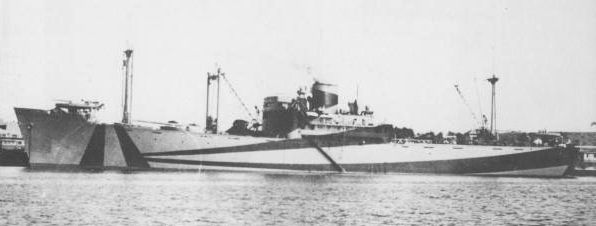 (Sagara Maru in 1942 camouflage)
IJN Seaplane Tender SAGARA MARU:
Tabular Record of Movement
© 1998-2018 Bob Hackett, Sander Kingsepp, Allan Alsleben and Peter Cundall
Revision 4
23 June 1939:
Yokohama. SAGARA MARU is laid down as a cargo liner by Mitsubishi Shipbuilding for the Nihon Yusen Co. (Japanese Mailboat Co.)
23 March 1940:
Launched and named SAGARA MARU.
12 November 1940:
Yokohama. Completed. SAGARA MARU is assigned to NYK's Seattle route.
11 September 1941:
Requisitioned by the Imperial Japanese Navy.
20 September 1941:
SAGARA MARU completes conversion and is attached to the Yokosuka Naval District as a converted seaplane tender. Recalled Captain Kohashi Yoshiaki (37) is the Commanding Officer.
SAGARA MARU’s aircraft complement is six Type 0 Mitsubishi F1M2 “Pete” two-seat float reconnaissance biplanes with two Type 95 Kawanishi E8N2 “Dave” two-seat float reconnaissance biplanes in reserve. Her aircraft code is “UVI-xx” and her call sign is JNPO.
1 October 1941:
Attached to Vice Admiral Ozawa Jisaburo's (37) (former CO of HARUNA) Southern Expeditionary Fleet.
31 October 1941:
Yokohama. At Mitsubishi's shipyard for installation of equipment.
22 November 1941:
At 1532 arives at Samah.
26 November 1941:
Departs Samah, Hainan Island.
5 December 1941: Operation “E” – The Invasion of Malaya:
Camranh Bay, Chochin China (Vietnam). SAGARA MARU is administratively attached to the Southern Area Fleet, 9th Base Force with light cruiser KASHII, but tactically attached to the 12th Seaplane Tender Division under Rear Admiral (later Vice Admiral) Imamura Osamu (40) (former CO of NOTORO).
At 0825
SAGARA MARU arrives abnd then operates off Pulau Condore.
6 December 1941:
Scheduled to make a rendezvous with the invasion convoy S of Cape Camau.
7 December 1941:
At 1322 departs Pulau Condore.
8 December 1941:
SAGARA MARU participates in the invasion of the Malay Peninsula. At 0727 arrives at Panjang and later that day at 1315 sails on to Ream. Arrives there at 1344.
9 December 1941:
At 1453 departs Ream.
10 December 1941:
At 1255 arrives at Singora. SAGARA MARU provides air cover for the landings at Bandon and Nakhorn, Siam (Thailand).
12 December 1941:
At 1254 departs Singora.
13 December 1941:
At 1413 arrives at Pulau Condore and departs later that day at 1939.
16 December 1941:
Arrives off Singora and Patani, Siam at night. SAGARA MARU provides air cover for the second invasion echelon.
19 December 1941:
At 1928 arrives at Singora.
27 December 1941:
Returns to Camranh Bay.
31 December 1942:
Departs Camranh.
8 January 1942:
Arrives off Patani. Provides air cover for the third invasion echelon.
9 January 1942:
Arrives off Singora. Provides air cover for the third invasion echelon.
13 January 1942:
At 1520 departs from Singora.
14 January 1942:
At 1921 arrives at Pulau Condore.
20 January 1942:
At 2346 departs Pulau Condore. Provides air cover with tender KAMIKAWA MARU for a convoy of 11 transports from Camranh Bay carrying troops of the IJA's 18th Infantry Division.
21 January 1942:
At 0700 arrives at St Jacques.
24 January 1942:
At 0803 departs St Jacques and later that day at 1118 arrives at Saigon, where bunkers.
25 January 1942:
At 0952 departs Saigon and later that day at 1309 arrives at St Jacques.
26 January 1942:
Operates an air patrol off the Anambas Islands.
27 January 1942:
At 1322 departs St Jacques.
28 January 1942:
At 1728 arrives at the Anambas Islands.
1 February 1942:
E of Malaya, Near Anambas Island. An F1M2 Pete from SAGARA MARU encounters two flying boats. The Pete’s pilot claims one flying boat as a probable.
9 February 1942:
At 0558 attacked in an air-raid while anchored at Anambas Island.
10 February 1942:
SAGARA MARU is attached to the 1st Southern Expeditionary Fleet. The code for her aircraft is changed to “O-xx.”
11 February 1942:
SAGARA MARU, as a unit of the Advance Force, departs Camranh Bay with other units of the 9th Base Force.
14 February 1942:
Bangka Island. SAGARA MARU anchors off Muntok and begins air operations.
16 February 1942:
SAGARA and KAMIKAWA MARUs leave a detachment of F1M2 scouts at Bangka Island to operate from Muntok.
Sumatra. Moesi River. In the late afternoon, two of SAGARA MARU's detachment of F1M2 Petes intercept Lockeed "Hudson" light bombers of the RAAF's 8 Squadron from Palembang over the IJN invasion ships. During their attack, one of the two Petes is shot down.
17 February 1942:
Both units return to Camranh Bay for replenishment.
22 February 1942:
At 0745 departs Anambas.
23 February 1942:
At 1046 arrives at Singora.
25 February 1942:
At 0850 departs Singora.
26 February 1942:
At 1820 arrives at Singapore. SAGARA MARU is camouflaged using captured British paint. Her hull is painted light gray. Two wide indigo blue stripes run almost horizontally from her bow to her stern with two other vertical stripes at her bow. The camouflage scheme is the result of an IJNAF experiment.
7 March 1942: Operation "T" - The Invasion of Northern Sumatra:
At 1250, SAGARA MARU and the main elements of the Northern Sumatra Invasion Force depart Seletar, Singapore and arrives at Batu Pahat later that day at 2129. This force consists of CHOKAI (flagship), CruDiv 7’s MOGAMI, MIKUMA, KUMANO and SUZUYA, DesDivs 11 and 12. The Invasion Force heads for the waters south of Great Nicobar Island.
8 March 1942:
At 0944 departs Batu Pahat.
9 March 1942:
At 1035 arrives at Penang.
10 March 1942:
Reassigned to the First Southern Expeditionary Fleet.
11 March 1942:
At 1150 departs Penang.
12 March 1942:
At 1555 arrives off Sabang. Provides air cover for troop landings at Sabang and Kutaradja, Sumatra.
14 March 1942:
At 1604 departs Sabang.
15 March 1942:
At 1905 arrives at Penang.
21 March 1942:
At 1400 departs Penang escorted by auxiliary subchaser SHONAN MARU No. 7 to support 1st Invasion convoy to Rangoon, Burma (U Sakusen).
23 March 1942: Operation “D” – The Seizure of the Andaman Islands.
SAGARA MARU provides air cover and operates E of the Nicobar's. At 1200 arrives at Port Blair. Refuels destroyer SHIOKAZE.
24 March 1942:
Andaman Islands. Assists in the construction of a seaplane base. Operates anti submarine patrols.
30 March 1942:
At 1755 departs Port Blair.
1 April 1942:
At 0935 drives at Penang.
4 April 1942:
At 1445 departs Penang escorted by auxiliary submarine chaser SHONAN MARU No. 7. Provides air support for the Burma operation.
7 April 1942:
At 0550 arrives at Middle Moscos Island and departs later that day at 1915.
9 April 1942:
At 1205 arrives at Penang.
18 April 1942:
Captain (Retired) Matsuhara Masata (35) (former CO of NOTORO) is posted as the Commanding Officer.
3 May 1942:
At Penang. Assists in the construction of a seaplane base.
5 May 1942:
At 1140 departs Penang.
6 May 1942:
At 1010 arrives at Sabang and departs later that day at 1345.
7 May 1942:
At 1630 arrives at Port Blair and departs later that day at 1945.
9 May 1942:
At 1425 arrives at Penang.
11-31 May 1942:
Undertakes anti submarine air patrols over Malacca Straits.
3 June 1942:
At 1950 departs Penang.
4 June 1942:
At 1855 arrives at Batu Pahat.
5 June 1942:
At 1050 departs Batu Pahat. At 1920 arrives at Seletar, Singapore.
13 June 1942:
At 1200 departs Seletar and drydocked at 1555. Hull painted.
25 June 1942:
At 1120 undocked. At 1445 arrives at Seletar.
26 June 1942:
Seletar Naval Base, Singapore. SAGARA MARU wears a “dazzle” type of camouflage.
1 July 1942:
At 0720 departs Singapore. Arrives off Jugra the same day at 2200.
2 July 1942:
At 0545 departs Jugra and later that day at 2010 arrives at Penang.
14 July 1942:
Assigned to the Malaya Area Fleet. SAGARA MARU’s aircrafts' tail code is changed to “UVII-xx”.
22 July 1942:
At 0000 departs Penang and later that day at 2305 arrives at Batu Pahat.
24 July 1942:
At 0840 departs Batu Pahat and later that day at 1620 arrives at Singapore. Loads 700-tons of heavy oil in preparation for operations.
29 July 1942:
At 0730 departs Singapore and later that day at 2225 arrives off Jugra.
30 July 1942:
At 0355 departs Jugra and later that day at 1930 arrives at Penang.
31 July 1942:
At 0155 departs Penang.
1 August 1942:
At 2010 arrives at Port Blair.
4 August 1942:
At 0855 departs Port Blair and later that day at 1804 arrives at Port Cornwallis.
7 August 1942:
Air-raid while at Port Cornwallis. Later that day at 2050 left the port.
8 August 1942:
At 1830 arrives at Mergui.
9 August 1942:
At 1950 departs Mergui.
11 August 1942:
At 0950 arrives at Penang.
12 August-1 September 1942:
Conducts anti submarine and convoy escort air patrols from Penang.
5 September 1942:
At 1925 departs Penang.
6 September 1942:
At 1856 arives at Malacca.
7 September 1942:
At 1620 departs Malacca and later that day at 2155 arrives at Jugra anchorage.
8 September 1942:
At 0750 departs Jugra anchorage and later that day at 0955 arrives at Port Swettenham.
9 September 1942:
At 0752 departs Port Swettenham and later that day at 1436 arrives at Lumut.
10 September 1942:
At 0943 departs Lumut and later that day at 1922 arrives at Penang.
12-14 September 1942:
Conducts anti submarine and convoy escort air patrols from Penang.
19 September 1942:
At 2355 departs Penang.
20 September 1942:
At 0855 arives at Lumut and departs later that day at 1518.
21 September 1942:
At 1655 arrives at Sabang.
23 September 1942:
At 1315 departs Sabang.
24 September 1942:
At 1311 arrives at Penang.
28 September 1942:
At 0144 departs Penang and later that day at 1000 arrives at Lumut.
1 October 1942:
At 0753 departs Lumut.
2 October 1942:
At 0125 arrives at Batu Pahat.
3 October 1942:
At 0350 departs Batu Pahat and later that day at 1740 arrives at Seletar, Singapore.
6 October 1942:
At 1650 departs Singapore.
7 October 1942:
At 2000 arrives at Palembang.
9 October 1942:
At 1534 departs Palembang.
11 October 1942:
At 1112 arrives at Seletar, Singapore.
12 October 1942:
At 1349 departs Singapore.
13 October 1942:
At 0357 arrives at Port Dickson.
14 October 1942:
At 1745 departs Port Dickson and later that day at 1837 arrives at Lumut.
14-16 October 1942:
Conducts anti submarine and convoy escort air patrols from Lumut.
16 October 1942:
At 0750 Departs Lumut and later that day at 1640 arrives at Penang.
23 October 1942:
At 0725 departs Penang and later that day at 1605 arrives at Lumut.
27 October 1942:
At 0745 departs Lumut and later that day at 1623 arrives at Penang.
30 October 1942:
At 2345 departs Penang.
31 October 1942:
At 0835 arrives at Lumut.
1 November 1942:
At 0812 departs Lumut and later that day at 2035 arrives at Penang.
November 1942:
SAGARA MARU's aircrafts' tail code is changed to “P1-xx.”
2 November 1942:
At 0649 departs Penang and later that day at 2000 arrives at Belawan.
6 November 1942:
At 1345 departs Belawan.
7 November 1942:
At 0945 arrives at Sabang.
8 November 1942:
At 1045 departs Sabang.
9 November 1942:
At 1307 arrives at Port Blair.
10 November 1942:
At 1350 departs Port Blair.
12 November 1942:
At 1035 arrives at Penang.
16 November 1942:
At 0915 departs Penang and later that day at 1752 arrives at Lumut.
16-20 November 1942:
Conducts anti submarine and convoy escort air patrols from Lumut.
20 November 1942:
At 1745 departs Lumut.
21 November 1942:
At 1623 arrives at Penang.
23 November 1942:
At 1150 departs Penang.
24 November 1942:
At 1630 arives at Keppel Harbour, Singapore.
29 November 1942:
At 0355 departs Singapore.
1 December 1942:
Rerated as a auxiliary fleet replenishment vessel (Tokusetsu Unsokan) and attached to the Navy Ministry Supply Force at Yokosuka. [1]
6 December 1942:
Arrives at Yokosuka. Loads part of an air defense unit.
11 December 1942:
Departs Yokosuka for Truk, Rabaul and Shortland.
17 December 1942:
Departs Truk.
20 December 1942:
Arrives at Rabaul. Then sails onto Shortland.
31 December 1942:
Arrives at Sasebo. Loads 1,073 men of the IJA’s 20th Infantry Division.
6 January 1943:
Departs Sasebo.
7 January 1943:
Arrives at Fusan (Pusan), Southern Korea.
9 January 1943: Operation “C” (HINOE-GO) – The Reinforcement of New Guinea:
SAGARA and SANUKI MARUs depart Fusan with Rear Admiral (later Vice Admiral) Kishi Fukuji's (40) flagship light cruisers KITAKAMI and OI. Their first transport echelon in operation "HEI No. 1" embarks the IJA's 20th Infantry division. KITAKAMI and OI both also embark troops. These ships sail separately from the others.
14 January 1943:
At 1030, arrive at Palau.
16 January 1943:
At 1600, depart Palau.
19 January 1943:
At 1530, arrive at Wewak, New Guinea. Disembarks troops.
20 January 1943:
Wewak. Attacked by four B-24's of the 90th Bomb Group, but they are driven off by A6M "Zekes" from JUNYO's fighter squadron flown into Wewak to provide close protection. Two B-24's are damaged. At 0200, SAGARA MARU and the convoy depart Wewak for Palau.
22 January 1943:
Arrives at Palau.
30 January 1943:
Captain (Retired) Kanda Yoshio (35) is posted as the Commanding Officer. Captain Matsuhara is posted to the Yokosuka Naval District.
31 January 1943:
Arrives at Tsingtao, China. Embarks the IJA’s 41st Infantry Division.
4 February 1943:
Departs Tsingtao with Transport group "HINOE-GO No. 3". The transport group is divided into four units with the 1st unit again consisting of SAGARA and SANUKI MARUs escorted by KITAKAMI and OI.
10 February 1943:
Arrives at Palau.
17 February 1943:
Departs Palau escorted by KITAKAMI and OI and destroyers YUGUMO and KAZAGUMO.
20 February 1943:
Arrives at Wewak. Disembarks troops.
21 February 1943:
Departs Wewak.
24 February 1943:
Arrives at Palau.
28 February 1943:
Departs Palau.
4 March 1943:
Arrives at Yokosuka.
11 March 1943:
Departs Yokosuka.
30 March 1943:
Arrives at Yokohama.
18 April 1943:
Sasebo Navy Yard. Completes the installation of equipment.
19 May 1943:
At 1130 departs Yokohama in convoy No. 7519A with Submarine tender HIE MARU escorted by patrol boat PB-101.
20 May 1943:
At 1330 arrives off Kobe where the convoy is dissolved.
26 May 1943:
Arrives at Shanghai.
28 May 1943:
Departs Shanghai.
30 May 1943:
Arrives at Sasebo.
2 June 1943:
Departs Sasebo.
6 June 1943:
Arrives at Shanghai.
11 June 1943:
Departs Shanghai.
14 June 1943:
Arrives at Kobe.
22 June 1943:
Departs Kobe for Yokosuka carrying raw cotton, and a total of 700-tons of sundry goods.
23 June 1943:
(USNA ’30) Off Mikomoto Island, SE of Cape Omae Zaki lighthouse, Honshu. Cdr (MOH posthumously) Samuel D. Dealey’s USS HARDER (SS-257) picks up a large ship on her SJ radar. Dealey makes a submerged approach. At 0350 (JST), while destroyer SAWAKAZE is escorting SAGARA MARU, Dealey attacks. As he closes to 2,500 yards, the SAGARA MARU opens fire on USS HARDER’s periscope. Dealey fires four torpedoes. SAGARA MARU attempts to evade them, but the first torpedo hits between her bow and bridge. SAGARA MARU is damaged severely and begins to drift. SAWAKAZE takes her in tow. Auxiliary netlayers MATSU and TATSU MARUs arrive to assist.
24 June 1943:
1.5 miles SW of Kaketsuka Light. SAGARA MARU is beached to avoid sinking at the estuary of the Tenryu River at 33-45N, 138-10E. Captain Kanda is among the survivors.
4 July 1943:
At 2200, LtCdr Willis M. Thomas' (USNA ’31) USS POMPANO (SS-181), in a night radar attack, torpedoes the beached SAGARA MARU. Thomas fires hits three torpedoes at her and gets two hits.
17 August 1943:
Captain (Ret) Kanda is officially relieved.
1 September 1943:
The hulk of SAGARA MARU is finally abandoned as a total loss.
Removed from the Navy List that same day.
Authors' Note:
[1] Tokusetsu-unsokan was newly set up in 1939. Its main role was to supply naval vessels with fuel. If necessary, they transported personnel and war supplies.
Special thanks for assistance in developing this TROM go to Mr. Andrew Obluski of Poland, Mr. Gilbert Casse of France, Mr. Matthew Jones of USA and Mr. Jean-Francois Masson of Canada.
Thanks go to Toda Gengoro of Japan for information in Revision 1.
- Bob Hackett, Sander Kingsepp, Allan Alsleben and Peter Cundall.
Back to
Seaplane Tender Page

