SUIRAI-BOKAN!
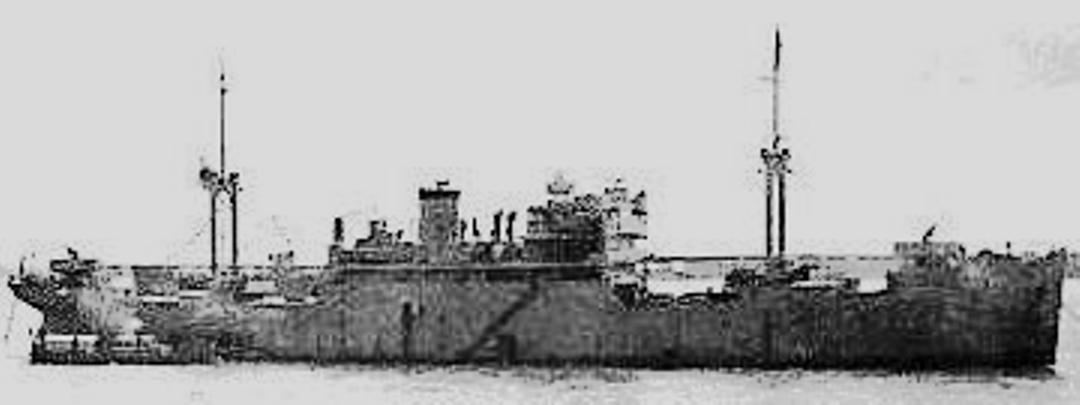 (NIPPONKAI MARU in war time)
IJN NIPPONKAI MARU:
Tabular
Record of Movement
© 2009-2018 Bob Hackett, Berend van der Wal and Peter Cundall.
Revision 6
6 October 1931:
Tamano. Laid down at Mitsui Shipbuilding as a 2,681-ton passenger/cargo ship for Shimatani Kisen K.K., Kobe.
28 March 1932:
Launched and named NIPPONKAI MARU. [1]
30 April 1932:
Completed. Placed in service on Shimatani Kisen’s Hokkaido - Korea route.
7 July 1937: The Marco Polo Bridge ("China") Incident:
Hun River. Lugouqiao, China. Japanese troops fire blank cartridges on night maneuvers at the bridge. Chinese troops fire back, but do not cause injuries. At morning roll call, the Japanese discover a soldier missing and assume the Chinese captured him. The Japanese demand entry to a Peking (Beijing) suburb to look for the soldier. The Chinese refuse. The Japanese shell the city and an undeclared war
on China begins.
22 July 1938:
Requisitioned by the IJN. Cdr Murayama Seiroku is appoined Commanding Officer.
25 July 1938:
Registered in the Sasebo Naval District as an auxiliary minesweeper tender.
1 August 1938:
At Sasebo, alongside second quay.
8 August 1938:
Supplied with heavy oil.
15 August 1938:
Attached to the Third Fleet. Departs Sasebo.
0955 ~ 1132 Deviation correction.
1223 ~ 1250 High angle gun trial.
1351 ~ 1405 Machine gun trial.
1405 ~ 1515 Torpedo towing drill.
At 1620, workers disembark.
1654 ~ 1704 Speed test.
1940 ~ 1950 Searchlight illumination drill.
16 August 1938:
Arrives at Nagasaki.
17 August 1938:
Departs Nagasaki.
19 August 1938:
Arrives at Shanghai, China. Departs later that day. Arrives of the coast of Tongzhou, (now Nantong) China. Departs later that day.
20 August 1938:
Arrives at Zhenjiang, Yangtze river, China.
21 August 1938:
Departs Zhenjiang. Arrives at Asahi navy pier, Nanking (now Nanjing), Yangtze river, China. Loads depth charges.
22 August 1938:
Loads minesweeping equipment and embarks 126 people. Departs Nanking. Arrives at Wuhu, Yangtze river, China later that day.
23 August 1938:
Departs Wuhu. At 0725, front and rear high angle gunery staff training. Each gun fires once. At 1332, hit by small arms fire on the port right side. At 1338, machine gun fire starts. At 1344 machine gun fire stops. At 1545, Subject to fire coming from port side 70 degrees ashore. At 1600, machine gun fire starts. At 1602, machine gun fire stops. At 1742 returned fire. At 1745, stopped firing. At 1801, received rifle fire from an enemy pillbox. At 1803 machine gun fire starts. At 1806 machine gun fire stops.
23 August 1938:
Arrives at Anqing, Yangtze river, China. 126 people disembark. Off loads consignment goods.
24 August 1938:
At 0605, in port SHUNZAN MARU No. 2 comes alongside. Workers come on board. At 0632, SHUNZAN MARU No. 2 departs. At 0732, destroyer NAGATSUKI arrives. At 0820 NAGATSUKI commences action. At 0846, NAGATSUKI fires with machine guns at enemy soldiers. At 1022, IJN auxiliary transport MURO MARU starts firing. At 1100, attack commences. At 1111, attacks ends. At 1130, destroyer MINAZUKI returns. At 1209, rescues two army civilian employees from drowning. Later arrives at Jiujiang, Yangtze river, China. Workers leave the ship.
25 August 1938:
Anchors upstream of Jiujiang. At 1430, minelayer SHIRATAKA anchors nearby.
27 August 1938:
In port alongside storeship TOKO MARU loading fresh food.
30 August 1938:
Alongside storeship KOSOKU MARU No. 3 aft portside loading fresh food.
30 August 1938:
At anchor.
1530 ~ 1600 alongside RYOSEI MARU No. 2 loading fresh food. Thereafter at anchor.
1 September 1938:
Departs Jiujiang. Arrives later that day at Xinzhou, Yangtze river, China.
2 September 1938:
At 1445, alongside storeship TESHIO MARU starboard aft loading fresh food. At 1515, loading is completed.
4 September 1938:
At anchor.
5 September 1938:
Stil at anchor. At 1740, SHINYU MARU comes alongside to port aft. She departs at 1745.
6 September 1938:
Stil at anchor. At 1745, storeship AZUCHI MARU comes alongside to port aft and provisions fresh food. She departs at 1750.
7 September 1938:
Stil at anchor. Surface to air combat. At 1150, KASHIWA MARU comes alongside to port aft and transfers wounded. At 1205, transfer of wounded is completed.
8 September 1938:
Stil at anchor. At 1410, SHINYU MARU comes alongside to port centre. Loads food. At 1418, Loading food is completed.
9 September 1938:
Stil at anchor. At 1250, storeship TOKO MARU comes alongside and supplies fresh food. At 1315, supplying fresh food is completed.
11 September 1938:
At 1127, disposed of floating mines by shooting. At 1612, SHINYU MARU comes alongside to port centree and is provisioned with food. At 1616, provisioning is completed.
12 September 1938:
At 1030, torpedo boat HATO lies alongside port. Repaired damage. At 1635, storeship KOSOKU MARU No. 3 is alongside to starboard. At 1700, KOSOKU MARU No. 3 departs.
13 September 1938:
Stil at anchor. At 0800, HATO departs. At 1400, SHINYU MARU No. 1 is alongside to port. Provisoned with food. At 1410, SHINYU MARU No. 1 departs. At 1815, SHINYU MARU No. 3 is alongside to starboard. Provisoned with food. At 1830, SHINYU MARU No. 3 departs.
14 September 1938:
At 1000, TESHIO MARU is alongside to port and supplies fresh food. At 1040, supply is completed. At 1430, HARUYAMA MARU No. 2 is alongside to port aft. Loads miness. At 1507, loading of mines is completed. At 2030, embarked injured army personel and 11 patients.
15 September 1938:
Stil at anchor. At 0810, transported wounded army personel and 11 patients by daihatsu to Jiujiang. At 1742, started testing high angle guns. At 1810, testing ends.
16 September 1938:
Stil at anchor. At 1110, boards a junk.
17 September 1938:
Stil at anchor. At 1310, minelayer TOSHIMA is alongside to port. Start repairing her mizenmast. At 1545, repairs are completed. At 1550, auxiliary submarine chaser KIRI MARU No. 3 is alongside to starboard and delivers torpedoes. At 1818, delivery is completed. At 1607, air attack. The front high angle gun fires 3 shots. At 1610, the attack is over. At 1620, gunboat SETA is alongside to port and transfers casualties.
18 September 1938:
At 1325, SHINYU MARU is alongside to starboard aft. At 1330, she departs. At 1520, SHINYU MARU No. 1 is alongside to port aft and is provisoned with food. At 1525, provisioning is completed.
19 September 1938:
Stil at anchor. At 1540, SHINYU MARU No. 8 is alongside to starboard. Loading canteen goods and mail bags. At 1553, loading is completed.
20 September 1938:
At 0950, MURO MARU is alongside to starboard. The dead, wounded and sick are transferred.
21 September 1938:
Departs Xinzhou. Arrives at Mioyama later that day.
22 September 1938:
At 0745, gunboat FUTAMI lies alongside to port and loads coal. At 1045, coal loading is completed. At 0950, AZUCHI MARU is alongside to starboard and provisioned fresh food. At 1020, provisioning is completed. At 1105, supplied minelayer KUROSAKI with coal. At 1440, suppying coal is completed. At 1455, OMI MARU No. 8 is alongside to starboard. Loads minesweeping equipment. At 1715, loading minesweeping equipment is completed. At 1530, MITSU MARU is alongside to port. Off loads topedo equipment. At 1735, off loading is completed.
23 September 1938:
At 0740, minelayer TOSHIMA is alongside to port and supplied her with coal. At 1645 supplying coal is completed.
24 September 1938:
At 1345, TOKO MARU is alongside to port and supplies fresh food. At 1410, supplying fresh food is completed. At 1350, NISSHO MARU No. 6 is alongside to port. Transferred a gunbarrel for minelayer YAEYAMA. At 1730, completed transfer.
25 September 1938:
Departs Mioyama. Arrives at Shizi Shan, Nanking later that day.
26 September 1938:
At anchor. At 0710, KOSOKU MARU No. 3 is alongside to port and supplies fresh food. At 0725, supplying fresh food is completed. At 1140, YONEYAMA MARU is alongside to port and supplies fresh food. At 1430 supplying fresh food is completed.
27 September 1938:
At 0940, torpedoboat KIJI is alongside to port. Replaced 12 centimeter front and rear gun barrels. At 1835, gun barrel replacement is completed.
28 September 1938:
Stil at anchor. At 1100, MITSU MARU is alongside to front port. Supplied with canteengoods. At 1130, supplying is completed. Departs Shizi Shan. Arrives at Takeana later that day. Returns to Shizi Shan later that day.
29 September 1938:
At 0850, YAEYAMA is alongside to port. Replaced main gun. At 1305, stopped replacing main gun. At 1410, YAEYAMA is alongside to starboard. Replacement of main gun continues. At 1640, replacement of main gun is completed. At 1420, MITSU MARU is alongside to starboard aft. Supplies clothing. At 1445, supplying clothing is completed. Departs Shizi and arrives at Takeana later that day.
30 September 1938:
At 0910, til 0912 SHINYU MARU No. 1 is alongside to port. Received docments. At 1255, storeship HOKKAI MARU is alongside to port aft and supplies food. At 1325, supplyinng food is completed.
1 October 1938:
Stil at anchor.
2 October 1938:
Departs Takeana and arrives at Shizi mountain later that day. At 1110, second class detroyer HASU is alongside to port and retroffited gun barrel. At 1615, retrofitting gun barrel is completed. At 1130, MURO MARU transfers ashes of the dead and war wounded. Departs Shizi mountain and arrives at Takeana later that day.
3 October 1938:
At anchor. The Twelfth Gunboat Force transfers two dead and three war wounded persons. At 1350, TESHIO MARU is alongside to port and supplies drinking water and rations. At 1435, supplying is completed. At 1925, TESHIO MARU is alongside to port. The original barrel of YAEYAMA is transferred to her.
4 October 1938:
From 0835 til 0838 SHINYU MARU No. 1 is alongside to port. Received mail bags. Departs Takeana and arrives at Satogyoyama later that day. At 1045, TESHIO MARU is alongside to starboard and supplies fresh food and transfers 14 army wounded. At 1200, supplying and transfer of wounded is completed. From 1310 til 1520, embarked 21 army war wounded.
5 October 1938:
At 0735, MITSU MARU is alongside to port and is equipped with minesweeping equipment. At 0850, Equipping is completed. From 0900 til 0912, disposed of floating mines by shooting. Departs Satogyoyama and arrives at Shizi Shan later that day. At 1000, MURO MARU is alongside to starboard and transfers 38 wounded people. Departs Shizi Shan and arrives at Satogyoyama later that day. Departs Satogyoyama and arrives at Takeana later that day.
6 October 1938:
Departs Takeana and arrives at Fang Niu Tang later that day. At 1425 SHUNZAN MARU No. 2 is alongside to port and is equipped with a gun barrel. At 1648 equipping is completed. Departs Fang Niu Tang and arrives at Tianjiazhen later that day.
7 October 1938:
At anchor. At 1045, KOAN MARU (895 GRT) is alongside to starboard and supplies water. At 1150, supplying is completed. At 1055, HATO is alongside to port for barrel retrofit. At 1448, barrel retrofit is completed.
8 October 1938:
Departs Tianjiazhen. At 1442, Gun training. How to start firing front high angle gun. At 1444, how to start firing machine gun. At 1445, how to stop firing. Until 1500, how to recognize enemy soldiers on a rocky shore and to fire at them with the high angle gun. At 1508, How to stop firing. At 1008, arrives at Qichun At 1622, start hitting enemy land by firing high angle gun sideways. At 1626, stopped firing. At 1640, starts hitting enemy soldiers on the left bank. At 1649, stopped firing. At 1900, 1 dead and 4 wounded from the twelfth gun boat group are transferred. At 1910, started hitting enemy soldiers on the Long Mountain Foothills. At 1920, stopped firing.
9 October 1938:
At 0815, MITSU MARU is alongside to port aft and supplies cedar planks. At 0845, supplying is completed. At 1145, SHINYU MARU No. 3 is alongsideto port and supplies ammunition. At 1245, supplying is completed. At 1320, AZUCHI MARU is alongside to port and supplies fresh food. At 1505 supplying is completed. At 1735, SHINYU MARU No. 3 is alongside to port and is equipped with minesweeping equipment.
10 October 1938:
At 1558, anti submarine netlayer DAIKOKUTEN MARU is alongside to port and transfers the original gun barrel of HATO. At 1630, transfer is completed. At 1640, general servivce ship KAWASEMI MARU is alongside to port for wounded transfer. At 1700, transfer is completed. At 1705, SHINYU MARU No. 1 is alonside to port and loads the main anchor for second class destroyer HASU. Departs Qichun. At 1755, started firing with front cannon at enemy soldiers in volcanic foothills. At 1759, stopped firing. At 1801, started firing again. At 1802, stopped firing. Started firing with aft cannon. At 1805, stopped firing. Arrives at Hou Er Ji.
11 October 1938:
0850 ~ 1500 Torpedoboat HIYODORI is alongside to port for barrel retrofit.
0900 Delivered main anchor to second class destroyer HASU.
1158 Started firing with high angle gun at enemy remnants in Hou Er Ji.
1202 Stopped firing.
1648 ~ 1655 TOKO MARU is alongside to port and supplies fresh food.
12 October 1938:
0845 ~ 1410 Torpedoboat KASASAGI is alongside to port for barrel retrofit.
1422 ~ 1426 SHINYU MARU No. 8 is alongside to port.
13 October 1938:
Departs Hou Er Ji and arrives at Qichun later that day.
1057 ~ 1450 Torpedoboat OTORI is alongside to port for barrel retrofit.
14 October 1938:
1015 ~1455 Torpedoboat HAYABUSA is alongside to port for barrel retrofit.
1530 ~ 1845 HAKUAI MARU is alongside to port and loads a gun barrel. Supplied minelayer SHIRATAKA and second class destroyer KURI with water.
16 October 1938:
0735 ~ 0810 Storeship CHOKO MARU is alongside to port and supplies fresh food.
18 October 1938:
0825 ~ 0850 MITSU MARU is alongside portside aft and delivers mail bags and sundries.
1410 ~ 1425 anchors on opposite shore to fetch firewood.
1710 ~ 1715 returns to original anchorage.
19 October 1938:
Departs Qichun. Arrives at Mao Ji Gang later that day.
20 October 1938:
0800 ~ 0830 MITSURU MARU is alongside portside aft and is equipped with mines.
1220 ~ 1230 SHINYU MARU No. ? is alongside to port and is provisioned with canteen goods.
Departs Mao Ji Gang.
1615 ~ 1640 SHINYU MARU No. 8 is alongside to starboard and is provisioned with canteen goods.
Arrives at Huangshi later that day.
21 October 1938:
Storeship TESHIO MARU is alongside to port and provisions fresh food.
22 October 1938:
1140 ~ 1155 Patrol boat FUKUJU MARU No. 2 is alongside to port and is supplied with oil.
Departs Huangshi and arrives at Echeng later that day and anchors.
1545 ~ 1640 Patrol boat FUKUJU MARU No. 2 is alongside to port and offloads empty barrels.
23 October 1938:
1145 ~ 1212 Storeship KOSOKU MARU No. 3 is alonside to port and provisiones fresh food.
25 October 1938:
0805 ~ 0930 Minelayer KUROSAKI is alongside to port for recovery of the old 8 cm cannon.
Departs Echeng later that day and arrives at Fan Jia Wan.
1630 ~ 1635 SHINYU MARU No. 1 is alongside to port and is provisioned with canteen goods.
26 October 1938:
Departs Fan Jia Wan.
1142 ~ 1150 KASHIWA MARU is alongside to port, towing a launch.
Arrives at Hankou.
27 October 1938:
0825 ~ 1600 HIDAKA MARU is alongside to port aft and is equipped with mines.
28 October 1938:
At anchor.
29 October 1938:
Departs Hankou and arrives at Wuchang, Wuhan later that day.
1550 ~ 1600 Auxiliary gunboat SHOTOKU MARU is alongside and loads nautical ordnance.
30 October 1938:
Departs Wuchang and arrivesd at Guangkou. Departs Guangkou and returns to Wuchang later that day.
31 October 1938:
SHINYU MARU No. 1 is alongside to starboard and is provisioned with canteen goods.
1 November 1938:
Harbor service ship SUMIYOSHI MARU is alongside to port and disembarks workers. Departs Wuchang and arrives at Hankou later that day.
1710 ~ 1756 storeship HOKKAI MARU is alongside to port and provisions fresh food.
1805 ~ 1850 auxiliary minesweeper YOSHITOMO (RYOYU) MARU No. 11 is alongside to port.
4 November 1938:
Departs Hankou and arrives at Tuan Feng Shuidao later that day.
5 November 1938:
From 0715 - 0735 alongside supply ship CHICHIBU MARU that provides fresh food.
6 November 1938:
1450 ~ 1550 Torpedo boat KASASAGI is alongside to port and transfers 50 pairs of minesweeping ordnance.
2000 ~ 2015 TATSUHASHI MARU No. 1 alongside aft and receives a filtration machine.
7 November 1938:
1505 ~ 1535 Storeship TESHIO MARU is alongside to port and provisiones food.
8 November 1938:
At anchor. 1405 ~ 1625 Auxiliary gunboat SHOTOKU MARU is alongside to port and receives minesweeping ordnance.
9 November 1938:
Departs Tuan Feng Shuidao and arrives at Fu Xi An later that day.
12 November 1938:
Storeship KOSOKU MARU No. 3 is alongside to port aft and provisiones fresh food.
13 November 1938:
Departs Fu Xi An.
At 1143, started firing at mines of Hu Guanzhou At 1148, stopped firing. At 1200, started firing at mines of Hu Guangzhou. At 1203 stopped firing. Arrives at Yang Luo later that day.
14 November 1938:
Departs Yang Luo and arrives at Hankou later that day.
15 November 1938:
At anchor. 1450 ~ 1720 provisioned with food.
16 November 1938:
At 1630, SHINYU MARU No. 8 is alongside to port and is supplied with minesweeping ordnance. Departs Hankou and arrives at Guijia Zhou later that day.
17 November 1938:
Departs Guijia Zhou and arrives at Yang Luo later that day.
18 November 1938:
Departs Yang Luo and arrives at Bai Hu Shan later that day.
19 November 1938:
Departs Bai Hu Shan and arrives at Ni Ji.
1710 ~ 1755 Auxiliary patrol boat CHOSHU MARU No. 1 is alongside to port and is provisioned with fresh food.
1850 ~ 1930 Storeship HOKKAI MARU is alongside to port and provisions fresh food.
20 November 1938:
Departs Ni Ji and arrives at Huangzhou later that day.
21 November 1938:
Alongside a lighter portside and loads explosives. Departs Huangzhou and arrives at Longwang Ji.
22 November 1938:
0830 ~ 0847 Storeship KOSOKU MARU No. 3 is alongside to port aft and provisions fresh food. Departs at Longwang Ji and arrives at Hongshi Ji later that day.
23 November 1938:
0825 ~ 0920 Minelayer KUROSAKI is alongside to port and transfers minesweeping ordnance.
Departs Hongshi Ji and arrives at Xingang.
1325 Auxiliary patrol boat CHOSHU MARU No. 1 is alongside port aft and is provisioned with sundries. Departs Xingang and arrives at Shihui Ku.
24 November 1938:
At 0810, repairs of Shohatsu barge undertaken .
25 November 1938:
1110 ~ 125 General cargo ship KITAMI MARU is alongside to port aft and is provisioned with fresh food and water.
1312 ~ 1500 Minelayer SHIRATAKA is alongside to port and transfers minesweeping ordnance.
Departs Shihui Ku and arrives at Qichun later that day.
1815 ~ 1900 KASHIWA MARU is alongside to port and transfers weapons.
26 November 1938:
Departs Qichun and arrives at Jiujiang later that day.
1750 ~ 1840 Minelayers KUROSAKI and TOSHIMA are alongside to port and transfer weapons.
27 November 1938:
1400 ~ 1415 Auxiliary gunboat MEIJI MARU No. 1 GO is alongside to starboard.
1500 MEIJI MARU No. 1 GO is alongside to port.
1523 ~ 1540 YAMADA MARU is alongside starboard aft, received engine supplies.
28 November 1938:
0730 ~ 0809 Minelayer TOSHIMA receives a machine gun.
0845 ~ 0935 Minelayer KUROSAKI alongside to port and receives a machine gun.
1010 ~ 1042 Auxiliary oiler SHOYO MARU is alongside to port aft and supplies light oil.
12 15 ~ 1230 Storeship TESHIO MARU is alongside to port and provisions fresh food.
1255 ~ 1540 KOSEI MARU is alongside and provisions canteen goods. (not storeship).
1425 ~ 1545 Minelayer ITSUKUSHIMA equipped with weapons.
1650 ~ 1815 Anti submarine netlayer DAIKOKUTEN MARU is alongside to port and supplies coal.
29 November 1938:
Departs Jiuijiang and arrives at Hui Feng Ji later that day.
30 November 1938:
Departs Hui Feng Ji and arrives at Hankou later that day.
1 December 1938:
1150 ~ 1230 TAKA MARU and minelayer TOSHIMA are alongside to port aft and load a machine gun.
1645 ~ 1912 Storeship TESHIO MARU is alongside to port and provisions frozen meat.
1800 ~ 1927 Auxiliary submarine chaser EBISU MARU alongside to starboard and is equipped with 3 barrels.
3 December 1938:
1040 ~ 1215 TOKO MARU alongside to port and provisons fresh food.
5 December 1938:
0830 ~ 1215 SAGA MARU is alongside to port and is replenished with water.
7 December 1938:
At 1730, receives picket (?) boats from KASEI .
8 December 1938:
At 1835, completes picket boat repairs from KASEI.
13 December 1938:
1830 ~ 1855 Alongside a lighter on starboard aft and loads canteen goods.
15 December 1938:
At 0915 ~ 1730 Painted ship on the inside and outside. Captain (later Vice-Admiral) Mori Kunizo (40)(former CO of SATA) is appointed Commanding Officer. Concurrently, he is appointed CO of the 13th gunboat division (hoteitai).
16 December 1938:
At anchor.
0930 ~ 1230 Paints ship on the inside and outside.
1045 ~ 1112 A lighter is alongside to starboard and provisions food.
17 December 1938:
0920 ~ 1720 Paints ship on the inside and outside.
18 December 1938:
At 0730, the crew of gun boat No. 12 disembarks.
0915 ~ 1230 Paints ship on the outside.
21 December 1938:
1100 ~1715 KOSAI alongside to starboard and equiped with mines.
1110 ~ 1135 Lighter alongside to starboard and loads canteen goods.
1840 ~ 1846 Lighter alongside to starboard and loads rice cake for New Year.
22 December 1938:
At 1130 KOSAI alongside to starboard aft.
1320 ~ 1400 Lighter alongside to port and loads food.
23 December 1938:
At 0900 KOSAI departs.
24 December 1938:
At 1515 a lighter is alongside starboard aft and transfers mines.
25 December 1938:
1040 ~ 1425 auxiliary submarine chaser EBISU MARU is alongside to starboard.
At 1745, EBISU MARU is alongside to port.
28 December 1938:
At 0900 EBISU MARU departs.
At 1610, a storeship is alongside to starboard and provisions with fresh food.
29 December 1938:
At 1620, a lighter is alongside to starboard and transfers mines.
30 December 1938:
1500 ~ 1525 a lighter is alongside to starboard and supplies winter clothing.
3 January 1939:
0915 ~ 0930 A lighter is alongside to port and transfers tatami mats.
5 January 1939:
1648 ~ 1930 KOSAI is alongside to port.
7 January 1939:
1500 ~ 1535 A lighter is alongside to port and supplies food.
1555 ~ 1610 OSU MARU No. 6 is alongside to starboard and supplies 100 tatami mats and disembarks thirteen gunboat force transferee.
8 January 1939:
1615 ~ 1655 A lighter is alongside to port and loads Financial Division food.
9 January 1939:
0925 ~ 0940 A lighter is alongside to starboard and receives mines for KUROSHIMA, KATOKU and SHINKO MARU (ex Chinese HSIN HOONG HSING).
11 January 1939:
0810 ~ 0855 TENKO MARU is alongside to starboard and transfers mines.
At 1848, EBISU MARU is alongside to port aft.
13 January 1939:
At 0945, EBISU MARU is alongside to starboard aft.
14 January 1939:
At 1240, Received mail from water vessel Yori.
18 January 1939:
1143 ~ 1205 Loads canteen goods.
19 January 1939:
0925 ~ 1405 Army unit collier alongside to starboard fore, loads coal.
22 January 1939:
0825 ~ 0900 A lighter is alongside to starboard and transfers mines.
1637 ~ 1645 A lighter is alongside to port and supplies rations.
24 January 1939:
0920 ~ 0935 A lighter is alongside to port aft and loads mines.
25 January 1939:
1450 ~ 1530 A lighter is alongside to starboard aft and loads rations for officers room.
26 January 1939:
1830 ~ 1835 A lighter is alongside staboard aft and loads mines.
28 January 1939:
1700 ~ 1710 A lighter is alongside to starboard and receives 1 urn of remains.
30 January 1939:
1201 ~ 1207 Aircombat training.
2 February 1939:
0956 ~ 1045 CHOSHU MARU is alongside to starboard fore, received uniforms.
1525 ~ 1555 A food ship is alongside to port aft and supplies food.
5 February 1939:
At 0140, strong winds caused a transfer shift from port to starboard.
8 February 1939:
0820 ~ 0845 A lighter is alongside to port aft and loads minesweeping equipment.
1147 ~ 1157 A lighter is alongside to starboard and loadd canteen goods.
11 February 1939:
At 1445, KOKOW from Hankow comes alongside to starboard and transfers mail and sundries.
13 February 1939:
1230 ~ 1315 Army lighter is alongside and loads groceries.
15 February 1939:
0810 ~ 1110 SEIUN MARU is alonside to starboard aft and transfers depth charges.
17 February 1939:
1105 ~ 1115 A lighter is alongside to starboard and loads canteen goods.
18 February 1939:
At 0920, undertakes repairs on a Shohatsu barge.
At 1615, EBISU MARU is alongside to port aft.
At 1650, repairs on barge complete.
19 February 1939:
At 1930, EBISU MARU departs.
20 February 1939:
1600 ~ 1635 A lighter is alongside, receives uniforms.
23 February 1939:
1500 ~ 1507 A lighter is alongside to port and loads food.
25 February 1939:
0915 ~ 1215 A lighter is alongside to starboard and loads coal.
0915 ~ 1110 A lighter is alongside to starboard and loads petroleum.
At 1705, Transferred minesweeping equipment.
26 February 1939:
1530 ~ 1535 A lighter is alongside to starboard aft and loads sailing ssupplies
27 February 1939:
1320 ~ 1500 A lighter is alongside to starboard fore and transfers bullet proof plates of gunboat corps and minesweeping equipment.
1 March 1939:
NIPPONKAI MARU embarks the 1st group (dai-1 shotai) of six daihatsu and shohatsu barges. 1537 ~ 1547 Six daihatsus are alongside to port. Embarked the first platoon from the thirteenth gun boat corps.
1547 ~ 1640 A lighter is alongside to starboard.
2 March 1939:
At 1005 undertakes repairs of one armored Shohatsu barge.
4 March 1939:
At 1030, hoisted the eleventh squadron flagship flag. Anchored alongside Asahi pier. At 1400, transport MIDORI MARU is alongside to port. At 1610, the captain leaves the ship.
5 March 1939:
At 0840, the captain returns.
1110 ~ 1210 The captain leaves the ship.
1455 1800 The captain leaves the ship.
At 2035, the captain leaves the ship.
6 March 1939:
At 0850, the captain returns.
0915 ~ 1700 Painted the outboard hull.
At 1525, the captain leaves the ship.
7 March 1939:
At 0850, the captain returns. At 1035, MIDORI MARU departs.
1522 ~ 1648 The captain leaves the ship.
At 1935, the captain leaves the ship.
8 March 1939:
At 0855, the captain returns. At 0915, minelayer KUROSHIMA is alongside to port aft. At 1815, the captain leaves the ship.
9 March 1939:
At 0900, the captain returns.
1359 ~ 1430 The captain leaves the ship. At 1850, the captain leaves the ship.
10 March 1939:
At 0918, the captain returns. At 1930, the captain leaves the ship.
11 March 1939:
At 0855, the captain returns. At 1500, the captain leaves the ship.
12 March 1939:
At 0835, the captain returns. At 0935, KUROSHIMA departs. At 2025, the captain leaves the ship.
13 March 1939:
At 0815, the captain returns. At 1345, a lighter is alongside to port and received three captured mines.
1530 ~ 1600 Loads food.
1723 ~ 1752 The captain leaves the ship. At 2000, the captain leaves the ship.
14 March 1939:
At 0835, the captain returns. At 1835, the captain leaves the ship.
15 March 1939:
At 0853 the captain returns.
1120 ~ 1830 The captain leaves the ship. At 1945, the captain leaves the ship.
16 March 1939:
At 0940, the captain returns. At 0920, EBISU MARU is alongside to port.
1435 ~ 1500 Loads food.
1730 ~ 1030 The captain leaves the ship.
17 March 1939:
1622 ~ 150 The captain leaves the ship. At 1935, the captain leaves the ship.
18 March 1939:
At 0910, the captain returns. At 1550, the captain leaves the ship.
19 March 1939:
At 0910, the captain returns. At 1640, the captain leaves the ship.
20 March 1939:
At 0848, the captain returns. At 1720, the captain leaves the ship.
21 March 1939:
At 0837, the captains returns. At 1550, the captain leaves the ship.
22 March 1939:
1610 ~ 2243 The captain leaves the ship.
23 March 1939:
0705 ~ 1936 The captain leaves the ship. At 0900, EBISU MARU departs. At 2012, the captain leaves the ship.
24 March 1939:
At 0843, the captain returns.
1605 ~ 1725 The captain leaves the ship.
25 March 1939:
Departs Hankou and arrives at Longkou later that day.
26 March 1939:
Departs Longkou and arrives at Yuezhou later that day.
1536 ~ 1750 The captain leaves the ship.
2055 ~ 2105 Searchlight illumination training.
27 March 1939:
Departs Yuezhou and arrives at Chenglinji later that day.
1032 ~ 1110 The captain leaves the ship.
28 March 1939:
Departs Chenglinji. And arrives at Xindi. Departs Xindi and arrives at Puchow.
29 March 1939:
Departs Puchow and arrives at Asahi pier Hankou later that day. At 1742, the captain leaves the ship.
30 March 1939:
At 0655, the captain returns.
0845 ~ 0920 The captain leaves the ship.
1330 ~ 1455 The captain leaves the ship.
1501 ~ 1652 The captain leaves the ship.
At 1735, the captain leaves the ship.
31 March 1939:
At 0730, the captain leaves the ship. Departs Hankou and arrives at Wuxue later that day.
1 April 1939:
Cdr (later Rear Admiral) Itakura Tokushi (42)(former XO of OKINOSHIMA) assumes command. Departs Wuxue and arrives at Jiujiang later that day. The eleventh flagship mission is canceled. The flagship flag is transfered to the gunboat ATAKA.
2 April 1939:
Departs Jiujiang and arrives at Shihui Ku.
4 April 1939:
Departs Shihui Ku and arrives at Hankow.
5 April 1939:
1605 ~ 1645 A lighter is alongside to port aft, loads canteen goods.
6 April 1939:
1100 ~ 1137 A lighter is alongside to starboard aft and supplied mine carriers.
7 April 1939:
At 1100, repairs a Daihatsu barge propulsion system.
8 April 1939:
At 1525, loads a survey boat for repairs.
1650 ~ 1715 loads canteen goods.
11 April 1939:
1530 ~ 1535 A lighter is alongside to starboard and supplies fresh food.
12 April 1939:
1112 ~ 1135 A lighter is alongside to starboard fore and supplies tatami mats.
At 1823, Unloads a survey boat after repairs are completed.
15 April 1939:
Departs Hankow and arrives at Puchow. Departs Puchow and arrives at Longkou later that day.
16 April 1939:
Departs Longkou and arrives at Xindi later that day. Departs Xindi and arrives at Yuezhou later that day.
18 April 1939:
At 0945, HIKACHI MARU comes alongside.
19 April 1939:
At 1733, boards a junk.
21 April 1939:
At 0745, boards five junks. At 0755, boards five junks. At 0820, a daihatsu disposes of two floating mines.
0827 ~ 0842 A lighter is alongside to port. At 0830, boards two junks and a daihatsu disposes of two floating mines.
0940 ~ 1010 A lighter is alongside and transfers empty cans. At 1026, boards two junks. Thereafter at anchor. At 1330, boards a junk. At 1637, boards a junk.
22 April 1939:
At 0655, boards five junks. At 0825, boards three junks. At 1200, destroys a floating mine. At 1525, boards two junks. At 1630 boards two junks.
2222 ~ 2232 illuminates searchlight.
23 April 1939:
At 0847, boards two junks. At 1005, boards two junks. At 1245, boards four junks. At 1331, boards one junk.
1410 ~ 1440 A lighter is alongside to port and supplies food. At 1500, boards one junk.
24 April 1939:
At 0915, two boats with 10 soldiers depart for an upstream inspection. At 1230, boards three junks.
25 April 1939:
At 0805, boards two junks. At 0815, boards one junk. At 1315, navy wharf workers ship departs. At 1327, boards one junk.
1600 ~ 1725 auxiliary patrol boat JUMA MARU is alongside to starboard and loads food, clothing, and canteen goods. At 1630 navy wharf workers ship returns.
26 April 1939:
0720 ~ 0812 KIFUKU MARU is alongside and transfers minesweeping equipment. At 0905, boards one junk.
27 April 1939:
At 0703, boards two junks. At 1240, Army soldiers depart towards Junshan Mountain . At 1450, boards two junks. At 1550, TORA MARU lies alongside to starboard and loads fresh food. At 1600, boards three junks. At 1742, Army soldiers return.
28 April 1939:
At anchor. At 1245, Army soldiers depart towards Junshan Mountain. At 1655, boards two junks. At 1735, Army soldiers return.
29 April 1939:
At 1040, boards one junk.
30 April 1939:
At 0645 boards two junks. At 1235 boards three junks.
1843 ~ 1920 SUMIYOSHI MARU No. 5 GO lies alongside to starboard aft. Loads clothing, canteen goods and sundries. At 1850, boards five junks. At 1935, boards two junks.
2 May 1939:
At 0745 boards one junk.
2223 ~ 2240 A lighter is alongside and unloads mail.
3 May 1939:
RYOSEI MARU No. 2 is alongside to port aft.
4 May 1939:
Depart Yuezhou. At 1253, passes Longkou. At 1305 turns around. At 1315, alighter is alongside, loads food and sundries. At 1323, the lighter departs. Arrive at Puchow.
5 May 1939:
1605 ~ 1615 SUMA MARU is alongside to port aft.
7 May 1939:
At 1150, storeship No. 9 is alongside to starboard aft.
1700 ~ 1720 A lighter is alongside to port aft and loads food.
8 May 1939:
0640 ~ 0705 A lighter is alongside to port.
1051 ~ 1110 A lighter is alongside to starboard aft.
9 April 1939:
0852 ~ 1120 Army soldiers shooting training.
1750 ~ 1815 A lighter is alongside and loads general operation supplies.
10 May 1939:
Departs Puchow and arrives at Longkou later that day.
1725 ~ 2020 A lighter is alongside to port and loads frozen food.
11 May 1939:
0805 ~ 1810 a lighter is alongside to port rear and tansfers mail. At 1115, testfiring machine gun.
13 May 1939:
0209 ~ 0358 Searchlight illuminate the sky. Departs Longkou and arrives at Xindi later that day.
14 May 1939:
1650 ~ 1710 A lighter is alongside to starboard fore and loads canteen goods.
15 May 1939:
Departs Xindi and arrives at Ling Xiang Ji later that day. At 1615 Army Corps departs.
16 May 1939:
Departs Ling Xiang Ji and arrives at Chenglinji later that day.
1430 ~ 1715 Painted outside hull.
17 May 1939:
1200 ~ 1235 SUMA MARU is alongside to port and loads canteen goods.
1250 ~ 1308 SUMA MARU is alongside to port.
18 May 1939:
At 1732, SHINKO MARU is alongside to port aft.
19 May 1939:
At 0805, transfered rations to SHINKO MARU. At 0915, SHINKO MARU departs. Departs Chenglinji and arrives at Yeuzhou later that day.
1355 ~ 1400 RYOSEI MARU No. 2 is alongside to port aft.
20 May 1939:
At 0920, an army daihatsu arrives for repairs.
21 May 1939:
1645 ~ 1725 A lighter is alongside to starboard aft and loads food.
22 May 1939:
Departs Yuezhou and arrives at Hankou later that day.
23 May 1939:
At 0800, a lighter is alongside port aft and unloads mines.
24 May 1939:
0915 ~ 1030 loads department supplies.
25 May 1939:
At 1800, transferred the captains flag to the SHINKO MARU (ex Chinese HSIN HOONG HSING). Removed from the Sasebo Naval District general transport list under instruction No. 419. Rerated a general duty charter boat.
26 May 1939:
0920 ~ 1500 the SHINKO MARU (ex Chinese HSIN HOONG HSING) is alongside to port.
28 May 1939:
Departs Hankou and arrives at Jiujiang later that day.
29 May 1939:
Departs Jiujiang. At 0835, embarks four people from the thirteenth gunboat corps. At 1040, passes Madang. At 1101, embarks 11 people from auxiliary gunboat KIRI MARU No. 8. At 1436, passes Anqing. At 1820, passes Datong. Arrives at Digang later that day.
30 May 1939:
Departs Digang. At 0650, embarks 1 person from auxiliary gunboat SHINKO MARU. At 0828, embarks four people from second class destroyer TSUGA. At 0834, passes Wuhu. At 1230, 2 officers disembark. At 1245, passes Nanjing. At 1600, passes Zhenjiang. Arrives at Jiangyin later that day.
31 May 1939:
Departs Jiangyin. At 0625, passes Wushan. At 1015, passes Baimaoscha. At 1240, emergency anchoring at Wusongchong. Arrives at 21 – 22 buoy at Shanghai. At 1615, 151 people disembark.
June 1939:
Attached to the Egami Aircraft Corps fleet.
1 June 1939:
Loads water.
2 June 1939:
Loads canteen goods.
4 June 1939:
Departs Shanghai. At 1142, a tugboat starts towing. At 1310, arrives at buoy 2, Jiangnan Shipyard.
14 June 1939:
0900 ~ 1145 RYOYU (YOSHITOMO) MARU No. 13 is alongside to port aft, loads coal.
16 June 1939:
At 1130, received two cutters.
1320 ~ 1435 alongside a lighter, loads food.
17 June 1939:
Loads water and fuel for the Egami aircraft. Anchored at Jiangnan No. 1 buoy.
22 June 1939:
1000 ~ 1235 A lighter is alongside to starboard, loads maintenance department canteen goods.
1345 ~ 1443 A lighter is alongside to staboard, loads maintenance department goods.
1515 ~ 1610 A lighter is alongside to staboard, loads maintenance department goods.
23 June 1939:
1215 ~ 1310 Loads food.
26 June 1939:
1030 ~ 1245 A lighter is alongside to staboard aft, loads maintenance department goods.
1245 ~ 1510 A lighter is alongside to staboard aft, loads maintenance department goods.
27 June 1939:
Anchoring at Jiangnan pier. At 1400, loads water.
28 June 1939:
At 0945, alonside a lighter port aft, loads maintenance department goods. At 1050, received an Egami aircraft fleet launch. Departs Jiangnan. Arrives at Wusongchong later that day.
29 June 1939:
Departs Wusongchong and arrives at Dinghai later that day.
7 July 1939:
2343 ~ 0040 Searching with searchlight for sunken aircraft No. 18.
8 July 1939:
0105 ~ 0200 Illuminated searchlight.
0215 ~ 0305 Illuminated searchlight.
0332 ~ 0349 Illuminated searchlight.
At 0400, at Yingkou.
0415 ~ 0525 wreck of No. 18 airctraft discovered and hauled up.
9 July 1939:
0630 ~ 0955 KYUSHU MARU is alonside to port aft and loads bombs. At 0950, transfers aircraft No. 18 to KYUSHU MARU.
10 July 1939:
At 1510, boards five junks. At 1520, boards three junks.
11 July 1939:
At 1744, the starboard picket boat is lifted.
12 July 1939:
The anchor drags. At 1148, runs aground.
1456 ~ 1500 Daihatsu alongside to port. At 1805, torpedo boat HIYODORI takes the aft towing line. At 1825, torpedo boat KASASAGI takes the front towing line. At 1845, HIYODORI starts towing. At 1850, HIYODORI stops towing. At 1942, HIYODORI takes the aft towing line. At 2100, HIYODORI fires a towing line aft. At 2215, HIYODORI takes the towing line.
13 July 1939:
At 0535, Aft and front towing starts. At 0630, HIYODORI takes the aft towing line. At 0648, Hiyodori starts towing aft. At 0705, HIYODORI releases the aft line. At 0822, HIYODORI takes the aft line. At 0830, HIYODORI takes the aft towing line. At 0845, HIYODORI starts towing aft. At 0905, HIYODORI cuts the towing line.
1350 ~ 1511 Divers inspect the bottom. At 1723, HIYODORI takes the aft towing line. At 1820, HIYODORI starts towing. At 1830, HIYODORI stops towing and releases the towing line. At 1907, HIYODORI takes the aft towing line. At 1912, HIYODORI starts towing. At 1915, at Hanareshu. At 1920, HIYODORI drops a towing line. At 1922, HIYODORI drops the aft towing line.
14 July 1939:
1130 ~ 1305 Gunboat No. 202 is alongside to port. At 1338, boards three junks.
1454 ~ 1759 Gunboat No. 202 is alongside to port, received main anchor.
15 July 1939:
1535 ~ 1715 Daihatshu KI No. 17 is alongside to starboard.
1625 ~ 1813 SANKO MARU No. 6 is alongside to starboard. At 1939 boards five junks.
16 July 1939:
0915 ~ 0935 Daihatshu KI No. 17 is alongside to port.
18 July 1939:
1352 ~ 1415 A Daihatsu barge is alongside to starboard.
20 July 1939:
At 1305 SHUNZAN MARU No. 2 is alongside to starboard aft.
1320 ~ 1335 Loads rations.
1322 ~ 1458 Loads 30t water.
21 July 1939:
1640 ~ 1753 Daihatsu No. C66 is alongside to starboard.
23 July 1939:
0750 ~ 1112, uses a launch to unload two buoys for an aircraft.
0800 ~ 1055 loads two buoys on Dahaitsu No. C66.
At 1020, emabarks one person. Then departs Dinghai. Arrives at Yangtze River mouth later that day
24 July 1939:
Departs the Yangtze River mouth and arrives at buoy No. 89 at Shanghai later that day.
1250 ~ 1307 YASHIMA MARU is alongside to starboard aft. At 1450, embarks aircraft personnel.
25 July 1939:
1000 ~ 1145 Unloads Egami Air corps goods.
1215 ~ 1408 A watership is alongside to port aft, loads 69t water.
1500 ~ 1710 British water ship is alongside to port aft, loads water.
26 July 1939:
0845 ~ 0852 Lighter No. 62 is alongside to starboard.
0955 ~ 1054 Lighter No. 63 is alongside to starboard and unloads shells.
1155 ~ 1230 A lighter is alongside to starboard.
E 27 ~ 31 July 1939:
Regisered to the Sasebo Naval District and attached to the Third Fleet.
1 August 1939:
1538 ~ 1603 Egami corps launch alongside to starboard.
5 August 1939:
At 1350 transport ASUKA (ex-Chinese gunboat YUNG CHIEN) is alongside to starboard.
6 August 1939:
At 0715 ASUKA departs.
7 August 1939:
At 1015, loads the buoy and supplementary aircraft equipment in the aft hold. Harbor tug KUROSHIMA MARU assited with anchoring at No. 21, 22 buoy.
10 August 1939:
At 1906 embarked 59 people from the Egami corps.
11 August 1939:
At 0730, disembarked 59 people from the Egami corps.
15 August 1939:
1515 ~ 1615 Egami corps launch alongside to port.
18 August 1939:
0820 ~ 0828 Lighter No. 61 is alongside to starboard.
21 August 1939:
0715 ~ 0959 A water ship is alongside to mid starboard, loads water.
1059 ~ 1200 A water ship is alongside to starboard fore, loads water.
22 August 1939:
1110 ~ 1145 A storeship is alongside to port aft, loads food.
23 August 1939:
0825 ~ 1035 Army personnel conduct battle excersice.
1645 ~ 1655 Lighter No. 61 is alongside to starboard.
26 August 1939:
1100 ~ 1138 Lighter No. 61 is alongside to starboard, loads fuel.
28 August 1939:
Departs Shanghai and arrives at the Jiangnan Shipyard later that day.
11 September 1939:
1100 ~ 1125 A lighter is alongside to starboard, loads canteen goods.
1555 ~ 1603 Lighter No. 3 is alongside to starboard fore, loads canteen goods.
13 September 1939:
At 1017, steam launch I-2 is alongside to starboard.
19 September 1939:
Steam launch I-2 while alongside to starboard aft, loads a flight buoy.
20 September 1939:
1000 ~ 1155 Loads aircraft gasoline.
1215 ~1240 A lighter is alongside, loads canteen goods.
22 September 1939:
Received goods from an Egami corps aircraft and therafter from an army truck.
23 September 1939:
At 0855, embarked Egami aircraft crew. Departs Jiangnan and arrives at Sand Chong Liu later that day.
24 September 1939:
Departs Sand Chong Liu and arrives at Zhenjiang later that day.
25-26 September 1939:
Loads aircraft recovery [ships?] 1-3, 5, 9, 15 and 18.
27 September 1939:
1035 ~ 1045 Lighter No. 57 is alongside to port, loads fuel.
1305 ~ 1310 A lighter alongside to port.
28 September 1939:
1330 ~ 1358 Two daihatsu alongside to port.
29 September 1939:
1530 ~ 1555 Lighter No. 55 is alongside to port, loads fresh food.
1 October 1939:
0835 ~ 0854 Lighter No. 55 is alongside to port.
1440 ~ 1450 Lighter No. 12 is alongside to port.
3 October 1939:
0845 ~ 0858 Lighter No. 57 is alongside to port.
1415 ~ 1535 Lighter No. 55 is alongside to port.
5 October 1939:
1112 ~ 1115 Lighter No. 33 is alongside to port fore.
6 October 1939:
0753 ~ 0842 Lighter No. 43 is alongside to port aft, loads fresh food.
7 October 1939:
1014 ~ 1115 Lighter No. 57 is alongside to port, loads fresh food.
1507 ~ 1517 Lighter No. 52 is alongside to port aft, loads aviation fuel.
9 October 1939:
0713 ~ 0823 storeship ZUIHO MARU is alongside to mid port.
11 October 1939:
0815 ~ 0832 Lighter No. 51 is alongside to port.
1022 ~ 1055 Lighter No. 55 is alongside to port, loads aircraft trolleys.
1516 ~ 1550 Lighter No. 57 is alongside to port, loads groceries.
12 October 1939:
1215 ~ 1910 Lighter No. 53 is alongside to port.
13 October 1939:
0700 ~ 0720 GENEI MARU No. 1 is alongside to port.
14 October 1939:
0910 ~ 0945 Lighter No. 69 is alongside to port, unloads fresh food.
15 October 1939:
1620 ~ 1635 A lighter is alongside to port fore, loads one vehicle.
1638 ~ 1900 Lighter No. 53 is alongside to port, transfers fresh food.
17 October 1939:
0755 ~ 1022 Lighter TARUMI MARU is alongside to mid port, loads rations. Departs Zhenjiang and arrives at Nanjing later that day.
18 October 1939:
At anchor alongside Ataka pier.
1400 ~ 1500 Loads fresh food.
19 October 1939:
At 0645, Loads a car at bow of ship. Departs Nanjing and arrives at Quanglingsha light buoy later this day.
20 October 1939:
Departs at Quanglingsha light buoy and arrives at Anqing later that day.
1153 ~ 1155 Gunboat No. 403 is alongside to port aft.
22 October 1939:
1010 ~ 1240 Gunboat No. 403 is alongside to port aft. At 1050, anchoring a pontoon to stern.
23 October 1939:
1135 ~ 1143 Lighter No. 55 is alongside to port.
24 October 1939:
1315 ~ 1355 storeship HOKKAI MARU alongside to mid port, loads food.
26 October 1939:
0805 ~ 0850 Gunboat No. 404 is alongside to port aft and loads a damaged aircraft.
1740 ~ 1829 A lighter is alongside to starboard aft, loads shells.
27 October 1939:
1057 ~ 1110 An army lighter is alongside to starboard, liaison disembarks.
28 October 1939:
1450 ~ 1458 Lighter No. 30 is alongside to port.
29 October 1939:
0905 ~ 0910 Gunboat No. 413 is alongside to port.
1603 ~ 1640 Lighter No. 51 is alongside, loads canteen and consignment goods.
1740 ~ 1750 An army lighter is alongside to mid starboard and purchases canteen goods.
30 October 1939:
0845 ~ 0915 ZUIHO MARU is alongside to mid port, loads food.
2130 ~ 2135 Army KINRYO MARU is alongside.
31 October 1939:
1640 ~ 1652 HOKKAI MARU is alongside to port aft, loads food.
1656 ~ 1700 Lighter No. 51 is alongside to port.
15 November 1939:
Registered as an auxiliary torpedo boat tender attached to the Sasebo Naval District under instruction No. 852. Captain (Rear Admiral, posthumously Morino Sorokuro (40)(former XO of KONGO is appointed Commanding Officer. Departs for the Yangtze River with a fleet of gun boats.
E 16 ~ 30 November 1939:
Attached to the Thirteeenth Squadron of the Third Fleet.
1 December 1939:
Departs Jiangnan and arrives at 6, 7 buoy, Shanghai later that day.
2 December 1939:
At 1020, the Thirteenth Squadron commander arrives and the flagship flag is hoisted. At 1630, transport ASUKA is alongside to starboard. At 1800, the captain departs.
3 December 1939:
At 1000 the captain returns.
1207 ~ 1216 The captain departs for an inspection of general use ship KASASEMI.
4 December 1939:
1130 ~ 1215 Lighter No. 92 is alongside to port, loads rations. At 1815, the captain departs.
5 December 1939:
At 0900, the captain returns.
0900 ~ 0955 Lighter No. 109 is alongside to port, loads fuel.
At 1128, Lighter No. 93 is alongside to port, loads canteen goods.
1100 ~ 1242 The captain is not on board.
1350 ~ 1405 The captain is not on board.
1615 ~ 2250 The captain is not on board.
6 December 1939:
At 0950, transport ASUKA departs. Departs Shanghai and arrives at Liu Sha later that day.
1908 ~ 1925 Searchlight illumination training.
1930 ~ 2016 Gunboat No. 224 is alongside to port.
7 December 1939:
Departs Liu Sha and arrives at Kouan Shuidao later that day. Departs Kouan Shuidao later that day.
8 December 1939:
Arrives at Zhenjiang.
1900 ~ 1935 Searchlight illumination training.
9 December 1939:
0903 ~ 1150 The captain departs for a second gun boat corps patrol.
1410 ~ 1757 The captain departs for a land visit.
1900 ~ 1930 Searchlight illumination training.
10 December 1939:
At 0725, the captain departs to inspect Gao Deng.
11 December 1939:
1600 ~ 1615 Lighter No. 80 is alongside to starboard, unloads mail.
1900 ~ 1930 Searchlight illumination training.
12 December 1939:
At 1222 the captain returns.
1900 ~ 1935 Searchlight illumination training.
13 December 1939:
At 1330 the captain departs for auxiliary gunboat NISSHO MARU No. 12 inspection.
1530 ~ 1550 Army hospital ship MIZUHO MARU is alongside to starboard aft, loads food.
14 December 1939:
Departs Zhenjiang and arrives at Ataka pier, Nanjing later that day.
15 December 1939:
10000 ~ 1020 The captain departs for an inspection of minelayer NASAMI.
16 December 1939:
0957 ~ 1251 The captain is not on board. At 1840 the captain departs.
17 December 1939:
1159 ~ 1610 The captain is not on board.
1720 ~ 2200 The captain is not on board.
18 December 1939:
Nanking (Nanjing), China. Auxiliary gunboats TOSHO MARU and UNKAI MARU No. 10 come alongside NIPPONKAI MARU.
0830 ~ 0840 Lighter No. 102 is alongside to starboard aft, received new year’s pine decoration.
1305 ~ 1425 The captain departs for a inspection of auxiliary gun boats TOSHO MARU and UNKAI MARU No 10.
1500 ~ 1658 The captain is not on board.
19 December 1939:
0928 ~ 1225 The captain is not on board.
1330 ~ 1645 The captain is not on board.
20 December 1939:
1356 ~ 1634 The captain is not on board.
1625 ~ 1630 general transport BANSHU MARU No. 22 is alongside to starboard, loads food.
21 December 1939:
Departs Nanjing and arrives at Wuhu later that day.
1530 ~ 1830 The captain departs for an inspection of auxiliary gunboat DAIGEN MARU No. 7.
2350 ~ 0840 Gunboat No. 404 is alongside to starboard aft.
22 December 1939:
0438 ~ 0450 Searchlight illumination training.
0536 ~ 0542 Searchlight illumination training.
0600 ~ 0605 Searchlight illumination training.
1018 ~ 1200 The captain departs for a plannes site visit of the gun boat corps base.
Departs Wuhu and arrives at Nanjing later that day.
1900 ~ 1925 Searchlight illumination training.
23 December 1939:
0902 ~ 0925 The captain is not on board.
Departs Nanjing and arrives at Zhenjiang later that day.
1900 ~ 1945 Searchlight illumination training.
24 December 1939:
Departs Zhenjiang.
1555 ~ 1606 Lighter No. 108 is alongside to port, loads canteen goods.
Arrives at Jiangyin later that day.
25 December 1939:
1115 ~ 1215 HANNO MARU is alongside to starboard.
1316 ~ 1718 The captain departs for a visit to the Jiangyin Army Corps.
1738 ~ 1743 Lighter No. 100 is alongside to port rear, received mail.
26 December 1939:
Departs Jiangyin and arrives at Tiansheng later that day.
1900 ~ 1930 Searchlight illumination training.
27 December 1939:
1230 ~ 1235 Lighter No. 98 is alongside to port, received documents.
1909 ~ 1945 Searchlight illumination training.
28 December 1939:
Departs Tiansheng and arrives at Haimen waterway later that day.
1015 ~ 1020 KASHIWA MARU is alongside to port aft, received confidential documents.
1146 ~ 1235 Gunboat No. 224 is alongside to starboard.
1235 ~ 1850 The captain departs for a visit to auxiliary gunboat HOKOKU MARU.
1455 ~ 1500 Lighter no. 97 is alongside to port aft, received documents
29 December 1939:
Departs Haimen waterway and arrives at Wu Song later that day.
1217 ~ 1220 A lighter is alongside to port. At 1230, a gun boat is alongside to starboard, receives mail. Departs Wu Song and arrives at Wu Song Fujin later that day. At 1600, takes a rope from a crashed aircraft (J-BJAO air number). At 1710, using a derrick, lifting and recovery of the aircraft begins. At 1715, assisted by ASAKAWA MARU. At 1730, the crashed aircraft is loaded onto gunboat No. 206. At 1746, loading is completed. At 1749, gunboaT No. 206 casts off. Then departs Wu Song Fujin and arrives at Cezi Shuidao later that day.
30 December 1939:
Departs Cezi Shuidao and arrives at Dinghai later that day.
1347 ~ 1710 The captain departs for an inspection of the Zhoushan Island Base Corps.
1355 ~ 1558 Army Corps attacks.
1915 ~ 1920 The captain is not on board.
31 December 1939:
0805 ~ 1330 The captain is not on board.
0858 ~ 1155 Army Corps attacks.
4 November 1940:
Docks.
12 November 1940:
Leaves the dock.
1 May 1941:
Arrives at central China coast.
1 July 1941:
Captain (Rear Admiral, posthumously) Nakatsu Seiki (44)(former XO of FUSO is appointed Commanding Officer.
27 November 1941:
Reassigned to the China Area Fleet’s Shanghai Area Base Force.
28 November 1941:
Captain Ento Jitsu is appointed Commanding Officer.
5 December 1941:
Attached to the China Area Fleet’s Shanghai Fifth Attack Force.
10 December 1941:
Attached to the China Area Fleet’s Shanghai area Base Force.
13 December 1941:
Attached to the China Area Fleet’s Shanghai Sixth Attack Force.
21 December 1941:
Departs Woosung escorting a convoy consisting of MADRAS and SHINYU MARUs bound for Mako and KAINAN MARU bound for Canton.
20 January 1942:
Detached from the China Area Fleet’s Shanghai Sixth Attack Force under Shanghai District Force instruction No. 171 and attached to North China Force South Patrol Force.
24 January 1942:
Departs Shanghai for Seito (Tsingtao).
26 January 1942:
Arrives at Seito.
5 February 1942:
Departs Seito and arrives at Shijiusuo later that day.
6 February 1942:
Departs Shijiusuo and arrives at Lianyungang later that day.
8 February 1942:
Departs Lianyungang and arrives in the Phan estuary later that day.
9 February 1942:
Departs the Phan estuary.
10 February 1942:
Arrives at Seito.
15 February 1942:
Reassigned to the Third Expeditionary Fleet, China Area Fleet.
17 February 1942:
Departs Seito and arrives at Shidao later that day.
19 February 1942:
Departs Shidao and arrives at Weihai Wei later that day.
21 February 1942:
Departs Weihai Wei and arrives at Zhifu later that day.
22 February 1942:
Departs Zhifu and arrives at Longkou later that day.
23 February 1942:
Departs Longkou.
24 February 1942:
Arrives at Dagu. Departs later that day.
26 February 1942:
Arrives at Seito.
7 March 1942:
Departs Seito.
8 March 1942:
Arrives at Shidao. Departs later that day and arrives at Weihai Wei later that day.
12 March 1942:
Departs Weihai Wei and arrives at Zhifu later that day.
13 March 1942:
Departs Zhifu.
14 March 1942:
Arrives at Seito.
22 March 1942:
Departs Seito.
23 March 1942:
Arrives at Zhifu.
24 March 1942:
Departs Zhifu and arrives at Weihai Wei later that day.
30 March 1942:
Departs Weihai Wei and arrives at Zhifu later that day. Departs Zhifu later that day.
31 March 1942:
Arrives at Shidao.
E 1 April 1942:
Departs Shidao.
April 1942:
For security of Seito acts as guardship for Seito waterways and coastal bases.
2 April 1942:
Arrives at Seito.
10 April 1942:
Reassigned to the China Area Fleet’s Qingdao (Tsingtao) Area Special Base Force.
11 April 1942:
Departs Seito.
27 April 1942:
Arrives at Seito.
5 May 1942:
Departs Seito.
15 July 1942:
Arrives at Seito.
26 July 1942:
Departs Seito.
7 August 1942:
Captain (Rear Admiral, posthumously) Nakamaruo Yoshizo (36) (former CO of HOYO MARU) is appointed Commanding Officer.
18 September 1942:
Arrives at Seito.
16 October 1942:
Departs Seito.
7 December 1942:
Arrives at Seito.
20 December 1942:
Departs Seito.
23 December 1942:
Arrives at Seito.
16 January 1943:
Departs Seito.
20 January 1943:
Arrives at Kure.
24 January 1943:
Departs Kure.
12 February 1943:
Arrives at Seito.
16 February 1943:
Departs Seito.
23 February 1943:
Arrives at Seito.
1 March 1943:
Departs Seito.
24 March 1943:
Arrives at Seito.
28 March 1943:
Departs Seito.
7 April 1943:
Arrives at Seito.
21 April 1943:
Departs Seito.
30 April 1943:
Arrives at Seito.
6 May 1943:
Departs Seito.
16 May 1943:
Arrives at Seito.
20 May 1943:
Departs Seito.
29 June 1943:
Arrives at Seito.
5 July 1943:
Departs Seito.
16 July 1943:
Arrives at Seito.
27 July 1943:
Departs Seito.
7 August 1943:
An unknown officer assumes command.
17 August 1943:
Arrives at Ryojun (Lushun/Port Arthur).
19 August 1943:
Departs Ryojun as North China waters' guardship.
28 September 1943:
Scheduled for conversion to an auxiliary transport under instruction No. 4917.
1 October 1943:
An unknown officer is appointed Commanding Officer. Re-classified as a Tokusetsu Unsosen (Zatsuyosen) (auxiliary transport) (charter) in the Sasebo Naval District. Attached to the Sasebo Naval District as a special transport, Otsu category. [2]
16 October 1943:
As a result of a merger, ownership is changed to Mitsui Sempaku.
20 October 1943:
The conversion to transport decree is issued.
25 October 1943:
Arrives at Sasebo where Naval items are offloaded and officially receipted.
30 October 1943:
Departs Sasebo. Arrives at Sakito.
1 November 1943:
Departs Sakito.
3 November 1943:
Arrives at Kobe.
5 November 1943:
Departs Kobe.
7 November 1943:
Arrives at Yokosuka.
13 November 1943:
Departs Yokosuka.
16 November 1943:
Arrives at Sasebo.
19 November 1943:
NIPPONKAI MARU departs Sasebo with KOTO MARU (No. 2 GO) and auxiliary gunboat CHOHAKUSAN MARU and joins convoy No. 115 also consisting of ore carrier GYOKUREI and transport LONDON MARUs, tankers OGURA MARU No. 1 and KOTO MARU No. 2 GO and three unidentified ships. Soon after leaving, CHOHAKUSAN MARU suffers engine problems and returns to port leaving the convoy unescorted.
24 November 1943:
At 0400, GYOKUREI MARU is detached for Kirun, Formosa (Keelung, Taiwan) at 26-0N, 120-10E and KOTO MARU No. 2 GO is detached for Hong Kong.
26 November 1943:
Arrives at Takao, Formosa.
28 November 1943:
At 1700, NIPPONKAI MARU departs Takao in convoy No. 780 consisting of BIZEN, CHIYO, KINSHU, NICHIWA, NORWAY, RYUYO, RYUUN, TOSEI and YAMAHAGI MARUs and tankers SAN DIEGO MARU and OGURA MARU No. 1 and unidentified merchant ships escorted by destroyer FUYO and kaibokan KANJU.
3 December 1943:
At 1400, arrives Manila.
10 December 1943:
Departs Manila.
12 December 1943:
Arrives at Cebu.
15 December 1943:
Departs Cebu.
17 December 1943:
Arrives at Davao.
26 December 1943:
Patrol boat PB-2 departs Balikpapan, Borneo escorting convoy No. 2614 consisting of tanker OGURA MARU No. 3.
29 December 1943:
Departs Davao.
30 December 1943:
At 0740, NIPPONKAI MARU joins the convoy.
31 December 1943:
At 1800, subchaser CH-33 also joins convoy No. 2614 at sea.
1 January 1944:
At 1956, arrives at Palau.
19 January 1944:
At 1200, NIPPONKAI MARU departs Palau for Rabaul in convoy SO-903 also consisting of NEIKAI MARU and TAKATORI MARU No. 2 towing a target barge escorted by subchasers CH-17 and CH-18.
26 January 1944:
Arrives at Rabaul, New Britain.
30 January 1944:
At midnight, NIPPONKAI MARU departs Rabaul for Yokosuka in convoy No. 2312 also consisting of MATSUTAN (SHOTAN) MARU escorted by destroyers MATSUKAZE and FUMITSUKI.
1 February 1944:
Minesweeper W-21 joins the escort.
2 February 1944:
American aircraft bomb the convoy and damage both FUMITSUKI and W-21.
4 February 1944:
At 1600, W-21 is unable to continue because of damage and is detached from the convoy.
6 February 1944:
Arrives at Truk.
14 February 1944:
Arrives at Truk and departs later that day.
18 February 1944:
Arrives at Saipan.
20 February 1944:
NIPPONKAI MARU departs Saipan in a convoy also consisting of DAITEN and KOKUYO MARUs escorted by kaibokan ISHIGAKI.
29 February 1944:
Arrives at Yokosuka.
1 March 1944:
Departs Yokosuka and arrives at Yokohama.
2 March 1944
Departs Yokohama for the nearby Port of Tokyo.
3 March 1944:
Tokyo. Undergoes hull repairs at Ishikawajima shipyard.
26 April 1944:
Departs Tokyo and arrives later that day at Yokohama.
15 May 1944:
Departs Yokohama and arrives later that day at Tateyama.
17 May 1944:
At 0616, NIPPONKAI MARU departs Tateyama in convoy No. 3515 also consisting of AKISHIMA (MEITO), CHIYO, EIKO, HAKUSAN, KINSHU, HINKO, NATSUKAWA, REIKAI, SEIGA, SHOKAI and TOYO, MARUs and UNYO MARU No. 8.escorted by destroyer HATAKAZE, kaibokan MIKURA, MIYAKE and CD-16, minesweeper W-20, subchaser CH-48, minelayer SARUSHIMA and auxiliary netlayer KOA MARU No. 2.
20 May 1944:
At 0700, arrives at Chichijima.
23 May 1944:
At about 0900, minesweeper W-20 is detached from the convoy.
25 May 1944:
At 0708, the convoy arrives safely at Saipan.
28 May 1944:
Departs Saipan arrives at nearby Tinian then returns to Saipan the same day.
29 May 1944:
NIPPONKAI MARU departs Saipan in a convoy consisting of KINSHU and TOYO MARUs escorted by kaibokan MIKURA, subchaser CH-48, auxiliary subchaser URUPPU MARU and auxiliary patrol boat SHOHO MARU.
1 June 1944:
At 0345, USN codebreakers intercept and decrypt a message that reads: “Subchaser No. 53 proceed immediately to present position [of the] NIPPONKAI MARU convoy which sustained a torpedo attack this morning at 0345 in position 18-04N, 141-18E, and engage in escort of this convoy--.” [3]
At 1800, CH-53 departs Saipan and later joins the convoy.
4 June 1944:
At 1000, arrives at Palau.
10 June 1944:
Departs Palau escorted by subchaser CH-35.
11 June 1944:
At 1730 arrives at Yap.
14 June 1944:
At 1200, departs Yap for Davao escorted by subchaser CH-35 and auxiliary subchaser CHa-64.
17 June 1944:
At 06.36N 107.55E CH-35 detaches. Philippine Sea. 118 miles off Cape San Augustin, Mindanao. At about 1300, Cdr James E. Stevens’ (USNA '30) USS FLOUNDER (SS-251) torpedoes and sinks NIPPONKAI MARU at 06-33N, 127-55E. 20 crewmen are KIA. The escorts counter attack, but fail to damage USS FLOUNDER. CHa-64 rescues survivors and takes them to Davao the next day.
10 August 1944:
Removed from the Navy List.
Authors' Note:
[1] NIPPONKAI MARU was also known as NIHONKAI MARU.
[2] There were two categories of Kyusuisen. (Ko) category with an IJN Captain as supervisor aboard and (Otsu) category without.
[3] The submarine was Cdr (later Admiral/CINCPACFLT) Bernard A. Clarey's USS PINADO (SS-387).
Thanks go to Hisashi-san of Japan and Gilbert Casse of France.
- Bob Hackett and Peter Cundall.
Back to Destroyer Tender Page

