KYURYOKAN
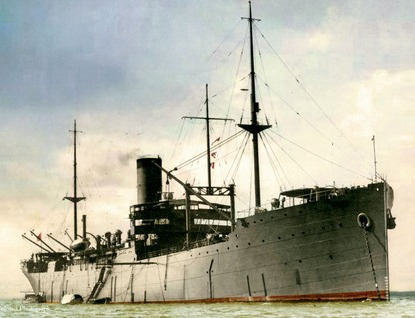 <
(MAMIYA ca. 1924)
<
(MAMIYA ca. 1924)
IJN MAMIYA:
Tabular Record of Movement
© 2007-2018 Bob Hackett, Sander Kingsepp and Peter Cundall.
Revision 12
25 October 1922:
Kobe. Laid down at Kawasaki’s Shipyard.
26 October 1923:
Launched and named MAMIYA.
1 December 1923:
Captain (later Rear Admiral) Otani Shiro (31) is appointed Chief Equipping Officer.
15 July 1924:
Completed. Attached to the Kure Naval District. Captain Otani is the Commanding Officer.
25 October 1924:
Cdr (later Rear Admiral) Katayama Noboru (32)
assumes command.
1 December 1924:
Cdr Katayama is promoted Captain.
1925:
Reassigned to the Combined Fleet.
1 December 1925:
Captain (later Rear Admiral) Yamaguchi Seishichi (32)(former CO of HAYATOMO) assumes command.
1 November 1926:
Cdr (later Captain) Fujisawa Takuo (33) is appointed Commanding Officer.
15 November 1927:
Cdr (later Captain) Irie Fuchidaira (33) is appointed Commanding Officer.
10 December 1928:
Captain Aiba Shoji (34) is appointed Commanding Officer. Captain Irie is reassigned as CO of ABUKUMA.
30 November 1929:
Captain (later Rear Admiral) Kojima Kentaro (36) assumes command.
15 November 1930:
Cdr (later Rear Admiral) Fujimori Seiichiro (37)(former XO of ISE) assumes command.
1 December 1930:
Cdr Fujimori is promoted Captain.
1 December 1931:
Captain Tomita Kiichi (33) assumes command. Captain Fujimori is reassigned as CO of ASAHI.
1 December 1932:
Captain Kato Tadashi (37)(former CO of ATAKA) is appointed Commanding Officer. Captain Tomita is reassigned as CO of YURA.
15 November 1933:
Captain (later Vice Admiral) Suzuki Yoshio (40) assumes command.
25 May 1934:
Captain (later Rear Admiral) Sasaki Kiyoyasu (38) assumes command.
15 November 1934:
Captain (later Rear Admiral) Aoyagi Muneshige (37) assumes command.
1935:
Undergoes remodeling. MAMIYA’s mainmast is replaced by a tripod.
2 March 1936:
Captain (later Rear Admiral) Kakimoto Gonichiro (41) assumes command.
14 April 1936:
Departs Ariake Bay, Kyushu, for spring exercises of the Combined Fleet in the Tsingtao area of China.
Mid-May 1936:
Returns to Ariake.
23 July 1936:
MAMIYA and several other vessels are caught by a typhoon off Beppu Bay, Kyushu. She and submarine I-55 are briefly grounded. MAMIYA receives minor damage.
1 December 1936:
Captain (later Rear Admiral) Hoshino Masatsugu (41) assumes command.
15 November 1937:
Cdr (Vice Admiral, posthumously) Akiyama Monzo (42) assumes command.
Late 1937:
AA armament is fitted.
1 December 1937:
Cdr Akiyama is promoted Captain.
15 December 1938:
Captain Misaka Naokado (40) is appointed Commanding Officer. Captain Akiyama is later promoted Rear Admiral and assigned as CO of 6th Base Force.
15 November 1939:
Captain (later Rear Admiral) Nomura Tomekichi (46) (former XO of CHOKAI) assumes command.
11 October 1940: Imperial Naval Review:
Yokohama. MAMIYA and 97 warships are spread across Tokyo Bay. Vice Admiral (later Admiral of the Fleet, posthumously) Yamamoto Isoroku (32)(former CO of AKAGI), CINC, Combined Fleet, accompanies Emperor Hirohito (Showa) aboard battleship HIEI for the Emperor's annual review of the fleet. 527 aircraft also participate. HIEI, escorted by cruisers TAKAO, KAKO and FURUTAKA, then passes among the fleet's ships.
15 October 1940:
Cdr (later Captain) Tamura Yasuo (45)(former XO of HAGURO) is appointed Commanding Officer. Captain Nomura is later assigned to the Staff of Sasebo Naval District.
1 July 1941:
Captain (Rear Admiral, posthumously) Fukuyoshi Yasuo (42) (former XO of MUTSU) assumes command.
20 September 1941:
Kure Navy Yard. MAMIYA and light carrier HOSHO are anchored near a large fitting-out pontoon servicing battleship YAMATO in her later stage of construction. Heavy cruisers KAKO and KINUGASA are anchored nearby.
5 November 1941:
Captain Manzen Mitsuo (39) assumes command.
3 December 1941:
Transfers from Kure to Hashirajima.
7 December 1941:
Transfers from Hashirajima to Kure.
8 December 1941:
MAMIYA is with the Combined Fleet's Supply and Support Unit.
12 December 1941:
Departs Kure.
18 December 1941:
Arrives at Palau.
30 December 1941:
At 1150 stores PB-1 at Palau.
3 January 1942:
Departs Palau.
11 January 1942:
Arrives at Kure.
25 January 1942:
Departs Kure for Palau.
7 February 1942:
Davao. Provisions auxiliary gunboat KAMITSU MARU.
5 March 1942:
Arrives at Staring Bay.
8 March 1942:
Departs Staring Bay.
9 March 1942:
Arrives at Macassar.
15 March 1942:
Departs Macassar.
16 March 1942:
Arrives at Balikpapan. Provisions auxiliary gunboat MANYO MARU.
20 March 1942:
Departs Balikpapan.
21 March 1942:
Arrives at Tarakan.
25 March 1942:
Departs Tarakan.
27 March 1942:
Arrives at Davao.
31 March 1942:
Departs Davao.
8 April 1942:
Arrives at Kure.
20 April 1942:
Departs Kure.
28 April 1942:
Arrives at Truk.
10 May 1942:
Departs Truk.
18 May 1942:
Arrives at Kure.
13 June 1942:
Transfers from Kure to Hashirajima.
23 June 1942:
Transfers from Hashirajima to Kure.
3 October 1942:
Recalled Captain Ofuji Masanao (39)(former CO of KYOKUTO MARU) is appointed Commanding Officer.
18 October 1942:
Cable layer TSURUSHIMA meets up with MAMIYA off Fukajima and escorts the ship to 90 degrees off Toi Misaki.
27 October 1942:
In waters off Truk meets up with destroyer YUZUKI.
12 November 1942:
Joined by torpedo boat HATO 90 degrees off Toi Misaki and escorted north.
E 13 November 1942:
HATO is detached off Fukajima.
22 November 1942:
Joined by minelayer NUWAJIMA off Fukajima and escorted south.
E 23 November 1942:
NUWAJIMA is detached 90 degrees off Toi Misaki.
7 December 1942:
Truk. Re-provisions storeship KITAKAMI MARU.
14 December 1942:
Departs Yokosuka for Truk. [NB highly dubious]
21 December 1942:
Joins a convoy at 30-00N, 133-10E also consisting of naval oiler SHIRETOKO from Jaluit escorted by subchaser CH-39.
23 December 1942:
CH-39 is detached off Fukajima.
5 January 1943:
Transits the Bungo Straits heading south.
13 January 1943:
At 1300, arrives at Truk via the north channel.
19 January 1943:
Truk. Provisions damaged auxiliary seaplane carrier SANYO MARU.
25 January 1943:
Truk. Re-provisions storeship KITAKAMI MARU. Provisions SANYO MARU. At 0430, MAMIYA departs Truk in a convoy consisting of SOYO MARU escorted by destroyer MOCHIZUKI as far as Saipan.
1 February 1943:
MAMIYA and SOYO MARU are joined by subchaser CH-36 at 30-53N, 132-46E.
E 2 February 1943:
CH-36 is detached off Fukajima.
12 February 1943:
Off Fukajima. MAMIYA is joined by minelayer NUWAJIMA and subchaser CH- 39 and escorted south for Truk.
E 13 February 1943:
The escorts are detached 90 degrees off Toi Misaki.
19 February 1943:
At 1000 MAMIYA and submarine chaser CH-12 arrive at Truk. Aircover for MAMIYA is provided in the vicinity of Truk.
25 February 1943:
At Truk. Provisions auxiliary seaplane tender SANYO MARU and storeship KITAKAMI MARU with supplies.
5 March 1943:
At 0700 MAMIYA and KEISHO MARU depart Truk escorted by destroyer OITE.
9 March 1943:
At 16-10N 144-30E OITE is detached.
13 March 1943:
MAMIYA is met by minelayer NATSUSHIMA at 30-15N 134-35E and escorted north.
E 14 March 1943:
Off Fukajima, NATSUSHIMA is detached.
27 March 1943:
MAMIYA is joined by minelayer NUWAJIMA off Fukajima and escorted south.
E 28 March 1943:
NUWAJIMA is detached at 29N.
6 April 1943:
Truk. Re-provisions storeship KITAKAMI MARU.
15 April 1943:
MAMIYA and SOYO MARU depart Truk escorted by destroyer MAKINAMI.
22 April 1943:
MAMIYA and SOYO MARU with MAKINAMI steam north. Subchasers CH-35 and CH-36 departing Saiki, undertake advance patrols ahead of them.
4 May 1943:
MAMIYA, auxiliary cruiser BANGKOK MARU and destroyer IKAZUCHI steam southward through the Bungo Suido escorted by several small auxiliaries.
12 May 1943:
Arrives at Truk.
17 May 1943:
At Truk. Re-provisions KITAKAMI MARU.
21 May 1943:
Departs Truk in convoy No. 4521 also consisting of ONOE, NICHIRO, TATSUMIYA, NICHIZUI, MOGAMIGAWA and YAMAGIRI MARUs escorted by destroyer YUZUKI.
30 May 1943:
Arrives at Yokosuka.
13 June 1943:
Departs Yokosuka in convoy No. 3613A also consisting of MITAKESAN and SANTOS MARUs escorted by kaibokan OKI.
22 June 1943:
Arrives at Truk.
26 June 1943:
At Truk. Re-provisions KITAKAMI MARU.
22 July 1943:
Off Kure. Collides with and damages KOSEI MARU’s bow.
14 September 1943:
Departs Truk for Yokosuka escorted by destroyer SHIRATSUYU.
22 September 1943:
Arrives at Yokosuka.
9 October 1943:
Departs Yokosuka in convoy No. 3009A also consisting of ASAKAZE, HOKKO and NICHII MARUs escorted by destroyer ASANAGI.
12 October 1943:
Off Chichi-Jima. At about 0500, Cdr David C. White's (USNA ’27) USS CERO (SS-225) attacks convoy No. 3009A. White torpedoes and damages MAMIYA at 28-39N, 137-28E. Hit in the stern, her rudder probably damaged, MAMIYA becomes unnavigable. About noon, Cdr White makes a second attack on anchored MAMIYA. He fires six torpedoes and gets four hits, one of which is a dud.
At 0705, USN codebreakers intercept and decrypt a message from MAMIYA that reads: “At 0530 received torpedo attack in position 28-39 N, 137-28 E. Torpedo hit bulkhead between starboard engine room and No. 5 hold. Both engines, No. 5 hold and shaft alley were completely flooded. The boiler room and the No. 7 hold were slightly flooded. Unable to navigate ---- under our own power. ”
14 October 1943:
During salvage operations, torpedo boat CHIDORI collides with MAMIYA.
15 October 1943:
At 0950 patrol boat PB-101 departs Chichi Jima and takes over escort of MAMIYA.
16 October 1943:
Submarine tender JINGEI departs Kure to assist MAMIYA. JINGEI finds MAMIYA drifting SW of the Ogasawara Islands and takes her in tow until the arrival of collier ASAKAZE MARU and destroyers OITE and ASANAGI that take over towing and escort duties. PB-101 remains with vessel also.
17 October 1943:
After detacheing at 1434 PB-101 arrives at Yura.
18 October 1943:
MAMIYA and ASAKAZE MARU are escorted through the Bungo Straits by torpedo boat SAGI, kaibokan IKI, and auxiliary minesweepers OI and TAMA MARUs and TAMA MARU No. 7.
19 October 1943:
Arrives at Saeki.
October 1943-April 1944:
Kure. Undergoes battle damage repairs.
1 April 1944:
At 1100, MAMIYA departs Tokyo as part of convoy “Higashi-Matsu” No. 4. The ships and their destinations are:
Palau: MAMIYA and TENRYUGAWA, TAIAN and TOSEI MARUs and SHINSEI MARU No. 5. Saipan: SHOUN, TOKO, TAKASAN, AKIKAWA, KOKO, SHIRAMINE, TAIKAI, KAKOGAWA and MAKASSAR MARUs. Guam: MIMASAKA (BISAKU), TOAN, AZUCHISAN and NISSHU MARUs and UNYO MARU No. 8. Truk: Fleet supply ship KINESAKI and SHOZUI, TATEBE (KEMBU), SHIMA, SHINYO and HAVRE MARUs. Yap: SHINSEI MARU.
The convoy commander is Rear Admiral Kiyota Takahiko (42) (former CO of NACHI) in destroyer SAMIDARE. The other escorts include destroyer ASANAGI, torpedo-boat HIYODORI, kaibokan AMAKUSA, FUKUE, OKI, MIKURA, CD-2, CD-3 and subchaser CH-50.
3 April 1944:
5 miles S of Tori-Shima. At about 1457, LtCdr (later Rear Admiral-Ret) Bafford E. Lewellen's (USNA ’31) USS POLLACK torpedoes and sinks TOSEI MARU at 30-14N, 139-45E. She was carrying ammunition and rations. Only one passenger was KIA. The escorts counter-attack USS POLLACK and drop 55 depth-charges without effect.
8 April 1944:
N of Saipan. At 0228 (JST), LtCdr (later Vice Admiral) Frederick J. Harlfinger's (USNA ’37) USS TRIGGER (SS-237) fires four torpedoes at the convoy, but fails to get any hits. OKI and SAMIDARE counter-attack unsuccessfully.
9 April 1944:
62 miles WNW of Saipan. At 1625, LtCdr (later Captain) Slade D. Cutter's (USNA ’35) USS SEAHORSE (SS-304) torpedoes and hits MIMASAKA MARU at 15-30N, 145-00E. MIMASAKA MARU is taken in tow by TOAN MARU. The escorts counter-attack SEAHORSE unsuccessfully.
10 April 1944:
At about 0100 (JST), MIMASAKA MARU founders. She is carrying 1,146 Naval personnel, and 1,437-tons of luggage. Seven troops, one gunner and 10 crewmen are KIA. The convoy arrives at Saipan, where it is split into separate groups that continue on to their respective destinations.
E 16 April 1944:
MAMIYA arrives at Palau.
17 April 1944:
Transfers stored goods and fresh food to hospital ship TAKASAGO MARU.
27 April 1944:
At 1700 arrives at Kirun (Keelung), Formosa. Later that day, departs Takao in convoy TAMO-18 consisting of TAINAN MARU, SHINSEI MARU No. 5 and eight unidentified ships escorted by kaibokan FUKUE, CD-2 and gunboat UJI.
2 May 1944:
Arrives at Kirun. At 1500, MAMIYA departs Keelung for Moji in convoy TAMO-18 consisting of TAINAN, TEIKA (ex-French CAP VARELLA) and TOYOURA MARUs and SHINSEI MARU No. 5 and three unidentified ships escorted by kaibokan FUKUE, CD-2 and gunboat UJI.
6 May 1944:
E China Sea. At 0325, LtCdr (later Cdr) Joseph W. Williams' (USNA ’33) USS SPEARFISH (SS-190) torpedoes and sinks TOYOURA MARU and damages MAMIYA at 32-18N, 127-11E. 32 crewmen and 3 passengers are KIA.
Later that day, Williams attempts unsuccessfully to finish off MAMIYA. The escorts counter-attack SPEARFISH and inflict minor damage. UJI probably tows MAMIYA.
7 May 1944:
At 1352 minesweeper W-15 meets up with MAMIYA. At 1530 submarine chaser KAII commences towing MAMIYA and kaibokan FUKUE, CD-2, minelayer TAKASHIMA, submarine chaser CH-58 and auxiliary submarine chaser CHOUN MARU No. 16 all escort the ship.
8 May 1944:
At 1225 arrives at Sasebo.
May-September 1944:
Undergoes battle damage repairs.
10 June 1944:
Captain Shimizu Masamoto (43)(currently serving at the Sasebo Naval District port office) is appointed the acting CO.
29 August 1944:
Captain (Rear Admiral, posthumously) Kase Saburo (44)(former CO of KITAKAMI) assumes command.
26 October 1944:
At 1730, MAMIYA departs Mutsure in convoy HI-79 consisting of transports KAGU, MELBOURNE and ARIMASAN MARUs and tankers TENEI and MATSUSHIMA MARUs. The ships are initially escorted by light cruiser KASHII, kaibokan NOMI, UKURU and minelayer NIIZAKI.
27 October 1944:
Kaibokan CD-17 joins the escort.
28 October 1944:
Minesweeper W-21 joins the escort.
29 October 1944:
MELBOURNE MARU is detached for Keelung escorted by kaibokan UKURU
and CD-17.
30 October 1944:
HI-79 arrives at Takao. MAMIYA, KAGU MARU and minesweeper W-21 are detached from the convoy that later proceeds to Singapore.
20 November 1944:
MAMIYA departs Saigon for Manila with a full load of ammunition in convoy SAMA-14A escorted by kaibokan CD-4, CD-6, CD-38 and CD-46.
25 November 1944:
Off Corregidor, Manila Bay. About 2120, MAMIYA launches a blue signal flare. Just after the signal, kaibokan CD-38 suffers an attack by LtCdr (later Cdr) Francis A. Greenup's (USNA ’36) USS HARDHEAD (SS-365). Greenup hits CD-38 below the bridge and sinks her at 14-22N, 119-57E. 85 crewmen are KIA including CO LtCdr Hayashi Chiichi. CD-46 rescues 93 survivors.
26 November 1944:
Arrives at Manila.
E 18 December 1944:
Departs Indochina for San Fernando, Philippines escorted by torpedo boat KARI and kaibokan CD-17.
20 December 1944:
South China Sea, about 450 miles NE of Camranh Bay. At 2040, LtCdr Charles F. Putman’s (USNA ’37) USS SEALION (SS-315) torpedoes and damages MAMIYA at 17-48N, 114-09E. Putman evades the escorts.
21 December 1944:
South China Sea. At 0137, USS SEALION carries out a second attack on MAMIYA and sinks her at 17-48N, 114-09E. Captain Kase is KIA. He is promoted Rear Admiral, posthumously.
10 February 1945:
Removed from the Navy List.
Authors' Note:
Thanks go to the late John Whitman for info on decrypts of Japanese radio traffic and to Matthew Jones of USA for help in identifying COs and to Gengoro Toda of Japan. Grateful thanks also to Mr. Berend van der Wal of Netherlands and Mr. Gilbert Casse of France.
-Bob Hackett, Sander Kingsepp and Peter Cundall.
Back to Supply and Special Service Ships Page

