TOKUSETSU JUNYOKAN!
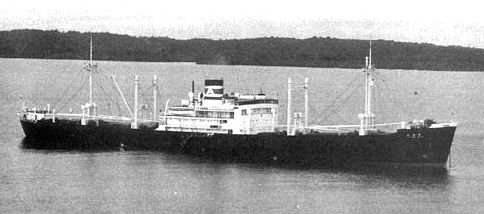
(Kiyosumi Maru in 1937 - National Archives)
IJN KIYOSUMI MARU:
Tabular Record of Movement
© 1998-2014 Bob Hackett and Sander Kingsepp
Revision 8
30 May 1933:
Kobe. Laid down at Kawasaki's dockyard.
30 June 1934:
Launched and named
KIYOSUMI MARU.
5 October 1934:
Completed as a 6,991-ton cargo-passenger ship for Kokusai Kisen K. K. of Tokyo.
30 October 1934 - 30 October 1941:
Chartered by the Nippon Yusen K. K. Line. Completes cargo-passenger runs between Kobe and New York for the next seven years. Ports of call include Singapore, Manila, Penang, Los Angeles, Panama Canal, New York, Baltimore, New Orleans, Galveston, Yokohama and Moji.
13 January 1938:
Departs Kobe for New York, still on NYK charter.
3 June 1938:
No longer on charter, departs Kobe for new York.
1 June 1941:
Departs Kobe for New York.
5 September 1941:
Rear Admiral-Retired (Vice Admiral, posthumously) Okamura Masao (38) is posted as the Commanding Officer. Okamura simultaneously assumes joint command of AIKOKU MARU.
1 November 1941:
Requisitioned by the IJN.
7 November 1941:
Assigned directly to the Combined Fleet in Rear Admiral (later Vice Admiral) Takeda Moriji's (38th) (former CO of ASHIGARA) 24th Squadron (Raider) with AIKOKU and HOKOKU MARUs.
1 December 1941:
Registered in the Kure Naval District. Arrives at Osaka. Begins conversion to an 8,613-ton armed
merchant cruiser. Eight 150-mm (5.9-inch) single mount guns, two 13.5-mm machine guns, two 533-mm (21-inch) torpedo tubes are fitted. She carries one Type 94 Kawanishi E7K2 “Alf” reconnaissance floatplane. Captain Kita Shoichiro is the Commanding Officer.
18 December 1941:
The conversion is completed.
19 December 1941:
Departs Osaka.
21 December 1941:
Arrives at Kure.
21 January 1942:
Departs Kure. Arrives at Shimoda.
January 1942:
Departs Shimoda.
4 February 1942:
Arrives at Kure.
6 February 1942:
Departs Kure.
19 March 1942:
Arrives at Kure.
29 March 1942:
The 24th Squadron is disbanded.
10 April 1942:
Assigned to the Southwestern Area Fleet.
26 April 1942:
Departs Kure
30 April 1942:
Arrives at Kure.
2 May 1942:
Departs Kure.
5 May 1942:
Arrives at Kure.
9 May 1942:
Kure Naval Arsenal. Begins loading heavy equipment and the
Kure No. 5 Special Naval Landing Force for transport.
15 May 1942:
Departs Kure for Guam with transports AIKOKU, KINRYU and BRAZIL MARUs escorted by patrol boats PB-34 and PB-35. KIYOSUMI MARU carries men of the Kure Special Naval Landing Force (SNLF).
18 May 1942:
Arrives at Guam, then departs for Saipan.
20 May 1942:
Arrives at Saipan.
28 May 1942:Operation "MI" - The Battle of Midway:
KIYOSUMI MARU is in Vice Admiral (later Admiral) Kondo Nobutake's (former CO of KONGO) Midway Invasion Force's Transport Group with
oiler AKEBONO MARU, transports ZENYO, TOA No. 2, ARGENTINA, BRAZIL, AZUMA, KEIYO, GOSHU, KANO, HOKURIKU, KIRISHIMA and NANKAI MARUs and patrol boats PB-1, PB-2 and PB-34 carrying troops. The transports carry an airfield construction unit, LtCol Ichiki Kiyonao's IJA detachment and two battalions of Special Naval Landing Forces (SNLF).
Rear Admiral (later Vice Admiral) Tanaka Raizo's (former CO of KONGO) DesRon 2's light cruiser JINTSU and DesDiv 15's KUROSHIO and OYASHIO, DesDiv 16's AMATSUKAZE, HATSUKAZE, TOKITSUKAZE and YUKIKAZE and DesDiv 18's KAGERO
provide the escort with destroyer-transports SHIRANUHI, KASUMI and ARARE. Rear Admiral (later Vice Admiral) Fujita Ruitaro's (former CO of FUSO) CHITOSE and KAMIKAWA MARU provide air cover.
3 June 1942:
The convoy is bombed by nine Boeing B-17 "Flying Fortresses". Later, the convoy is also attacked by three torpedo-carrying Consolidated PBY "Catalina" amphibious patrol planes. Oiler AKEBONO MARU is hit in the bow and KIYOSUMI MARU is strafed. Eight men of the embarked Kure SNLF are wounded.
5 June 1942:
At 0255, the Combined Fleet's Commander-in-Chief Admiral (Fleet Admiral, posthumously) Yamamoto Isoroku (former CO of AKAGI), aboard his flagship YAMATO, orders Operation MI cancelled.
13 or 16 June 1942:
The Transport Group arrives at Guam and disembarks LtCol Ikki's detachment. Departs that same day.
26 June 1942
At 0600, departs location MM (believed to be Manila) in Convoy "D" consisting of KANSAI, KINUGAWA, NAKO, SHINANOGAWA, TAIFUKU and KIYOZUMI MARUs for Japan.
2 July 1942:
Arrives at Kure.
10 July 1942:
Captain-Retired (Rear Admiral, posthumously) Kurosaki Rinzo (37) assumes command. Departs Kure. Later that day departs Mutsure in convoy No. 137 with six unidentified merchant ships escorted by destroyer SATSUKI.
14 July 1942:
The Eighth Fleet (Outer South Seas Force) is organized under Vice Admiral Mikawa Gunichi (former CO of KIRISHIMA). Departs Kure for Singapore escorted by destroyer URANAMI.
17 July 1942:
Arrives at Takao, Formosa.
18 July 1942:
Departs Takao.
23 July 1942:
Arrives at Singapore. Assigned to the Southwest Area Fleet (Eighth Fleet). Departs Singapore that day for Penang, Malaya.
7 August 1942: American Operation "Watchtower" - The Invasion of Guadalcanal, British
Solomons:
Rear Admiral (later Admiral) Richmond K. Turner's (former CO of ASTORIA, CA-34), Amphibious Task Force 62, covered by Vice Admiral (MOH/later Admiral) Frank J. Fletcher's (former CO of VERMONT, BB-20) Task Force 61 and Rear Admiral (later Admiral) John S. McCain's (former CO of RANGER, CV-4) Task Force 63's land-based aircraft, lands MajGen (later General/MOH/Commandant)
Alexander A. Vandegrift's 1st Marine Division on Florida, Tulagi, Gavutu, Tanambogo and Guadalcanal opening the campaign to retake the islands.
20 August 1942:
Assigned to transport elements of LtGen Sano Tadayoshi's 38th Infantry "Hiroshima" Division to Rabaul for the reinforcement of Guadalcanal.
13 September 1942:
Begins repairs at Singapore.
17 September 1942:
Repairs are completed.
September, 1942:
Departs Singapore for western Sumatra. Loads
elements of the IJA's 38th Infantry Division for duty in the Solomons.
24 September, 1942:
Departs Belawan, Sumatra for Rabaul a convoy consisting of three armed merchant cruiserscarrying elements of the IJA's 38th and 230th Infantry Divisions including the 1st Echelon of the 38th Division (division headquarters and the 230th Infantry, a company of 75mm mountain artillery, and a company of engineers) and the 2nd Echelon, 2nd Division (1st and 3rd Battalions, 16th Infantry). KIYOSUMI MARU carries 2,931 men of the 38th Division.
6 October 1942:
Arrives at Rabaul. Loads an infantry battalion for
transport to Wewak, New Guinea.
2 December 1942:
KIYOSUMI MARU departs Singapore for Rabaul in a convoy also consisting of GOKOKU and YAMABIKO MARUs and possibly others.
13 December 1942:
A new, but unknown, Captain assumes command. Captain Kurosaki is reassigned to the Yokosuka Naval District, then as CO of AMC AKAGI MARU on which he is KIA on 2 Mar '44.
16 December 1942:
Departs Rabaul on a troop transport run to Wewak, New Guinea escorted by destroyers YUGUMO, KAZAGUMO, MAKIGUMO and AKIZUKI.
18 December 1942:
Arrives at Wewak; disembarks troops and departs.
19 December 1942: Operation C (HEI-GO) - The Reinforcement of New Guinea:
Orders for Operation C (HEI-GO) are issued. The objective of this transport operation is to rush the 20th and 41st Army Division to Wewak. The operation consists of three separate operations, two are divided into sub echelons sailing at different dates: The first operation, HEI-ICHI GO (HEI-GO 1), is to land the main strength of the 20th Army Division consisting of 9,443 men, 82 vehicles, arms and 12,267 bundles of provisions at Wewak. [1]
20 December 1942:
Departs Rabaul in a convoy consisting of AIKOKU and GOKOKU MARUs.
21 December 1942:
Returns to Rabaul.
E 27 December 1942:
Torpedo boat HATO joins the convoy at 28-50N 134-17E. It is unclear whether GOKOKU MARU had been detached.
29 December 1942:
Off Fukajima. HATO is detached. Later that day, the convoy arrives at Kure.
3 January 1943:
Departs Kure. Off Fukajima, minelayer NATSUSHIMA joins the convoy as escort.
E 4 January 1943:
At 133-45E, NATSUSHIMA is detached.
5 January 1943:
Arives at Yokosuka.
10 January 1943:
Departs Yokosuka.
17 January 1943:
Arives at Sasebo.
23 January 1943:
Departs Sasebo for Tsingtao, China.
28 January 1943: Operation HINOE-GO-3 ("C-3") - The Reinforcement of New Guinea:
The 2nd echelon of transport group HINOE-GO No. 3 departs Tsingtao, China. The 2nd echelon consists of KIYOSUMI, AIKOKU, GOKOKU MARUs escorted by destroyers ASAGUMO and SAMIDARE. The 2nd echelon carries elements of the IJA's 239th Infantry Regiment. KIYOSUMI MARU carries the 2nd Battalion (less 7th and 8th Companies), AIKOKU MARU carries HQ and the 1st Battalion and GOKOKU MARU carries the 3rd Battalion. Aircraft from carrier ZUIHO provide air cover.
E 18 February 1943:
The 2nd echelon arrives at Palau. Refuels and replenishes.
19 February 1943:
At 1300, KIYOSUMI, AIKOKU and GOKOKU MARUs depart Palau.
At 1440 (I) LtCdr (later Rear Admiral) Frank W. Fenno's's USS RUNNER (SS-275) sights the masts of freighters in Toagel Melungui Pass. At 1455 (I), Fenno fires his four stern torpedoes at destroyer SAMIDARE, but does not score a hit. At 1456 (I), Fenno fires one torpedo at a freighter. Immediately thereafter, a depth charge, dropped by an E13A1 "Jake" of the 902nd NAG based at Palau, explodes close to RUNNER. Fenno, nevertheless, fires two more torpedoes and claims a hit on the freighter, but it was not.
The single 250-kg dropped by the Jake knocks out both of RUNNER's periscopes, her sound gear and magnetic and gyro compasses. The damage forces Fenno to terminate the patrol and return to Pearl Harbor.
26 February 1943:
The 2nd echelon arrives at Wewak,New Guinea:.
4 March 1943:
Arrives at Takao, Formosa.
10 March 1943:
Departs Takao.
12 April 1943:
An unknown Captain assumes command.
14 April 1943:
Arrives at Kobe.
20 April 1943:
Departs Kobe.
21 April 1943:
230 degrees off Muroto Zaki. Patrol Boat PB-31 joins as escort.
E 22 April 1943:
East of Tanega Shima. PB 31 is detached.
13 May 1943:
Arrives at Kure
24 May 1943:
Departs Kure.
25 May 1943:
Arrives at Sasebo.
May 1943:
Assigned to transport a unit to Wewak, New Guinea.
16 May 1943:
Arrives at Wewak and departs later that day.
E 21 June 1943:
Joins minelayer YURIJIMA at 29-25N, 132-55E.
23 June 1943:
Arrives at Saeki.
24 June 1943:
Arrives at Kure.
30 June 1943:
Departs Kure in fleet convoy G with KAGU MARU and oiler KENYO MARU escorted by kaibokan ETOROFU. Arrives at Sasebo the same day.
2 July 1943:
Departs Sasebo in fleet convoy G.
10 July 1943:
Arrives at Singapore at 1500.
13 July 1943:
Departs Singapore for Nancowry and Car Nicobar Islands, carrying troops and supplies.
2 August 1943:
Arrives at Takao.
7 August 1943:
Departs Takao carrying troops and supplies.
August 1943:
Arrives at Rabaul.
18 August 1943:
Recalled Captain-Retired Maki Kikuta (34) assumes command.
6 September 1943:
Arrives at Truk. Later steamd to Saipan.
13 September 1943:
Minelayer YURIJIMA conducts an anti-submarine sweep ahead of KIYOSUMI's projected arrival route through the Bungo Suido (Strait).
14 September 1943:
Arrives at Kure.
17 September 1943:
Departs Kure.
18 September 1943:
Arrives at Woosung Pier near Shanghai.
19 September 1943:
Arrives at Kure.
20 September 1943:
KIYOSUMI MARU departs Shanghai in convoy "Tei No. 2" (T2-GO Transportation Strategy) also consisting of sub tender HEIAN MARU, transport (ex-AMC) GOKOKU MARU and seaplane tender AKITSUSHIMA escorted by destroyers HIBIKI, MAKINAMI and YAMAGUMO.
The convoy carries 5,940 men of the IJA’s 17th Division’s headquarters staff, 53rd infantry regiment, 54th Regiment, 3rd Battalion, 1st Battalion, 23rd Field Artillery Regiment, 2nd Company, 17th Engineers, 17th Tank Regiment, a car platoon and the division’s Communication Station, 650 vehicles and 6,000 cubic meters of supplies.
KIYOSUMI MARU carries 1,300 men of the 17th Division’s 53rd Infantry Regiment including the regimental commander and 170 vehicles and 2,800 cubic meters of supplies.
HEIAN MARU embarks the CO of the 17th Infantry Division, 1,900 of his men, lead engineer troops and 240 wheeled vehicles. She also carries 900 cubic meters of supplies and a cargo of torpedoes. GOKOKU MARU carries 1,850 men. AKITSUSHIMA carries 500 men including the brigade commander, 10 vehicles and 400 cubic meters of supplies. Destroyers HIBIKI, MAKINAMI and YAMAGUMO each carry 130 men.
E 23 September 1943:
Arrives at Woosung.
24 September 1943:
KIYOSUMI MARU departs Woosung and later that day arrives at Ta Chen Shan.
25 September 1943:
Departs Ta Chen Shan.
2 October 1943:
The convoy arrives at Truk Atoll. HEIAN MARU unloads torpedoes.
The majority of the Combined Fleet is lying at anchor including BatDiv 1's YAMATO, MUSASHI and NAGATO, BatDiv 2's FUSO and BatDiv 3's KONGO and HARUNA, CarDiv 1's SHOKAKU, ZUIKAKU and ZUIHO, CruDiv 5's MYOKO and HAGURO, CruDiv 8's CHIKUMA and TONE, light cruisers AGANO, NOSHIRO and destroyers. Vice Admiral Kurita Takao leads the second section with his Advance Force: CruDiv 4's ATAGO, TAKAO, MAYA and CHOKAI.
Convoy Tei No. 2 departs Truk that evening.
3 October 1943:
An enemy patrol bomber appears, but dense clouds make an attack on the convoy impossible.
5 October 1943:
At 1000, arrives at Rabaul. KIYOSUMI MARU disembarks 1,300 troops including the regimental commander and 170 vehicles. Also unloads weapons, ammunition, provisions, medical supplies etc,
6 October 1943:
Departs Rabaul’s Pier No. 5.
9 October 1943:
Arrives at Truk.
11 October 1943:
Departs Truk.
18 October 1943:
Arrives at Shanghai.
21 October 1943:
KIYOSUMI MARU departs Shanghai as the second echelon of convoy "Tei No. 4" (T4-GO Transportation Strategy) also consisting of troop transport GOKOKU MARU escorted by light cruisers NAKA and ISUZU and destroyer YAMAGUMO.
KIYOSUMI MARU carries 1,342 men of the IJA's 17th Division including two companies, 81st Infantry 3rd Battalion (minus 8th Company), 23rd Field Artillery Equipment platoon and 17th Engineer Regiment.
GOKOKU MARU carries 1,759 men iof the IJA's 17th Divisionncluding a section of division headquarters, 81st Infantry main force, 2nd Battalion, 23rd Field artillery 17th Engineer Regiment headquarters and 3rd Engineer Company and 1st Field Hospital main force.
ISUZU carries 471 troops of the IJA's 17th Division. NAKA carries 485 troops.
East China Sea. That same day, Captain (later Vice Admiral) Charles B. "Swede" Momsen's (USNA ’19) Task Group 17.14's USS CERO (SS-225), GRAYBACK (SS-208) and SHAD (SS-235) receive an "Ultra" message from the codebreakers at Pearl alerting them of the transit of the troop convoy through their patrol area.
23 October 1943:
East China Sea. At 2320, LtCdr (later Captain) Edgar J. MacGregor's (USNA ’30) USS SHAD picks up two targets on her SJ radar at 15,000 yards. It takes MacGregor two hours to gain an attack position. At 0145, when the convoy is at 11,000 yards, he submerges to radar depth. At 0212, at 28-40N, 124-10E, MacGregor begins firing his torpedoes at ISUZU, NAKA and the fast troop transports. He fires ten torpedoes from shallow water, then is forced to head for deeper water to evade a depth-charge counter-attack. Although MacGregor claims damaging both light cruisers, neither is hit.
28 October 1943:
Arrives at Truk.
1 November 1943:
Departs Truk carrying 1,342 reinforcement troops of the IJA 17th Division in convoy "Tei No. 4" with light cruisers ISUZU and NAKA.
3 November 1943:
60 miles N of Kavieng. The convoy is attacked by 19 B-24 "Liberator" bombers of the USAAF 13th Air Force. NAKA suffers a near-miss. KIYOSUMI MARU is damaged. ISUZU takes her in tow to Kavieng.
At 1145, USN codebreakers intercept and decrypt a message that reads: As a result of bombing by 19 large-type enemy planes, KIYOSUMI's engine room is flooded and she is unable to navigate. Position 151-30E, 02-00S. At 1715, the codebreakers decrypt another message that reads: ISUZU commenced towing KIYOSUMI MARU at 1500 escorted by NAKA and ISOKAZE---."
4 November 1943:
Destroyer MINAZUKI departs Kavieng to assist KIYOSUMI MARU. Destroyer ISOKAZE and light cruiser YUBARI also assist.
YUBARI removes 196 troops and three field guns from KIYOSUMI MARU. ISUZU removes 196 troops and four regimental guns and NAKA removes another 166 men and four rapid fire antitank guns the transport. Destroyer MINAZUKI removes 267 troops from the transport and ISOKAZE removes 236 troops and two mountain guns. All the troops are landed at Rabaul. Ammunition and supplies are also off loaded from KIYOSUMI MARU.
Later, KIYOSUMI MARU is towed to Kavieng.
25 December 1943:
Kavieng. Aircraft from Rear Admiral (later Vice Admiral) Frederick C. Sherman’s (former CO of LEXINGTON, CV-2) TG 50.2's BUNKER HILL (CV-17) and MONTEREY (CVL-26) attack and sink transport TENRYU MARU and set
KIYOSUMI MARU afire. The planes also damage minesweepers W-21 and W-22.
KIYOSUMI MARU undergoes emergency repairs.
30 December 1943:
Departs Kavieng for Truk with destroyer YUKAZE and minesweeper W-22.
31 December 1943:
400 km N of the Admiralty Islands. LtCdr Cryrus C. Cole's USS BALAO (SS-285) sights KIYOSUMI MARU and begins tracking her on the surface.
1 January 1944:
SW of Truk, Carolines. At 2345, LtCdr Cole fires six bow torpedoes at KIYOSUMI MARU at 04-35N, 147-15E. Three hit and disable the ship and flood her forward hold.
NAKA arrives from Truk that same day and takes KIYOSUMI MARU in tow.
2 January 1944:
Destroyer TANIKAZE departs Truk to assist NAKA tow KIYOSUMI MARU to Truk. Light cruiser OYODO and destroyer AKIZUKI also arrive and provide escort. Auxiliary minelayer KINJO MARU also joins damaged KIYOZUMI MARU at 04-35N, 146-30E.
4 January 1944:
OYODO and AKIZUKI detach and return to Truk.
8 January 1944:
NAKA and TANIKAZE arrive at Truk with the KIYOSUMI MARU under tow. KIYOSUMI MARU begins repairs.
17-18 February 1944: American Operation "Hailstone" - The Attack on Truk:
Vice Admiral (later Admiral) Marc A. Mitscher’s Task Force 58's five fleet carriers and four light carriers, supported by six battleships, ten cruisers and 28 destroyers, launch air attacks on airfields, shore installations and ships in the lagoon. Mitscher launches 30 strikes of at least 150 aircraft each. Beginning at dawn, the strikes are launched about every hour for two days.
Fefan Island, Truk. KIYOSUMI MARU is in the Repair Anchorage. At 0900, Douglas SBD-5 “Dauntless” dive-bombers from YORKTOWN attack and score a direct hit in hold No. 2. At about 1330, SDBs from ENTERPRISE also attack
and hit both sides of her bridge with bombs. Forty-three crewmen are killed. KIYOSUMI MARU sinks as a result of torpedo damage and bomb hits. She comes to rest on her port side at a depth of 120 feet.
Captain Maki is KIA. He is promoted Rear Admiral, posthumously. During the raids, TF 58 sinks 31 merchant transports and 10 naval vessels (two light cruisers, four destroyers and four auxiliary vessels, destroys nearly 200 aircraft and damages severely about 100 more. Truk is eliminated as a major fleet anchorage for the IJN.
31 March 1944:
Removed from the Navy List.
Authors’ Notes:
Special thanks for assistance in developing this TROM go to Mr. Jean-Francois Masson of Canada. Thanks also go to John Whitman of the USA for info about decrypted IJN messages..
Thanks go to Toda Gengoro of Japan for information in Revision 3, Peter Cundall for info in Rev 5 and John Whitman for info in Rev 6 and 7.
-Thanks also go to Erich Muethaler of Germany for assistance with Operation C (HEI-GO) and Fontessa-san of Japan for info in Rev 8.
Bob Hackett and Sander Kingsepp.
Back to Auxiliary
Cruisers Page

