FUSETSUKAN!
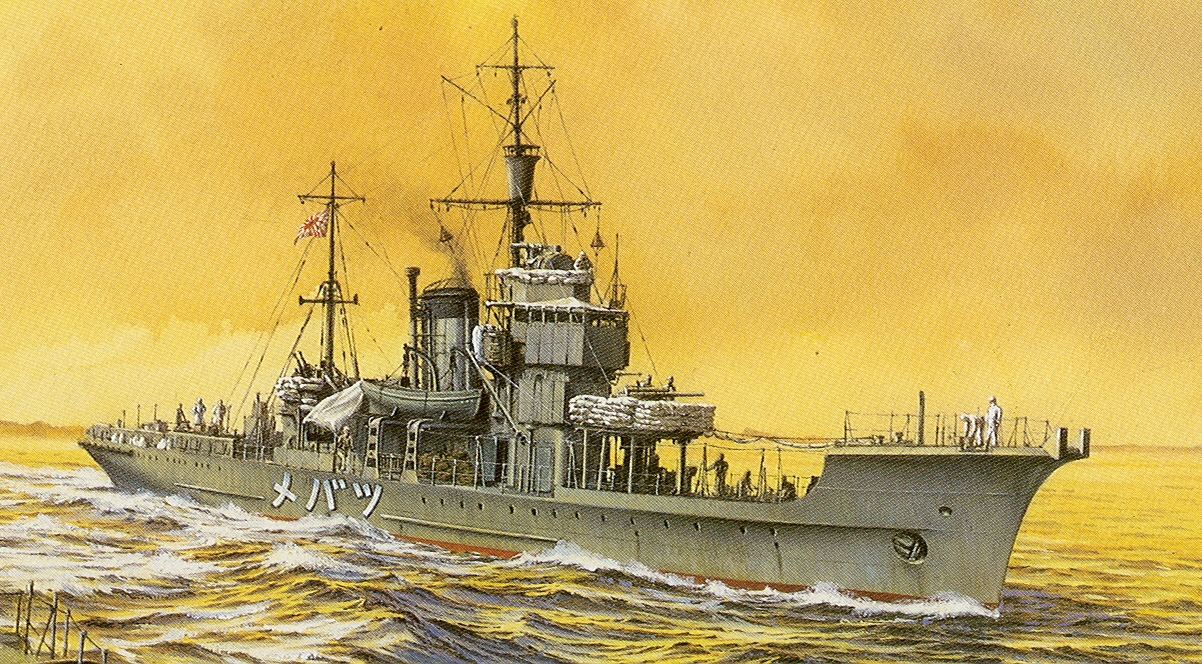 (TSUBAME by Takeshi Yuki scanned from "Color Paintings of
Japanese Warships")
(TSUBAME by Takeshi Yuki scanned from "Color Paintings of
Japanese Warships")
IJN Minelayer ISHIZAKI:
Tabular Record of Movement
© 2008-2016 Bob Hackett, Sander Kingsepp and Peter Cundall
Revision 4
10 March 1941:
Yokohama. Laid down at Mitsubishi Mitsubishi Heavy Industries shipyard and named ISHIZAKI.
13 August 1941:
Launched.
28 February 1942:
Completed. Assigned to the Yokosuka Naval District and attached to the Ominato Naval Guard District.
5 March 1942:
Departs Ominato.
7 March 1942:
Returns to Ominato.
11 March 1942:
Departs Ominato with SHIRAKAMI and conducts exercises in Mutsu Wan.
14 March 1942:
Both vessels move to Tairadate Kaikyo (Tairadate Strait) and continue exercises.
16 March 1942:
Returns to Ominato.
19 March 1942:
Departs Ominato and patrols quadrant CA.
22 March 1942:
Returns to Ominato.
24 March 1942:
Departs Ominato and patrols Tsugaru Strait and B patrol area.
28 March 1942:
Arrives back at Ominato.
2 April 1942:
ISHIZAKI and SHIRAKAMI depart Ominato and conduct an anti submarine sweep returning later that day.
5 April 1942:
Departs Ominato and patrols the Tsugaru Straits.
7 April 1942:
Returns to Ominato.
11 April 1942:
Carries out a training exercise then returns to Ominato.
13 April 1942:
Departs Ominato and patrols quadrant BA.
16 April 1942:
Returns to Ominato.
20 April 1942:
The minelayers ISHIZAKI, SHIRAKAMI, TOSHIMA and KUROZAKI all depart Ominato and conduct an anti submarine sweep in Akkeshi Wan.
25 April 1942:
ISHIZAKI and SHIRAKAMI arrive back at Ominato.
4 May 1942:
ISHIZAKI and SHIRAKAMI depart Ominato and undertake training exercises in Mutsu Wan and Tsugaru Strait.
7 May 1942:
ISHIZAKI arrives back at Ominato.
9 May 1942:
Departs Ominato and patrols the Tsugaru Straits.
10 May 1942:
Returns to Ominato.
12 May 1942:
Departs Ominato and patrols quadrant BA and the Tsugaru Straits.
14 May 1942:
Briefly arrives back at Ominato but departs again on patrol later that day.
16 May 1942:
Arrives back at Ominato.
18 May 1942:
Departs Ominato for Mutsu Wan.
19 May 1942:
Returns to Ominato.
21 May 1942:
Departs Ominato and returns later the same day.
24 May 1942:
Departs Ominato for the Tairadate Straits.
26 May 1942:
Arrives back at Ominato briefly and then departs and resumes patrolling the Tsugaru Straits.
29 May 1942:
Arrives back at Ominato.
1 June 1942:
Departs Ominato on an anti submarine sweep and returns later that day.
3 June 1942:
Departs Ominato on an anti submarine sweep and returns later that day.
7 June 1942:
Departs Ominato and patrols the eastern Tsugaru Straits and patrol areas A and B.
13 June 1942:
Arrives back at Ominato.
13 June 1942:
Departs Ominato for the Tairadate Straits.
16 June 1942:
Arrives back at Ominato.
19 June 1942:
Briefly arrives back at Ominato before departing again for the same location.
20 June 1942:
Briefly arrives back at Ominato before departing again for the same location. Finally returns to Ominato later that day.
22 June 1942:
Departs Ominato and patrols the Tairadate Straits and returns later that day to Ominato.
24 June 1942:
Departs Ominato and patrols the Tairadate Straits and returns later that day to Ominato.
26 June 1942:
Departs Ominato and patrols the eastern Tsugaru Straits and patrol areas A and B.
29 June 1942:
Arrives back at Ominato.
2 July 1942:
Departs Ominato and conducts a training exercise in the Tairadate Straits with SHIRAKAMI, ASHIZAKI and KUROSAKI before returning to Ominato later that day.
6 July 1942:
Departs Ominato and patrols area C.
10 July 1942:
Arrives back at Ominato. During the day reassigned to the Fifth Fleet.
14 July 1942:
At 1230 ISHIZAKI and UKISHIMA depart Ominato.
18 July 1942:
At 134 both arrive at Paramushiro Island.
19 July 1942:
At 0600 both depart Paramushiro and at 1020 both arrive at Kataoka Wan, Shimushu Jima.
21 July 1942:
At 0800 both depart Kataoka Wan.
24 July 1942:
At 0600 both arrive at Kiska.
26-28 July 1942:
Escorting HINO MARU No. 2 and departing at 1600 the 3 vessels lay a protective net in the vicinity of Kiska harbor.
28 July 1942:
At 1723 all arrive back at Kiska
30 July 1942:
At 0200 UKISHIMA alone departs Kiska but returns later that day.
31 July 1942:
Off Kiska, Aleutians. At 0547, LtCdr Mannert L. Abele's (USNA ’26) (former CO of USS S-31) USS GRUNION (SS-216), on her first war patrol, torpedoes freighter KANO MARU and gets a hit on the starboard machinery room. Abele fires three more unreliable Mark-14 torpedoes. One runs deep and the others hit, but fail to explode. Abele attempts to surface and sink KANO MARU by gunfire, but an old 8-cm/40 (3-inch) Type 41 gun opens fire on USS GRUNION's periscope. At 0610, her 84th shot hits the conning tower. USS GRUNION crash dives, but Abele's green crew loses depth control. USS GRUNION exceeds crush depth, implodes and is lost. [1]
Later, ISHIZAKI, subchaser CH-26 and cable layer UKISHIMA arrive on scene and observe much oil, a piece of lifeguard buoy, submarine deck material and other things. At 0735, a crew from ISHIZAKI board KANO MARU and assist with urgent repairs while ISHIZAKI stands by. At 0813, all crewmen, but damage parties, and passengers are transferred to ISHIZAKI and leave for Kiska. Aboard KANO MARU, preparation is made for towing. The 5th Guards Unit’s commander orders auxiliary transport KIKUKAWA MARU to tow KANO MARU. At 1545, transport KIKUKAWA MARU arrives and connects up a towline by 1645. At 1700 towing commences with ISHIZAKI providing escort.
At 1735, most of KANO MARU’s remaining personnel board ISHIZAKI. At 1900, the towing cable breaks. Later, due to dense fog KIKUKAWA MARU’s Captain requests permission to suspend towing. The damaged KANO MARU drifts the entire night on the Bering Sea.
1 August 1942:
Because of the difficult towing conditions, at 1100 ISHIZAKI takes over the tow and at 1206, KIKUKAWA MARU is lashed to the starboard side of KANO MARU to provide buoyancy and support. At 1430, towing is resumed.
2 August 1942:
At 0643, arrives Kiska Island where the vessel is left at anchor and eventually beached. Loads heavy oil from and is supplied with water and fresh food by auxiliary storeship HYUGA MARU.
5 August 1942:
At 2040 both minelayers depart Kiska on a preliminary sweep, returning at 2245.
6 August 1942:
At 0100 ISHIZAKI and UKISHIMA depart Kiska escorting KIKUKAWA MARU.
8 August 1942:
Transferred to the Ominato Naval Guard District.
9 August 1942:
At 0514 arrives at Kataoka Wan.
11 August 1942:
At 0700 ISHIZAKI and UKISHIMA departs Kataoka Wan.
13 August 1942:
At 1300 both arrive at Wakkanai.
14 August 1942:
At 0800 both depart Wakkanai.
15 August 1942:
At 1115 ISHIGAKI only arrives at Ominato. Released from Fifth Fleet and returned to Ominato Naval Guard District.
20 August 1942:
Departs Ominato and patrols area C.[2]
1 September 1942:
Based at Hachinohe, Honshu. Escorts convoys.
10 September 1942:
Arrives back at Ominato.
12 September 1942:
Departs Ominato and patrols area C.
1 October 1942:
Departs Ominato and patrols areas A, B and C.
11 October 1942:
Arrives back at Ominato.
12 October 1942:
Departs Ominato and patrols areas A, B and C.
18 October 1942:
Arrives back at Ominato.
23 October 1942:
Departs Ominato and patrols areas A, B and C.
25 October 1942:
Arrives back at Ominato.
30 October 1942:
Departs Ominato and patrols areas A, B and C.
3 November 1942:
Arrives back at Ominato.
5 November 1942:
Departs Ominato and patrols area C.
6 November 1942:
Arrives back at Ominato.
8 November 1942:
Departs Ominato and patrols area C.
9 November 1942:
Arrives back at Ominato.
12 November 1942:
Departs Ominato and patrols area C.
14 November 1942:
Arrives back at Ominato.
16 November 1942:
Departs Ominato and patrols area C and zoione 3 in the eastern Tsugaru Straits.
20 November 1942:
Arrives back at Ominato.
22 November 1942:
Departs Ominato and patrols area C.
23 November 1942:
Arrives back at Ominato.
25 November 1942:
Departs Ominato and patrols area C.
30 November 1942:
Arrives back at Ominato.
1 December 1942:
Departs Ominato and patrols C area.
2 December 1942:
Arrives back at Ominato.
4 December 1942:
Departs Ominato and patrols area C.
12 December 1942:
Arrives back at Ominato.
15 December 1942:
Departs Ominato and again patrols area C.
19 December 1942:
Arrives back at Ominato.
26 December 1942:
Departs Ominato and patrols area C.
11 January 1943:
Arrives back at Ominato.
14 January 1943:
Departs Ominato and patrols area C.
17 January 1943:
Arrives back at Ominato.
18 January 1943:
Departs Ominato and patrols area C.
23 January 1943:
Arrives back at Ominato.
27 January 1943:
Departs Ominato and patrols area C.
30 January 1943:
Arrives back at Ominato.
1 February 1943:
Departs Ominato and patrols area C.
3 February 1943:
Arrives at Muroran.
4 February 1943:
Departs Muroran and arrives at Ominato.
6 February 1943:
Departs Ominato and patrols area C.
13 February 1943:
Arrives at Hachinohe.
14 February 1943:
Departs Hachinohe and later that day arrives at Tairadate.
15 February 1943:
Departs Tairadate and patrols area C.
18 February 1943:
Arrives at Ominato.
19 February 1943:
Enters dock at Ominato.
24 February 1943:
Undocked.
4 March 1943:
Departs Ominato and patrols area C.
10 March 1943:
Arrives back at Ominato.
13 March 1943:
Departs Ominato and patrols area C.
18 March 1943:
Arrives back at Ominato.
20 March 1943:
Departs Ominato and patrols area C.
23 March 1943:
Arrives back at Ominato.
25 March 1943:
Departs Ominato to patrol area C but returns the same day.
27 March 1943:
Departs Ominato and patrols area C.
28 March 1943:
Arrives back at Ominato.
29 March 1943:
Undertakes boarding exercises with SHIRAKAMI, ASHIZAKI, CHOYO MARU and CHOYO MARU No. 2.
1 April 1943:
Departs Ominato to patrol area C and returns the same day.
2 April 1943:
Departs Ominato to patrol area C.
4 April 1943:
Returns to Ominato.
5 April 1943:
Departs Ominato to patrol area C and returns the same day.
7 April 1943:
Departs Ominato to patrol area C and returns the same day.
9 April 1943:
Departs Ominato to patrol area C.
11 April 1943:
Returns to Ominato.
12 April 1943:
Departs Ominato to patrol area C.
14 April 1943:
Returns to Ominato.
15 April 1943:
Departs Ominato to patrol area C.
18 April 1943:
Returns to Ominato.
20 April 1943:
Departs Ominato to patrol areas A and C.
21 April 1943:
Returns to Ominato.
22 April 1943:
Departs Ominato to patrol area C.
25 April 1943:
Returns to Ominato.
27 April 1943:
Departs Ominato to patrol area C.
28 April 1943:
Returns to Ominato.
1 May 1943:
Departs Ominato to patrol area C.
6 May 1943:
Arrives back at Ominato.
7 May 1943:
Departs Ominato to patrol area C.
8 May 1943:
Arrives back at Ominato.
13 May 1943:
Departs Ominato to patrol area C.
15 May 1943:
Arrives back at Ominato.
20 May 1943:
Departs Ominato to patrol area C.
22 May 1943:
Arrives back at Ominato.
23 May 1943:
Departs Ominato to patrol area C.
26 May 1943:
Arrives back at Ominato.
31 May 1943:
Departs Ominato to patrol area C.
1 June 1943:
At 1845 arrives back at Ominato.
6 June 1943:
At 0700 departs Ominato and patrols area A.
7 June 1943:
At 1425 arrives back at Ominato.
9 June 1943:
At 0800 departs Ominato and patrols area A and returns at 1530 the same day.
11 June 1943:
At 0950 departs Ominato and patrols area C.
13 June 1943:
Arrives back at Ominato.
15 June 1943:
At 0700 departs Ominato and patrols areas B and C.
18 June 1943:
Arrives back at Ominato.
21 June 1943:
At 0500 departs Ominato and returns at 1530 the same day.
29 June 1943:
At 0820 departs Ominato and patrols area C.
2 July 1943:
At 0950 arrives at Ominato and departs later that day at 1230 on a rescue mission.
4 July 1943:
At 2038 arrives back at Ominato.
5 July 1943:
At 0700 departs Ominato and returns to port at 1640.
8 July 1943:
At 1200 departs Ominato on an escort mission.
9 July 1943:
At 0530 arrives at Otaru and departs later that day, at 0730 on an escort mission.
10 July 1943:
At 1850 arrives at Odomari.
12 July 1943:
At 0900 departs Odomari on an escort mission.
13 July 1943:
At 1300 arrives off Uruppu (Urup Island).
14 July 1943:
At 0325 departs Uruppu on an escort mission.
16 July 1943:
At 1900 arrives at Otaru.
18 July 1943:
At 0900 departs Otaru on an escort mission.
20 July 1943:
At 0030 arrives off Motsutone.
21 July 1943:
At 1840 departs Motsutone on an escort mission.
22 July 1943:
At 1530 arrives at Ominato.
27 July 1943:
At 0700 departs Ominato with the minelayer SHIRAKAMI.
28 July 1943:
At 2000 arrives at Soya Straits. Over the next five days the two ships lays minefields in the straits.
2 August 1943:
At 1610 both ships arrive at Wakkanai.
5 August 1943:
At 0800 both ships depart Wakkanai and begin laying mines again in the Soya Straits.
6 August 1943:
At 1610 arrives at Rumoe.
8 August 1943:
At 0330 both ships depart Rumoe and undertake an anti submarine sweep in the Soya Straits.
14 August 1943:
SHIRAKAMI is detached and takes over escorting a convoy. At 1230 ISHIZAKI arrives at Nishi Notoro.
16 August 1943:
At 1000 ISHIZAKI departs Nishi Notoro and undertakes anti submarine sweeps around the Soya Straits, southern Karafuto and north west Hokkaido.
24 August 1943:
At 1730 arrives off Motsutone Misaki.
26 August 1943:
At 0000 departs Motsutone Misaki.
27 August 1943:
At 1220 arrives at Ota (Hogoshi) Misaki
28 August 1943:
At 0700 departs Ota Misaki. At 1140 arrives at Otaru.
31 August 1943:
At 1515 departs Otaru for Ominato on an escort mission.
1 September 1943:
At 1350 arrives at Ominato.
5 September 1943;
At 1400 departs Ominato on a patrol and then escorts a convoy in patrol area C.
7 September 1943:
At 1600 arrives back at Ominato.
9 September 1943;
At 0700 departs Ominato on a patrol and then escorts a convoy in patrol area C.
10 September 1943:
At 1045 arrives back at Ominato.
12 September 1943;
At 0900 departs Ominato on a patrol and then escorts convoy No. 2914B in patrol area C.
15 September 1943:
At 0645 arrives back at Ominato.
16 September 1943:
At 0700 departs Ominato to patrol area C but returns at 1800.
17 September 1943:
At 1030 departs Ominato to patrol area C. Later that day in the Shiriyasaki Sea, off Aomori Prefecture, NE Honshu. ISHIZAKI attacks an unknown submarine supported by Ominato-based floatplane No. 17, minelayer ASHIZAKI, converted patrol boats MIYA MARU, HIGASHI-NIPPON MARU No. 2 and MIZUHO MARU. Each vessel makes an attack against the target, which is moving eastward. The attacks stop the target and possibly sink LtCdr Willis M. Thomas' (USNA ’31) USS POMPANO (SS-181).
18 September 1943:
ISHIZAKI meets up and escorts convoy No. 2918 consisting of four unidentified ships that had departed Kobui at 1600.
19 September 1943:
At 0300 arrives back at Ominato.
23 September 1943:
At 0730 departs Ominato to patrol area C but returns at 1800.
24 September 1943;
At 0700 departs Ominato on a patrol and then escorts a convoy in patrol area C.
25 September 1943:
At 0600 arrives back at Ominato.
26 September 1943;
At 2000 departs Ominato on a patrol and then escorts a convoy in patrol area C.
27 September 1943:
At 1050 arrives back at Ominato.
28 September 1943;
At 1350 departs Ominato on a anti submarine sweep in patrol area C.
29 September 1943:
At 1800 arrives back at Ominato.
1 October 1943:
At 0730 departs Ominato on a patrol and then escorts a convoy in patrol area C.
2 October 1943:
At 0120 arrives at Hachinohe.
3 October 1943:
In contact with tugboat YODOBASHI in stormy weather.
5 October 1943:
At 0800 departs Hachinohe and escorts a convoy in patrol area C, before returning at 2345.
7 October 1943:
At 1045 departs Hachinohe on a patrol and then escorts convoy No. 2007 consisting of ESUTORU, HOKUSUI MARUs and two unidentified ships in patrol area C.
9 October 1943:
At 0545 arrives back at Ominato.
27 October 1943:
At 1600 departs Ominato and escorts a convoy in patrol area C, before returning at 2200.
28 October 1943:
At 0800 departs Ominato and undertakes an anti submarine sweep in patrol area C, before returning at 1800.
29 October 1943:
At 2140 departs Ominato undertakes an anti submarine sweep in patrol area C.
30 October 1943:
At 0750 arrives back at Ominato.
1 November 1943:
At 0800 departs Ominato on an anti submarine sweep in patrol area C and returns later that day at 1900.
5 November 1943:
At 0800 departs Ominato and undertakes an anti submarine sweep off Esan Misaki.
6 November 1943:
At 1620 arrives back at Ominato.
14 November 1943:
At 0800 departs Ominato on an anti submarine sweep in patrol area C and returns later that day at 2100.
17 November 1943:
At 0828 departs Ominato and undertakes an anti submarine sweep in patrol area C.
21 November 1943:
At 1100 arrives back at Ominato.
1 December 1943:
At 0700 departs Ominato on an anti submarine sweep in patrol area C and then escorts a convoy.
2 December 1943:
At 0930 arrives at Hachinohe.
6 December 1943:
Departs Hchinohe on patrol.
7 December 1943:
Arrives at Muroran.
8 December 1943:
Departs Muroran and later that day arrives at Ominato.
9 December 1943:
At 0720 departs Ominato and escorts a convoy, arriving back in port there at 1300.
17 December 1943:
At 0800 departs Ominato and escorts a convoy, arriving at Hakodate at 1330.
19 December 1943:
At 1100 departs Hakodate on an anti submarine sweep in patrol area C.
20 December 1943:
At 1300 arrives at Hachinohe.
24 December 1943:
At 1315 departs Hachinohe on an anti submarine sweep in patrol area C.
25 December 1943:
At 1200 arrives at Muroran.
27 December 1943:
At 1150 departs Muroran on an anti submarine sweep in patrol area C.
28 December 1943:
At 0730 arrives at Hachinohe.
31 December 1943:
At 1500 departs Hachinohe and patrols area C, arriving at Hakodate at 2250.
3 January 1944:
At 1200 departs Hakodate on a patrol and then escorts a convoy in patrol area C.
4 January 1944:
At 1300 arrives at Hachinohe.
6 January 1944:
At 1500 departs Hachinohe on a patrol and then escorts a convoy in patrol area C.
7 January 1944:
At 1200 arrives at Hakodate.
9 January 1944:
At 1315 departs Hakodate on a patrol and then escorts a convoy in patrol area C.
11 January 1944:
At 1130 arrives at Hachinohe.
14 January 1944:
At 1200 departs Hachinohe on a patrol and then escorts a convoy in patrol area C.
15 January 1944:
At 1200 arrives at Hakodate.
17 January 1944:
At 2117 departs Hakodate on a patrol and then escorts a convoy in patrol area C.
18 January 1944:
At 0330 arrives at Hachinohe.
20 January 1944:
At 0800 departs Hachinohe on a patrol in patrol area C.
21 January 1944:
At 1200 arrives at Hachinohe.
22 January 1944:
At 0720 departs Hachinohe on a patrol in patrol area C and returns to port at 1730.
23 January 1944:
At 1630 departs Hachinohe on a patrol and then escorts a convoy in patrol area C.
24 January 1944:
At 1130 arrives at Hakodate.
25 January 1944:
At 1400 departs Hakodate on a patrol and then escorts a convoy in patrol area C.
26 January 1944:
At 1400 arrives at Hachinohe.
28 January 1944:
At 2200 departs Hachinohe on a patrol in patrol area C.
29 January 1944:
At 1000 arrives at Ominato. Undergoes modifications.
23 February 1944:
Departs Ominato.
24 February 1944:
Arrives at Hakodate.
2 April 1944:
Departs Ominato on patrol.
4 April 1944:
Undertakes a minelaying mission.
7 April 1944:
Resumes patrolling.
9 April 1944:
Undertakes a further minelaying mission.
14 April 1944:
Undertakes an anti submarine sweep and then resumes patrols.
18 April 1944:
Arrives at Akkeshi.
19 April 1944:
Departs Akkeshi on patrol.
21 April 1944:
Arrives at Ominato.
25 April 1944:
Departs Ominato on patrol.
27 April 1944:
Arrives at Ominato.
29 April 1944:
Departs Ominato on patrol.
1 May 1944:
Arrives at Akkeshi.
2 May 1944:
Departs Akkeshi on a minelaying mission.
9 May 1944:
Arrives at Akkeshi.
10 May 1944:
Departs Akkeshi on patrol and later that day arrives at Hakodate.
11 May 1944:
Departs Hakodate.
12 May 1944:
Arrives at Ominato.
19 May 1944:
Departs Ominato and later that day arrives at Moura, and then departs that evening.
21 May 1944:
Arrives at Wakkanai.
25 May 1944:
Departs Wakkanai on a minelaying mission before returning to port.
28 May 1944:
Departs Wakkanai on a minelaying mission.
29 May 1944:
Arrives back at Wakkanai. Undertakes patrols over the next fortnight from Wakkanai.
12 June 1944:
Arrives at Ominato.
29 June 1944:
Departs Ominato on a training exercise.
12 July 1944:
Departs Odomari on patrol.
14 July 1944:
Arrives at Hachinohe.
17 July 1944:
Departs Hachinohe on patrol.
18 July 1944:
Arrives at Ominato.
21 July 1944:
ISHIZAKI and KUROZAKI depart Ominato on a defensive mission. (Laying a minefield?)
23 July 1944:
Both ships arrive back at Ominato.
31 July 1944:
Departs Ominato on patrol and minelaying mission.
3 August 1944:
Arrives at Ominato.
7 August 1944:
Vessel is open for official inspection.
8 August 1944:
Further day of official inspection.
10 August 1944:
Departs Ominato on patrol.
12 August 1944:
Arrives at Muroran.
15 August 1944:
Departs Muroran on patrol.
18 August 1944:
Arrives at Muroran.
21 August 1944:
Departs Muroran on patrol.
25 August 1944:
Arrives at Muroran.
27 August 1944:
Departs Muroran on patrol.
29 August 1944:
Arrives at Muroran.
30 August 1944:
Departs Muroran on patrol.
31 August 1944:
Arrives at Muroran.
4 September 1944:
Departs Muroran on patrol.
5 September 1944:
Arrives back at Muroran.
6 September 1944:
Departs Muroran on patrol.
7 September 1944:
Arrives back at Muroran and later that day departs Muroran and arrives at Ominato.
19 September 1944:
Departs Ominato.
20 September 1944:
Arrives at Hakodate.
21 September 1944:
Departs Hakodate on patrol.
22 September 1944:
Arrives back at Hakodate and departs port and later that day arrives at Ominato.
26 September 1944:
Departs Ominato to undertake a inspection of military operations.
28 September 1944:
Retuens to Ominato.
30 September 1944:
Departs Ominato but later that day returns to port.
3 October 1944:
Departs from Ominato still undertaking an inspection of military operations.
4 October 1944:
Arrives at Muroran.
6 October 1944:
Departs Muroran still undertaking an inspection of military operations. Later that day arrives at Ominato.
10 October 1944:
Departs Ominato and later that day arrives at Muroran.
12 October 1944:
Departs Muroran on a minelaying mission.
13 October 1944:
Arrives at Kushiro.
14 October 1944:
Departs Kushiro towing motortorpedoboats No. 11 and No. 19. At 2105 20 degrees and 20 miles off Cape Erimo the power of motortorpedoboat No. 19 is restored and the towline is cut. At 2400 the power of motortorpedoboat No. 11 is restored and the towline is cut.
15 October 1944:
Arrives at Muroran.
16 October 1944:
Departs Muroran on a minelaying mission.
17 October 1944:
Arrives at Kushiro.
19 October 1944:
Departs Kushiro towing motortorpedoboats No 10 and No. 251. At 1425 off Muroran stormy weather and problems to keep the towline intact with motortorpedoboat No. 10 forces Ishizaki to return to Kushiro. The ships arrive back at Kushiro later that day.
20 October 1944:
Departs Kushiro towing motortorpedoboats No 10 and No. 251. At 1630 the power of motortorpedoboat No. 251 and No. 10 are restored and the towlines are cut. At 1700 the starboard engine of motortorpedoboat No. 251 fails. At 1830 contact with motortorpedoboat No. 251 is lost. At 1840 the port engine of motortorpedoboat No. 10 fails. At 1930 3 miles northeast of Cape Erimo contact with motortorpedoboat No. 10 is lost.
21 October 1944:
At 0745 contact with motortorpedoboat No. 10 is regained. At 1525 they arrive at Samani.
22 October 1944:
Departs Samani towing motortorpedoboat No. 10. They arrive at Muroran later that day. KUROZAKI also arrives this day possibly with the ships.
23 October 1944:
Departs Muroran and later that day arrives at Ominato.
28 October 1944:
ISHIZAKI and KUROZAKI depart Ominato on a defensive mission. (Laying a minefield?)
30 October 1944:
Arrives at Muroran.
3 November 1944:
Departs Muroran on patrol.
4 November 1944:
Arrives at Ominato.
13 November 1944:
Departs Ominato on patrol.
17 November 1944:
Arrives back at Ominato.
30 November 1944:
Departs Ominato on patrol.
5 December 1944:
Departs Ominato and later that day arrives at Muroran.
9 December 1944:
Departs Muroran escorting a convoy.
10 December 1944:
Arrives back at Muroran.
12 December 1944:
Departs Muroran escorting a convoy.
13 December 1944:
Arrives back at Muroran.
14 December 1944:
Departs Muroran escorting a convoy.
15 December 1944:
Arrives back at Muroran.
21 December 1944:
Departs Muroran but returns to port later that day.
25 December 1944:
Departs Muroran escorting a convoy.
26 December 1944:
Arrives back at Muroran.
30 December 1944:
Departs Muroran escorting a convoy.
2 January 1945:
Departs Muroran and later that day arrives at Ominato.
18 January 1945:
Departs Ominato on trials and retuns to port later that day.
22 January 1945:
Departs Ominato and later that day arrives at Muroran.
25 January 1945:
Departs Muroran escorting a convoy.
26 January 1945:
Arrives at Kushiro.
28 January 1945:
Departs Kushiro escorting a convoy.
30 January 1945:
Arrives at Tennei.
31 January 1945:
Departs Tennei escorting a convoy.
1 February 1945:
Arrives at and departs from Kushiro.
2 February 1945:
Arrives at Muroran.
4 February 1945:
Departs Muroran.
5 February 1945:
Arrives at Ominato.
6 February 1945:
Undergoes hull and engine repairs at Ominato for the rest of the month.
6 March 1945:
Departs Ominato on trials and returns later that day.
7 March 1945:
Depsrts Ominato on patrol and arribves back in port late that day.
8 March 1945:
Departs Ominato on patrol.
9 March 1945:
At 1030 arrives back at Ominato.
10 March 1945:
Departs Ominato on patrol.
11 March 1945:
Arrives back at Ominato.
12 March 1945:
Departs Ominato.
13 March 1945:
Arrives back at Ominato.
14 March 1945:
Departs Ominato.
15 March 1945:
Arrives at Kurihama, Tokyo Bay.
18 March 1945:
Departs Kurihama.
19 March 1945:
Arrives back at Kurihama and later that day departs.
20 March 1945:
Arrives at an unidentified location.
21 March 1945:
Departs unknown location.
22 March 1945:
Arrives at Hachinohe.
23 March 1945:
Departs Hachinohe.
24 March 1945:
Arrives at Ominato.
24 April 1945:
Departs Ominato.
25 April 1945:
Returns to Ominato.
27 April 1945:
Departs Ominato on a training exercise but returns later that day.
10 May 1945:
Departs Ominato and later that day arrives at Iwaya.
13 May 1945:
At 0330 salvages coastal minelayer KUROSAKI from a reef.
14 May 1945:
Departs Iwaya and later that day arrives at Ominato.
21 May 1945:
Departs Ominato and later that day arrives at Hakodate.
22 May 1945:
Departs Hakodate.
23 May 1945:
Arrives at Wakkanai and later that day departs on patrol.
24 May 1945:
Arrives at Odomari.
25 May 1945:
Departs Odomari on patrol.
26 May 1945:
Arrives at Wakkanai.
28 May 1945:
Departs Wakkanai on patrol.
29 May 1945:
Arrives at Wakkanai.
31 May 1945:
Departs Wakkanai on an anti submarine sweep then returns later that day to Wakkanai.
15 August 1945:
Arrives at Yokosuka.
30 November 1945:
Arrives at Ominato. That same day, she is removed from the Navy List.
1 December 1945:
Assigned to the Allied Minesweeping Service. Thereafter, engages in minesweeping. [3]
July 1946:
Reassigned as a special storage vessel at Sasebo.
30 September 1947:
Arrives at Sasebo.
1 October 1947:
Ceded to the United States as a war reparation. Later, arrives at Tsingtao (now Qingdao), China for scrapping.
Author's Notes:
[1] No data were found on ISHIZAKI's movements from February 1944-August 1945. Readers with access to such data are requested to post the information on the Discussion
and Questions board or j-aircraft.org's IJN Ship Message
Board
[2] A total of 11 patrol areas numbered A-L inclusive were subject to regular patrol by Ominato Defence Force vessels. The two main Patrol areas were area C that ran down the Tohoku coast from a 90 degree line from Shiriya Zaki down to Hachinohe, the southern edge of Ominato Defence Corps area; and area A took in the Uchiura Wan section of southern Hokkaido with the eastern boundary formed by a line due north of Shiriya Zaki and the western boundary by the eastern end of the Tsugaru Straits.
[3] In 1945, the U. S. Army Air Force launched a five-phased campaign known as “Operation Starvation” to mine Japan’s home waters. The USAAF used 80 to 100 B-29 “Super Fortress” heavy bombers of the 21st Bomber Command based at Tinian in the Marianas. The B-29s could carry seven 2,000 lb. or twelve 1,000 lb. mines.
Beginning on 27 March 1945 and continuing until 5 August 1945, the B-29s flew 1,529 nighttime radar sorties and laid 4,900 magnetic, 3,500 acoustic, 2,900 pressure and 700 low-frequency mines for a total of more than 12,000 mines laid in Japanese waters. These mines sank 294 ships, damaged 137 beyond repair and damaged another 239 that could be repaired. The total was 1, 250,000 tons sunk or damaged or about 75 percent of Japanese shipping available in March 1945. Only 15 B-29s were lost during the mining campaign.
Postwar, removal of these mines posed a major challenge for the Allied Occupation Forces. They pressed 269 Japanese ships of various types into mine sweeping service to augment their own efforts.
-Bob Hackett, Sander Kingsepp and Peter Cundall.
Thanks to Mr. Gilbert Casse of France for general assistance.
Back to Minelayer
Page

