YUSOSEN!
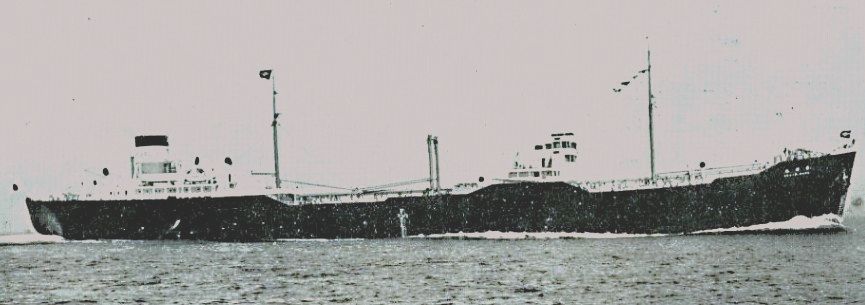
(GENYO MARU prewar as an Asano Bussan tanker)
IJN GENYO MARU:
Tabular Record of Movement
© 1998-2018 Bob Hackett and Peter Cundall.
Revision 16
1937:
Kobe. Completed as the 10,018-ton merchant tanker GENYO MARU by Kawasaki for Asano Bussan, Tokyo
2 November 1941:
Requisitioned by the IJN and registered in the Sasebo Naval District.
23 November 1941:
Sasebo Naval Yard. Begins conversion to a naval auxiliary.
10 December 1941:
Captain Ogawa Shigetaro (34)(former CO of NOJIMA) is appointed Supervisor.
15 December 1941:
The conversion is completed. Attached to Vice Admiral Ibo Takahashi's Third Fleet.
18 December 1941:
Departs Sasebo.
23 December 1941:
Arrives at Palau.
27 December 1941:
At Palau transfers 1772 tons fuel oil to cruiser HAGURO.
28 December 1941:
At Palau transfers 2370 tons fuel oil to cruiser NACHI.
29 December 1941:
At Palau at 1549 refuels PB-1. Transfers 2200 tons fuel oil to heavy cruiser MYOKO.
1 January 1942:
That evening refuels light cruiser JINTSU.
2 January 1942:
Supplies 335 tons and 500 tons fuel oil to cruisers NACHI and HAGURO respectively, and also an unspecified amount to patrol boat PB-34 and minelayer SHIRATAKA. Takes on stores from storeship KOSEI MARU.
4 January 1942:
Refuels destroyers KUROSHIO, AMATSUKAZE and HATSUKAZE.
5 January 1942:
Supplies the third torpedo squadron. Departs Palau
9 January 1942:
Arrives at Mako, Pescadores then departs later that day and arrives at Takao.
13 January 1942:
Takao. At 0915 refuels auxiliary gunboat KISO MARU.
17 January 1942:
Departs Takao.
23 January 1942:
Arrives at Davao.
25 January 1942:
At Davao transfers 320 tons fuel oil to destroyer IKAZUCHI.
2 February 1942:
Supplies transport MYOKO MARU with bunker fuel.
7 February 1942:
Departs Davao for Kendari.
9 February 1942:
At 0630 departs Staring Bay for Ambon with light cruiser JINTSU and destroyer IKAZUCHI.
11 February 1942:
At 0510 arrives and at 0715 departs Ambon escorted by destroyer HATSUKAZE.
13 February 1942:
Arrives Staring Bay. At Staring Bay at 1405 PB-1 refuels from GENYO MARU. The ship also refuels destroyers TOKITSUKAZE and HATSUKAZE.
15 February 1942:
At 0700 departs Staring Bay with destroyer IKAZUCHI.
20 February 1942:
Formosa Strait. Collides with and damages Army cargo ship DAKAR MARU. Later that day, arrives at Mako, where repairs commenced.
27 February 1942:
Departs Mako.
11 March 1942:
GENYO MARU departs Bandjermasin. That same day GENYO MARU and KAMIKAZE and SENKO MARUs are reported in the Macassar area being escorted by the minelayer WAKATAKA.
12 March 1942:
At Macassar refuels light cruiser NAKA, 9th DesDiv destroyers YAMAGUMO and ASAGUMO and the 16th DesDiv destroyers.
13 March 1942:
Still refuelling warships at Macassar. Soon after departs.
28 March 1942:
Arrives at Sasebo.
1 April 1942:
Departs Sasebo.
10 April 1942:
Refuels ships taking part in the Indian Ocean operation.
4 May 1942:
At 1500 allegedly departs Batavia in convoy supposedly with KENRYU MARU escorted by destroyer MINAZUKI. Note KENRYU MARU's TROM does not support this. Another source shows GENYO MARU refuelling light cruiser ISUZU at Surabaya this day and light cruiser NATORI on 8 May.
22 May 1942:
Arrives at Sasebo.
30 May 1942: Operation "MI" - The Battle
of Midway:
Departs Sasebo in Vice Admiral (later Admiral) Kondo Nobutake's (35) (former CO of KONGO) Second Fleet, Midway Invasion Force with Captain Murao Jiro's (39) Supply Group’s oilers SATA, TSURUMI and KENYO MARU and repair ship AKASHI.
4 June 1942:
Arrives at Truk.
13 June 1942:
Reassigned to the Northern Naval Force's (Fifth Fleet) 2nd Group.
15 June 1942:
Off Wake Island escorted by destroyer MINEGUMO, refuels the 5th cruiser squadron.
17 June 1942:
Completes refuelling at sea.
24 June 1942:
At 1200 arrives at Ominato.
28 June 1942:
At 1230 departs Ominato.
13 July 1942:
Arrives at Hiroshima Bay.
2 August 1942:
Departs Kure and transits the Bungo Straits.
7 August 1942: American Operation “Watchtower” – The Invasion of Guadalcanal, Solomons:
Rear Admiral (later Admiral) Richmond K. Turner's (USNA ’08) Amphibious Task Force 62, covered by Vice Admiral (later Admiral) Frank J. Fletcher’s (USNA ’06) Task Force 61 and Rear Admiral (Admiral posthumously) John S. McCain's (USNA ’06) Task Force 63’s land-based aircraft, lands MajGen (later Gen/MOH/Commandant) Alexander A. Vandergrift’s 1st Marine Division on Florida, Tulagi, Gavutu, Tanambogo and Guadalcanal opening the campaign to retake the island.
10 August 1942:
Departs Truk for Rabaul with destroyer HAMAKAZE.
14 August 1942:
Arrives at Rabaul.
3 September 1942:
Arrives at Shimotsu.
8 September 1942:
Reassigned to the Guadalcanal Transport Replenishment Group to support Naval Forces. That same day, departs Kanokawa and transits the Bungo Straits heading south.
17 September 1942:
At 1015 approaching the southern pass entrance to Truk the ship is missed by four torpedoes.
22 September 1942:
Joins the 8th Squadron at sea in area of 03-07N 155-10E.
24 September 1942:
Joins the 5th Cruiser Squadron at sea.
7 October 1942:
Arrives at Sasebo.
16 October 1942:
Departs Sasebo.
25 October 1942:
Refuels cruisers ATAGO and TAKAO at sea (ATAGO, 75 tons from 2318-2331). At 2300 joins a taskforce in the Eastern Solomons with SHINKOKU MARU. Later refuels destroyers from 25 DesDiv.
27 October 1942:
At 2140 again refuels destroyers from 25 DesDiv and cruisers of 5S.
28 October 1942:
At 0030 meets up with Taskforce off eastern Solomons in area of 01-19S 161-50E.From 0400-0730 undertakes refuelling operations with oiler SHINKOKU MARU. The ships are escorted by destroyer SUZUKAZE. GENYO MARU refuels heavy cruiser ATAGO on starboard side (68 tons between 0406-0700) and heavy cruiser TAKAO on port side. SHINKOKU MARU refuels 5S (Squadron) vessels. Also refuels destroyer NAGANAMI and light cruiser ISUZU.
30 October 1942:
At 1430 GENYO and SHINKOKU MARUs and destroyer SUZUKAZE arrive at Truk.
7 November 1942:
Transits the Bungo Straits enroute to Kure and Nagasaki in a convoy also consisting of empty tankers KENYO, NIPPON and TOEI MARUs. Arrives at Nagasaki.
11 November 1942:
Departs Nagasaki in a convoy also consisting of KENYO MARU escorted by torpedo boat HATO.
21 November 1942:
At 0800 arrives at Rabaul. At 1000 transfers heavy oil to TSURUMI.
22 November 1942:
Rabaul. At 0630 transfers heavy oil to TSURUMI. Finishes these operations at 1530.
21 January 1943:
At 0700 departs Truk for Singapore escorted by destroyer SAMIDARE. Soon after SAMIDARE is diverted to the HEIYO MARU disaster scene to rescue survivors.
8 February 1943:
Escorted by patrol aircraft while sailing between Davao and Jolo.
15 February 1943:
At Truk. Between 0630 and 1130 refuels heavy cruiser SUZUYA. From 1250 to 1628 refuels heavy cruiser KUMANO.
18 February 1943:
At 0800 at Truk refuels light cruiser JINTSU.
28 February 1943:
At 0800 departs Truk for Saipan escorted by destroyer ARIAKE. ARIAKE detaches later that day and returns to Truk the following day.
2 March 1943:
At 1130 arrives at Saipan from Truk.
3 March 1943:
At 1200 due to sail from Saipan for Singapore.
28 March 1943:
At 2100 tanker GENYO MARU escorted by destroyer ARIAKE (which met the ships about 2 days out of Truk), arrives at Truk.
10 April 1943:
Departs Truk escorted by destroyer KAGERO bound for Palembang and Singapore.
11 April 1943:
KAGERO, ghaving detached, arrives back at Truk.
1 May 1943:
Captain Iwahara Morie (36)(former CO of UKISHIMA MARU) is appointed Supervisor.
11 May 1943:
At 0700 GENYO MARU is tentatively identified as departs Palau for Balikpapan in fleet convoy
No. 2501 consisting of YASUKUNI, HAKUSAN, DAIGEN, KENKOKU, HOKO and KYOEI MARUs
escorted by destroyer KURETAKE.
18 May 1943:
At 1600, arrives at Balikpapan where the convoy is
dispersed.
31 May 1943:
At 1500 GENYO MARU departs Truk escorted by destroyer UMEKAZE.
1 June 1943:
After detaching 150 Rin from Truk, UMEKAZE arrives back at Truk.
10 June 1943:
At 0917 minesweeper W-16 departs Balikpapan and at 1050 meets up with inbound tanker GENYO MARU, the two ships arriving at Balikpapan at 1230.
2 July 1943:
At 1600 GENYO MARU departs Truk escorted by destroyers KIYONAMI and YUGURE.
5 July 1943:
At 1150 arrives at Rabaul.
30 July 1943:
Arrives at Truk.
31 July-2 August 1943:
Truk. On 31st July transfers 1330 tons of bunker fuel to light cruiser NAKA and 458 tons to light cruiser ISUZU. Over the next two days refuels NOWAKI and another DesDiv 27 destroyer, then refuels ISOKAZE and AKEBONO.
19 August 1943:
Departs Rabaul in convoy No. 2194 with an unidentified escort.
23 August 1943:
Arrives at Truk.
22 September 1943:
At 1500, GENYO MARU is attacked by LtCdr (later Cdr) Victor B. McCrea’s (USNA ’32) USS HOE (SS-258) in a submerged attack at 10-07N, 146-57E. McCrea fires six torpedoes, of which GENYO MARU’s lookouts spot the tracks of four. McCrea reports two hits and his target down by the stern and listing. Later at 10-10N 147-05 the destroyer YUZUKI meets up with GENYO MARU and escorts the ship to Truk.
23 September 1943:
Arrives at Truk.
6 October 1943:
At 1600, departs Truk via the South Channel with an unidentified destroyer.
10 October 1943:
At 0900, departs Truk with destroyer UMIKAZE that escorts the ship some distance before returning to Truk.
20 October 1943:
At 1000, departs Balikpapan with oiler AZUMA MARU escorted by patrol boat PB-102 (ex-USS STEWART, DD-224).
27 October 1943:
At 07-50N 143-00E destroyer YUZUKI meets up with the two tankers that are at this point unescorted.
29 October 1943:
At 0500, arrives Truk in convoy consisting of GENYO and AZUMA MARUs escorted by destroyer YUZUKI.
5 November 1943:
GENYO MARU departs Truk for Singapore in convoy with oiler HOYO MARU escorted by old destroyer YAKAZE, and store stores ship HAYASAKI.
6 November 1943:
150 miles NW of Truk. At 0200, the convoy is attacked by LtCdr (later Rear Admiral) Roy M. Davenport’s (USNA ’33) USS HADDOCK (SS-231) in a surface radar attack at 07-54N, 150-06E. Davenport fires six torpedoes at GENYO and HOYO MARUs from 3,000 yards. He then swings around and fires all four stern torpedoes at YAKAZE from about 4,000 yards.
The convoy switches on searchlights and opens fire. At 0005 (JST), YAKAZE steaming at 12 knots rams GENYO MARU’s starboard aft section. The escort’s bow is bent badly and speed reduced to 6 knots. YAKAZE returns to Truk on 7th. Davenport pulls off, reloads and about an hour later makes a second attack. He fires his last four torpedoes from 3,000 yards, two at each oiler, and claims sinking both. Actually, HOYO MARU is hit, set afire and abandoned.
GENYO MARU and YAKAZE return to Truk. Later that day, Subchaser CH-33 is detached and diverted and assists GENYO MARU. Near Orolup Islands, auxiliary minelayer KINJO MARU joins as escort. Cable layer escort TATEISHI, subchaser CH 33, and auxiliary minesweeper NOSHIRO MARU No.2 are also sent out from Truk in support roles.
Later, light cruiser NAGARA departs Truk and tows HOYO MARU back to port.
12 November 1943:
Departs Truk in a convoy consisting of oilers GENYO and AZUMA MARUs escorted by destroyer MATSUKAZE.
30 November 1943:
Departs Truk for Singapore.
9 December 1943:
Departs Balikpapan for Truk via Palau.
14 December 1943:
At 1630 departs Palau escorted by destroyer HAYANAMI and convoy later met en route by destroyer INAZUMA.
19 December 1943:
Arrives at Truk.
28 December 1943:
Between 0800 and 1040 refuels heavy cruiser KUMANO with 510 tons fuel oil.
29 December 1943:
Refuels heavy cruiser TONE.
30 December 1943:
Departs Truk escorted by the destroyer TACHIKAZE.
3 January 1944:
At 0731, departs Palau in Convoy NE-202 consisting only of GENYO MARU escorted by destroyer TACHIKAZE. At 10-30N - 133-33E, soon after its departure patrol boat PB-2 joins convoy NE-202 and takes over the escort from the destroyer TACHIKAZE.
5 January 1944:
At 1245 in position 04-04N 125-12E, PB-2 detaches to search for oiler KOKUYO MARU escorted by the storeship ARASAKI. At 1430, unable to find KOKUYO MARU. Returns to GENYO MARU.
6 January 1944:
At 0100, PB-2 rejoins with GENYO MARU.
7 January 1944:
At 1320 arrives at Balikpapan.
15 January 1944:
Departs Palembang.
16 January 1944:
Arrives at Singapore.
20 January 1944:
Captain Miyata Eizo (49)(former XO of KONGO) is appointed Commanding Officer.
25 January 1944:
At 0730, departs Singapore in convoy HI-32 consisting of oilers GENYO, OMUROSAN, TATEKAWA, ITSUKUSHIMA and KUROSHIO MARUs and passenger-cargo ships KINUGASA and HOKUROKU MARUs escorted by carrier CHITOSE and destroyer YUKIKAZE.
E 28 January 1944:
Kaibokan MIYAKE joins the convoy from Manila.
1 February 1944:
A patrol plane from the CHITOSE spots a small drifting boat ahead of the convoy, about 60 nm east of Okinawa. MIYAKE is detached to investigate. When closing it becomes clear that the small boat is actually a landing barge with more than 100 survivors from the TARUSHIMA MARU 4865gt. MIYAKE takes over 54 survivors, followed by YUKIKAZE which takes over the remaining 57 survivors.
4 February 1944:
CHITOSE detaches and heads to Sasebo. At 1100, the convoy arrives at Moji. Later that day, GENYO MARU arrives at Tokuyama.
7 February 1944::
Departs Tokuyama.
11 March 1944:
At 1900, convoy HI-53 arrives at Takao from Moji. The convoy probably consists of tankers GENYO and MIRI MARUs and an unidentified ship. Destroyer AMAGIRI and kaibokan KANJU join the escort.
18 March 1944:
At 1730, arrives at Singapore.
29 March 1944:
At 1840 departs Balikpapan in convoy bound for Palau via Davao consisting of tankers GENYO and KOKUYO MARUs together with destroyers HAYANAMI and HAMANAMI, likely kaibokan KANJU and initially patrol boat PB-102.
1 April 1944:
Arrives at Davao. The convoy stops here presumably because of the 30-31 March air raid on Palau.
8 April 1944:
Departs Davao, Philippines in convoy consisting of tankers GENYO and KOKUYO MARUs together with destroyers HAMAKAZE, TANIKAZE, URAKAZE, HAYANAMI and HAMANAMI and kaibokan KANJU.
10 April 1944:
Arrives at Tarakan, Borneo. Loads a cargo of refined oil.
12 April 1944:
Departs Tarakan still in convoy.
14 April 1944:
Arrives at Balikpapan, Borneo. Loads fuel oil.
18 April 1944:
Departs Balikpapan in a convoy also consisting of tankers KOKUYO and YUHO MARUs, and gasoline tanker SUNOSAKI escorted by destroyers OKINAMI, TANIKAZE and URAKAZE and kaibokan KANJU.
26 April 1944:
Arrives at Saipan, Marianas. Discharges fuel oil.
29 April 1944:
Departs Saipan in convoy also consisting of tankers KOKUYO and YUHO MARUs, and gasoline tanker SUNOSAKI escorted by destroyers OKINAMI, TANIKAZE and URAKAZE and kaibokan KANJU.
7 May 1944:
At 1100 arrives at Balikpapan. Lightly damaged by a mine in the shipping channel. Loads fuel oil.
13 May 1944:
At 0800 departs Balikpapan in convoy with KOKUYO MARU and Naval gasoline tanker SUNOSAKI escorted by destroyers TANIKAZE and URAKAZE.
15 May 1944:
At 1135 arrives at Tawi Tawi, Philippines.
26 May 1944:
At 1800 oiler TSURUMI comes alongside to starboard. GENYO MARU receives 3000t of heavy oil and 100t of fresh water.
27 May 1944:
Departs Tawi Tawi on mid sea refueling mission, first with one destroyer then with two cruisers. Afterwards returns to Tawi Tawi.
2 June 1944:
Tawi Tawi. Assigned to Vice Admiral Ozawa’s 2nd Supply Force. Refuels super-battleships MUSASHI and YAMATO. At 1450 supplies 75 tons fuel to heavy cruiser TONE. At 1530 refuels heavy cruiser KUMANO with 65 tons fuel.
3 June 1944:
At 1100, 2nd Supply Force’s oilers GENYO and AZUSA MARUs escorted by destroyers URAKAZE, YUKIKAZE and MAIKAZE depart Tawi Tawi for Point "I", a holding position 130 miles E of northern Mindanao, Philippines. Later that day, they depart Point I for Guimaras located between Negros Island and Panay Islands.
8 June 1944:
Arrives off Guimaras Island with AZUSA MARU escorted by destroyer URAKAZE.
13 June 1944: Operation “A-GO” - The Defense of the Marianas:
Hashirajima. From his flagship light cruiser OYODO, the CINC, Combined Fleet, Admiral Toyoda Soemu, (former CO of HYUGA), signals the fleet to activate Operation "A-GO". At 1724 refuels heavy cruiser TONE.
14 June 1944:
Guimaras, Philippines. Vice Admiral Ozawa Jisaburo's Mobile Fleet's Main Body arrives and the 2nd Supply Force begins refueling operations.
15 June 1944:
Guimaras. At 0800, refueling is completed and the Mobile Fleet's Main Body departs. At 0830, the 2nd Supply Force and destroyers YUKIKAZE and UZUKI depart. They heads through the Visayan Sea and San Bernardino Strait into the Philippine Sea towards the designated refueling rendezvous holding area.
16 June 1944:
NW of Palau. At about 2300, LtCdr (Later Rear Admiral) Herman J. Kossler's (USNA ’34) USS CAVALLA (SS-244) is running on the surface towards the San Bernardino Strait. Her SJ radar detects four targets. Kossler closes and identifies two oilers escorted by two destroyers on a southeasterly course. Kossler increases speed and begins an "end around" to get ahead of the small convoy.
17 June 1944:
At 0315, Kossler completes the "end around" and dives to begin an approach. He closes on either AZUSA MARU or GENYO MARU and sets up for an attack. Just as he is about to fire, one of the destroyers apparently spots his 'scope and charges USS CAVALLA. Kossler takes the submarine deep as the destroyer passes overhead. He remains submerged until about 0500. When USS CAVALLA again comes to persicope depth, the convoy is nowhere in sight. At 0545, USS CAVALLA surfaces and gets off a contact report to COMSUBPAC.[1]
GENYO MARU Arrives at E point (12.00N 131.00 E), At 1440, destroyer UZUKI joins GENYO MARU. At 1550, destroyer AKIZUKI also arrives. At 1845, destroyers AKIZUKI and URAKAZE are detached. The oiler then departs E point.
18 June 1944:
Arrives at F point (14.40N 134.20E). At 0730, oiler HAYASUI, destroyers HATSUSHIMO, YUNAGI and TSUGA all join the convoy. At 1515, light cruiser NATORI also joins the convoy.
19 June 1944:
At 0515, NATORI is detached. Departs F point. At 2400, GENYO MARU is at 15-20N, 134-40E.
20 June 1944: The Battle of the Philippine Sea:
At 0620, the fleet reverses course and completes refuelling. The fleet departs at high speed leaving GENYO MARU trailling. At 1746, a formation of Grumman "Avenger" TBF torpedo-bombers and Curtiss "Helldiver" SB2C-1 dive-bombers attacks the ships.
At 1806, GENYO MARU is dive-bombed by three SB2C-1 dive-bombers from Task Force 58's USS WASP (CV-18) Air Group 86. Bombs hit the port gangway near the machinery room, about 10 yards from the starboard bow and near the portside of the bridge wrecking the area. Near misses split GENYO MARU's sides and cause her engine to stop at 1810.
At 1850, AZUSA MARU takes GENYO MARU in tow. About 1,000 tons of water are taken onboard. This slows the towing and the line breaks several times. Since the enemy force is present nearby, this creates an impossible situation. At 2025 all hands prepare to abandon ship and at 2100 UZUKI comes alongside.
950 miles E of Luzon. At 2150, GENYO MARU's flag is hauled down. At 2200, her Kingston valves are opened and scuttling commences. At 2205, the crew abandons ship. At 2220, after UZUKI removes the crew, she scuttles GENYO MARU with gunfire. The ship is set afire, explodes and sinks at 15-35N 133-30E. Captain Miyata survives the sinking and is later appointed the Chief Equipping Officer of HARIO.
10 August 1944:
Removed from the Navy List.
Authors' Note:
[1] As a result of Kossler's contact report, COMSUBPAC repositions several submarines, among them USS CAVALLA and LtCdr James W. Blanchard's USS ALBACORE (SS-218). On 19 Jun '44, Blanchard torpedoes and sinks the new fleet carrier TAIHO. Later that same day, Kossler sinks SHOKAKU, the penultimate surviving carrier of the attack on Pearl Harbor.
Thanks for assistance go to Sander Kingsepp of Estonia and Allan Alsleben of Oregon.
Credit for the photo of GENYO MARU goes to Erich Muehlthaler of Germany via Gilbert Casse of France. Thanks to Mr. Gilbert Casse for extra information in revision 4 and Mr. John Whitman of USA for extra information in Revision 5. Thanks also to Gengoro Toda of Japan and Mr. Matthew Jones of Missisippi, USA, the latter for assistance in identifying COs.
- Bob Hackett and Peter Cundall.
Back to the Oilers Page

