ZATSUYOSEN!
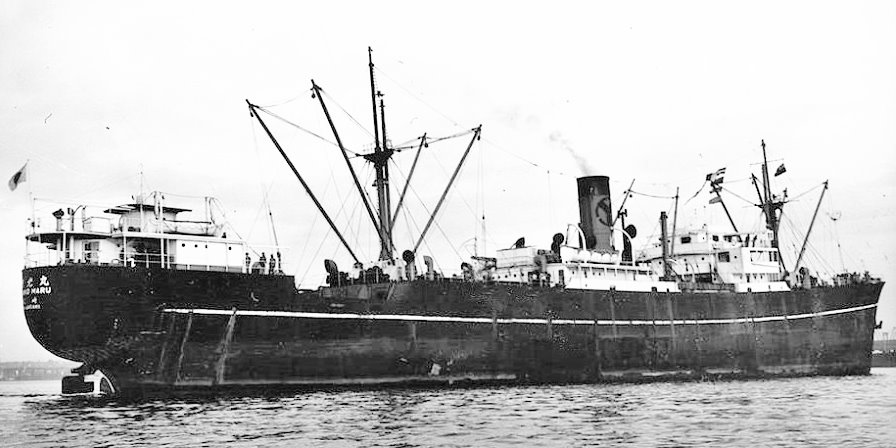 (CHOKO MARU, prewar)
IJN CHOKO MARU:
Tabular Record of Movement
© 2011-2015 Gilbert Casse, Bob Hackett and Peter Cundall
Revision 2
6 February 1939:
Tama. Laid down by Tama Zosensho K.K. as a 3,515-ton cargo ship for Taiyo Kogyo K.K., Kobe.
1 June 1939:
Launched and named CHOKO MARU [1].
30 November 1939:
Completed and registered at Kobe.
E 1939:
Chartered to Mitsui Bussan K.K.
19 July 1941:
Requisitioned by the IJN as a transport (Ippan Choyosen). [2]
9 September 1941:
Attached to the Yokosuka Naval District.
20 September 1941:
Registered in the IJN as an auxiliary transport under internal order No. 1093 and attached to the Kure Naval District with Kure as home port as an auxiliary transport, (Otsu) category. Starts her conversion to her military role at Kure Naval Yard. [3]
14 October 1941:
Conversion is completed.
22 October 1941:
Departs Kure. Calls at Osaka and Tokyo.
5 November 1941:
Arrives at Yokosuka.
6 November 1941:
Departs Yokosuka for Pagan Island, northern Marianas.
12 November 1941:
Arrives at Pagan.
15 November 1941:
Departs Pagan for Saipan, Marianas.
16 November 1941:
Arrives at Saipan.
22 November 1941:
Departs Saipan for Otaru, Hokkaido.
4 December 1941:
Arrives at Otaru. Departs later that same day and arrives at Yokohama at an unknown date.
E December 1941:
Departs Yokohama for Muroran, Hokkaido.
19 December 1941:
Arrives at Muroran.
22 December 1941:
Departs Muroran for Palau, Western Carolines.
2 January 1942:
Arrives at Palau.
8 January 1942:
Departs Palau for Yokosuka.
19 January 1942:
Arrives at Yokosuka. Departs later that same day.
E January-February 1942:
Calls at Hakodate, Hokkaido then at Muroran, Tokyo and Chichi-Jima, Ogasawara Gunto (Bonins).
20 February 1942:
R
Resupplies with assorted goods auxiliary gunboats MAGANE and YOSHIDA MARUs.
E February-March 1942:
Calls at Chichi-Jima, Haha-Jima, and Iwo Jima, Ogasawara Gunto (Bonins).
18 March 1942:
Arrives at Marcus Island (Minami Torishima).
20 March 1942:
Departs Marcus for Tinian, Marianas.
23 March 1942:
Arrives at Tinian.
30 March 1942:
Departs Tinian for Chichi-Jima.
3 April 1942:
Arrives at Chichi-Jima. Comes alongside and resupplies auxiliary gunboats MAGANE and YOSHIDA MARUs with assorted fresh goods.
4 April 1942:
Departs Chichi-Jima.
E April-May 1942:
Calls at Osaka, Moji, Chinnampo in Korea (Chosen), Takao and Kirun in Formosa (now Kaohsiung and Keelung, Taiwan), Yokkaichi, Mie Prefecture, and again Moji and Chinnampo.
29 May 1942:
Arrives at Kure. Probably undergoes some maintenance and repairs.
12 June 1942:
Departs Kure.
E June 1942:
Calls at Moji, Nagoya and Tamano.
24 June 1942:
Arrives at Tamano. Docks at Mitsui Engineering and Shipbuilding K.K. Shipyard for maintenance and repairs.
11 July 1942:
Repairs are completed. Exits shipyard and departs Tamano.
E July-August-September 1942:
Calls at Yokohama, Otaru, then at Raichishi, Karafuto (now Aynuskoye, Sakhaline), Osaka, then at Chirikoro, Karafuto (now Nerpichye, Sakhaline), Otaru again, Asase, Karafuto (now Sakhaline), Hakodate and Yokohama again.
25 September 1942:
Arrives at Ujina, Hiroshima Prefecture. CHOKO MARU is fitted with one IJA 75mm/31-cal Type 38 field gun placed on a platform at her stern. Four soldiers, civilian personnel, 12 workers and three gunners embark.
26 September 1942:
Departs Ujina for Pusan, Chosen (now Busan, Korea).
27 September 1942:
Arrives at Pusan. Departs later that same day.
28 September 1942:
Arrives at Saeki, Kyushu.
29 September 1942:
Departs Saeki for Rabaul, New Britain, in convoy “Oki” No. 4 also consisting of IJA transport HAMBURG MARU and and auxiliary transport (ex-auxiliary minesweeper tender) IKUSHIMA MARU escorted by destroyers HATAKAZE and MINEKAZE, torpedo boat HATO and patrol boat PB-31.
13 October 1942:
Arrives at Rabaul.
20 October 1942:
Departs Rabaul for Palau in a convoy also consisting of auxiliary transports YAMAGIRI, TOEI and IKUSHIMA MARUs with unknown escort.
26 October 1942:
Arrives at Palau.
30 October 1942:
Departs Palau for Angaur, Palaus.
31 October 1942:
Arrives at Angaur.
1 November 1943:
Departs Angaur for Miyako, Iwate Prefecture.
10 November 1942:
Arrives at Miyako.
13 November 1942:
Military personnel and civilian employees disembark. Departs Miyako for Muroran.
14 November 1942:
Arrives at Muroran.
17 November 1942:
Departs Muroran for Yokosuka.
21 November 1942:
Arrives at Yokosuka.
E November 1942:
Army field gun is unloaded. Fittings of Navy guns begin.
27 November 1942:
Fitted with nine guns provided by Kure Special Navy Landing Forces (SLNF) personnel.
30 November 1942:
Departs Yokosuka for Palau.
7 December 1942:
Arrives at Palau. Loads bauxite.
16 December 1942:
Departs Palau and arrives the same day at Garasumao, Babeldaob (Babelthuap), Palaus.
22 December 1942:
Departs Garasumao for Moji, alone.
28 December 1942:
Minelayer NUWAJIMA joins CHOKO MARU at about 30-00N, 133-00E and provides escort N as far as off Fukajima.
31 December 1942:
Arrives at Moji.
3 January 1943:
Departs Moji for Miike.
4 January 1943:
Arrives at Miike.
7 January 1943:
Departs Miike for Palau.
14 January 1943:
Arrives at Palau.
23 January 1943:
Departs Palau and arrives that same day at Garasumao.
28 January 1943:
Departs Garasumao for Moji. Although not in convoy, CHOKO MARU probably is joined by IJA Transport SAN FRANCISCO MARU also heading north.
6 February 1943:
Arrives at Moji.
7 February 1943:
Departs Moji for Fushiki, Toyama Prefecture.
9 February 1943:
Arrives at Fushiki.
11 February 1943:
Departs Fushiki for Moji.
14 February 1943:
Arrives at Moji. Departs later that day for Katayama, Ehime Prefecture, Shikoku.
15 February 1943:
Arrives at Katayama.
18 February 1943:
Departs Katayama and arrives the same day at Niihama, Shikoku.
21 February 1943:
Departs Niihama for Moji.
22 February 1943:
Arrives at Moji.
23 February 1943:
Departs Moji for Takao in convoy No. 130 also consisting of eight unidentified merchant ships escorted by patrol boat PB-36. The convoy splits into three parts shortly after leaving port. CHOKO MARU is probably in the third part of the convoy.
27 February 1943:
The first part arrives at Takao.
28 February 1943:
The second and third parts arrive at Takao.
5 March 1943:
Departs Takao for Manila, Luzon, Philippines in convoy No. 739 also consisting of two unidentified merchant ships escorted by auxiliary gunboat CHOJUSAN MARU.
8 March 1943:
Arrives at Manila.
10 March 1943:
Departs Manila for Macassar, Celebes (now Sulawesi).
16 March 1943:
Arrives at Macassar.
28 March 1943:
Departs Macassar for Pomalaa, Celebes.
29 March 1943:
Arrives at Pomalaa.
16 April 1943:
Departs Pomalaa for Macassar.
17 April 1943:
Arrives at Macassar.
20 April 1943:
Departs Macassar for Manila.
27 April 1943:
Arrives at Manila.
1 May 1943:
Departs Manila for Takao in convoy No. 845 also consisting of IJA transports NISHIYAMA (SEIZAN), AWAJI and ASAKA MARUs escorted by kaibokan MATSUWA.
4 May 1943:
Arrives at Takao.
6 May 1943:
Departs Takao for Kanmon channel, Shimonoseki in convoy No. 259 also consisting of seven unidentified merchant ships escorted by destroyer HOKAZE.
11 May 1943:
Arrives at Shimonoseki. Departs later for Niihama.
12 May 1943:
Arrives at Niihama.
16 May 1943:
Departs Niihama for Kure.
17 May 1943:
Arrives at Kure. Departs later for Miike.
19 May 1943:
Arrives at Miike.
20 May 1943:
Departs Miike for Wada-Misaki.
22 May 1943:
Arrives at Wada-Misaki. Departs later for Yokosuka.
25 May 1943:
Arrives at Yokosuka.
26 May 1943:
Departs Yokosuka for Chichi-Jima in convoy also consisting of IJA transports TOKO and KAIKO MARUs escorted by auxiliary minelayer TOSHI MARU No.8. Auxiliary storeship SHINYO MARU probably joins the convoy off Chichi-Jima.
30 May 1943:
Arrives at Chichi-Jima.
31 May 1943:
Departs Chichi-Jima for Saipan.
4 June 1943:
Arrives at Saipan.
14 June 1943:
Departs Saipan and arrives the same day at Rota, Marianas.
19 June 1943:
Departs Rota for Saipan.
20 June 1943:
Arrives at Saipan.
3 July 1943:
At 1735 departs Saipan for Yokohama, in convoy with TAIAN MARU escorted by auxiliary minesweeper SEKI MARU No. 3, auxiliary netlayer SHUKO MARU and auxiliary submarine chaser KYO MARU No. 8.
E 4 July 1943:
The three escorts are detached and return to Saipan arriving at 1000 the following day.
11 July 1943:
Arrives at Yokohama. Then transfers to Yokosuka.
E July 1943:
Her registered port is changed for Tokyo.
16 July 1943:
Departs Yokosuka for Muroran.
24 July 1943:
Arrives at Muroran.
26 July 1943:
Departs Muroran for Same, Aomori Prefecture.
27 July 1943:
Arrives at Same.
2 August 1943:
Departs Same for Nagoya.
10 August 1943:
Arrives at Nagoya.
13 August 1943:
Departs Nagoya.
E August 1943:
Calls at Wakamatsu, Fukuoka Prefecture and departs for Dairen, Manchuria (now Dalian, northern China).
21 August 1943:
Arrives at Dairen.
25 August 1943:
Departs Dairen for Kobe.
31 August 1943:
Arrives at Kobe.
5 September 1943:
Departs Kobe.
E September 1943:
Calls at Kure, Tamano, Osaka, Shimonoseki, then Truk.
17 September 1943:
At 0600 arrives at Truk escorted by subchaser CH-30.
20 September, 1943:
At 1300 departs Truk in convoy No. 4920 also consisting of Naval tanker NOTORO, auxiliary collier SHINYUBARI MARU and auxiliary storeship CHIYO MARU escorted by destroyer OITE and submarine chaser CH-29.
21 September 1943:
About 80 nms W of Onoun (Ulul), Ororu Shoto, Carolines. LtCdr (later Rear Admiral) Roy M. Davenport's (USNA ’33) USS HADDOCK (SS-231) intercepts the convoy. At 1821, Davenport torpedoes and damages
SHINYUBARI MARU at 08-53N, 148-30E. In the same attack, OITE is hit by a dud torpedo. The convoy resumes his course to Saipan.
W of Truk. About 2300 that same day, in a radar attack on the surface, LtCdr (later Rear Admiral) Roy M. Davenport’s (USNA ’33) USS HADDOCK (SS-231) fires a spread of six bow torpedoes. One hits and damages NOTORO. She makes for Truk escorted by CH-29.
24 September 1943:
Arrives at Saipan.
30 September 1943:
Arrives at Sasebo.
4 October 1943:
Departs Sasebo for Seito (Tsingtao) (now Qingdao), China.
7 October 1943:
Arrives at Seito.
10 October 1943:
Departs Seito for Dairen.
11 October 1943:
Arrives at Dairen.
14 October 1943:
Departs Dairen for Muroran.
20 October 1943:
Arrives at Muroran.
26 October 1943:
Departs Muroran for Kawasaki, Kanagawa Prefecture.
29 October 1943:
Arrives at Kawasaki.
31 October 1943:
Departs Kawasaki and arrives the same day at Tokyo.
E November 1943:
Loads building materials, fuel, assorted goods, towing materials and other sundries.
5 November 1943:
Departs Tokyo and arrives later that day at Yokosuka.
E 6-7 November 1943:
Joins six other cargo ships. Replenishes boiler water. Five passengers embark.
7 November 1943:
Departs Yokosuka for Truk in convoy No. 3107 also consisting of IJA tanker UNYU MARU No. 2 escorted by torpedo boat OTORI.
20 November 1943:
Arrives at Truk.
E November 1943:
Replenishes boiler water. Two of the three passengers aboard disembark.
23 November 1943:
At 1400, departs Truk for Kwajalein, Marshalls, in convoy No. 5233 also consisting of auxiliary water tanker NIPPO MARU and auxiliary transport NANKAI MARU No. 2, the latter towing “special” craft No. 35, escorted by cable-layer TATEISHI and subU CH-40. [4] [5]
1 December 1943:
During the night the tow to oil barge No. 35 breaks and the barge is abandoned. At 0830 the convoy arrives at Kwajalein less NIPPO MARU that was previously detached for Ponape, Carolines.
5 December 1943:
While still unloading cargo including 50-gallon barrels of fuel, a Task Force 51 air strike consisting of 27 Douglas "Dauntless"SBD dive-bombers and Grumman "Avenger"TBF torped-bombers attacks ships in Kwajalein atoll. At 0520, CHOKO MARU is hit by two bombs in her No. 4 hold and her engine room that both are set afire. Shortly after, a second strike consisting of 22 aircraft attacks. At 0535, another bomb causes her No. 5 hold to burst in flames in a vast explosion. All day long, damage parties try to extinguish the fires and save the ship.
6 December 1943:
At 0200, despite damage parties efforts, the fires continue their progression. CHOKO MARU's No. 4 and No. 5 holds partially flood. At 0300, her engine room floods about 65 ft long. At 0420, CHOKO MARU’s list increases rapidly and the sea begins to wash her port deck. Orders to abandon the ship are given. At 0437, listing heavily to port, she begins to sink by her stern about 1.5 nms WSW of Little Bustard Island (Orubeppu). Four crewmen are KIA.
5 February 1944:
Removed from the Navy List under internal order No. 305.
Authors Notes:
[1] Not to be confused with the other ships bearing the same name like Teikoku Kisen’s cargo (’20, 6783 GRT), auxiliary net-layer (’40, 889 GRT), auxiliary stores ship (’24, 1794 GRT), raised transport (ex-British HSIN YANGTSE) (’27, 921 GRT) and Taiyo Gyogyo’s cargo (’40, 842 GRT).
[2] See Zatsuyosen home page for a full explanation.
[3] There were two categories of Zatsuyosen. (Ko) category with an IJN Captain as supervisor aboard and (Otsu) category without.
[4] CH-40 apparently was detached from convoy No. 5233 and made port at Rabaul on or before 26 November.
[5] Some sources say CH-30 rather than CH-40.
Thanks go to Gengoro S. Toda of Japan.
-Gilbert Casse, Bob Hackett and Peter Cundall
Back to
IJN Transports Page

