© 2007-2018 Bob Hackett, Sander Kingsepp and Peter Cundall
Revision 10
26 February 1921:
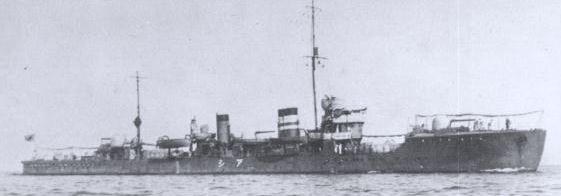
Laid down as a MOMI-class destroyer at Ishikawajima Shipbuilding.
14 March 1922:
Launched and named YOMOGI.
10 June 1922:
LtCdr (RAdm, posthumously) Arima Naoshi (36) is appointed Chief Equipping Officer.
19 August 1922:
Registered in the IJN. LtCdr Arima is the CO.
1 December 1925:
LtCdr (later Captain) Chigusa Keikichi (37) assumes command. LtCdr Arima is later posted CO of KISARAGI.
1 December 1927:
Lt (Captain, posthumously) Prince Fushimi Hiroyoshi (45) (former CO of KABA) is appointed the CO. LtCdr Chigusa is posted CO of MINEKAZE.
10 December 1928:
An unknown officer assumes command.
1 November 1929:
LtCdr (Vice Admiral, posthumously) Baron Ijuin Matsuji (43) assumes joint command of YOMOGI.
30 November 1929:
An unknown officer assumes command.
1 December 1930:
LtCdr (later Rear Admiral) Matsubara Hiroshi (45) assumes command.
2 November 1931:
Lt (Rear Admiral, posthumously) Amano Shigetaka (47) assumes command.
1 December 1931:
Lt Amano is promoted LtCdr.
17 May 1933:
Lt (later Captain) Yamada Tetsuo (49) is appointed the CO.
1 July 1934:
Lt Tashiro Itaru is appointed the CO. Lt Yamada is later promoted LtCdr and posted CO of ASANAGI.
1 April 1935:
Lt (later Captain) Fujita Hiroshi (50)(former navigator of SETA) is appointed the CO. He is later relieved at an unknown date by an unknown successor.
1937:
YOMOGI's funnels are raised and capped.
1 May 1937:
Cdr (later Captain) Kawahara Kinnosuke (39) is appointed the CO, with additional duty as CO of HISHI.
1 July 1937:
Cdr Kawahara is posted CO of TADE as a further additional duty. He is later relieved at an unknown date by an unknown successor.
10 August 1937:
Cdr Kawahara is relieved as CO of HISHI.
1 September 1937:
LtCdr Imoto Konosuke is appointed the CO. Cdr Kawahara is later promoted Captain and posted CO of SAN CLEMENTE MARU.
1 January 1938:
LtCdr (Captain, posthumously) Hagio Tsutomu (52) is appointed the CO.
20 February 1939:
An unknown officer is appointed the CO. LtCdr Hagio is posted CO of YUGURE.
1939:
One of three Kampon boilers is removed reducing speed to 18 knots. Additionally, her torpedo tubes, aft 4.7-inch/45 cal main gun and minesweeping gear are removed. 25mm AA guns and depth charge racks and throwers are fitted for 60 DCs. Extra ballast is added to compensate for the loss of topside weight and to increase stability. The changes increase her displacement to 935-tons.
1 April 1940:
Reclassified as a patrol boat and renumbered 38.
1941:
PB-38 undergoes reconstruction. Her aft funnel is removed and her stem cut down to form a ramp, She is fitted to carry and launch a 46-ft Daihatsu landing craft. Her forward interior spaces are modified to accommodate up to 150 troops. The number of DCs carried is reduced to 18. Her 25mm AA suite is increased.
10 February 1941:
Designated flagship of the Sasebo Guard Unit.
7 January 1942: The Invasion of Dutch Borneo:
Rear Admiral (later Vice Admiral) Hirose Sueto's (39) (former CO of AOBA) Tarakan Occupation Force departs Davao, Philippines carrying MajGen Sakaguchi Shizuo’s 56th Mixed Infantry Group (Sakaguchi Brigade) and the Kure No. 2 SNLF. The invasion force includes Army transports TSURUGA, LIVERPOOL, HAVANA, KURETAKE, NICHIAI, HITERU, TEIRYU (ex German AUGSBURG), HANKOW and EHIME MARUs, Navy transports KUNIKAWA, KANO, KAGU and RAKUTO MARUs and tanker KOKUYO MARU. Other escorts include MineSweepDiv 11’s W-13, W-14, W-15, W-16, MineSweepDiv 30’s W-17, W-18 and SubChasDiv 31’s CH-10, CH-11, CH-12 and other auxiliary ships.
The convoy’s escort is provided by Rear Admiral (later Vice Admiral) Nishimura Shoji’s (39) (former CO of HARUNA) DesRon 4’s light cruiser NAKA with DesDiv 2’s HARUSAME, SAMIDARE, YUDACHI and MURUSAME, DesDiv 9’s ASAGUMO and MINEGUMO, NATSUGUMO and DesDiv 24’s UMIKAZE, KAWAKAZE, YAMAKAZE and the SUZUKAZE. The 21st Air Flotilla’s tenders SANYO and SANUKI MARUs provide air cover.
Rear-Admiral Hirose’s No. 2 Base Force includes patrol boats PB-38, PB-36 and PB-37 MineSweepDiv 11’s W-13, W-14, W-15, W-16, MineSweepDiv 30’s W-17, W-18 and SubChasDiv 31’s CH-10, CH-11, CH-12 and other auxiliary ships.
8 January 1942:
PB-38, PB-37 and SANYO MARU rendezvous with units of No. 2 Base Force (Central Force) and proceed to Tarakan, Borneo.
11 January 1942:
Hirose's Force invades Tarakan. That night, NE of the island, Dutch minelayer KNS PRINS VAN ORANJE attempts to escape, but is sunk by gunfire from PB-38 and destroyer YAMAKAZE with heavy loss of life.
21 January 1942:
PB-38 departs Tarakan with PB-36 and PB-37, minesweepers W-16, W-17 and W-18 and subchasers CH-10, CH-11 and CH-12 escorting 16 transports carrying the Balikpapan Invasion Force consisting of the Sakaguchi Brigade. Light cruiser NAKA provides cover with DesDiv 2's YUDACHI, SAMIDARE, HARUSAME, DesDiv 9's ASAGUMO, MURASAME, MINEGUMO, NATSUGUMO and DesDiv 24's KAWAKAZE, YAMAKAZE and UMIKAZE.
ABDA (American-British-Dutch-Australian) forces air reconnaissance is hampered by poor weather, but ABDA Air locates the IJN invasion force. ABDA deploys submarines USS S-40, USS PORPOISE (SS-172), USS PICKEREL (SS-177), USS STURGEON (SS-187), USS SAURY (SS-189) and USS SPEARFISH (SS-190) and the Dutch submarines KNS K-XIV and the KNS K-XVIII to intercept the IJN force.
Timor, Kupang Bay. Rear Admiral (later Vice Admiral) William A. Glassford's Task Force 5's light cruisers USS MARBLEHEAD (CL-12), USS BOISE (CL-47) and Cdr Paul H. Talbot's DesDiv 59's old destroyers USS PARROTT (DD-218), USS POPE (DD-225), USS JOHN D. FORD (DD-228) and USS PAUL JONES (DD-230) are ordered by ADBA Command to stop the IJN invasion force before it reaches Balikpapan.
Glassford heads north to find the IJN invasion force, but USS BOISE runs aground on an uncharted reef in the Sape Strait. She is forced to retire for repairs. Then USS MARBLEHEAD develops engine trouble and can make no more than 15 knots. DesDiv 59 is detached and increases speed to 27 knots so as to arrive at Balikpapan at midnight on January 23rd.
23 January 1942: The Invasion of Balikpapan, Borneo:
Storms protect the invasion force until it is almost to Balikpapan, Borneo. At 1525, nine Dutch Martin Model 166 (B-10) bombers from Samarinda attack and hit transports TATSUGAMI and NANA MARU that has to be abandoned and later sinks. TATSUGAMI MARU continues on to Balikpapan. At 2130, the transports begin disembarking their troops.
24 January 1942:
Dutch Navy LtCdr C. A. J. van Well Groeneveld's (former CO of K-XIV) submarine KNS K-XVIII, operating on the surface due to the weather, fires four bow torpedoes at NAKA, but they all miss. At 0045, Groeneveld attacks and sinks transport TSURUGA MARU at 00-10N, 118-0E. 38 troops and a single crewman are killed. Nishimura moves his covering force eastwards to carry out antisubmarine sweeps.
Cdr Talbot's DesDiv 59 arrives from the south. Since Nishimura's covering forces are now to the east searching for submarines, the four destroyers are virtually unopposed. At 0316, they begin their first attack firing their 4-inch guns and launching ten torpedoes at the anchored transports, but all the torpedoes miss. Talbot orders another attack. At 0330, POPE hits and sinks transport SUMANOURA MARU. The ship explodes and 9 passengers, and the ship’s whole Navy crew are obliterated. At 0335, USS PARROTT and USS PAUL JONES sink already damaged transport TATSUGAMI MARU with torpedoes. Four crewmen are killed. At 0345, USS JOHN D. FORD sinks transport KURETAKE MARU with gunfire and torpedoes. The ship was carrying a total of 1500 infantry of the 56th Mixed Regimental Group (Sakaguchi Brigade) of whom 180 (including some shipping engineers) are killed. Two other transports suffer damage from gunfire and torpedoes but remain afloat. USS POPE and USS PARROTT sink the 2nd Base Force's patrol boat PB-37 with torpedoes and gunfire.
At 0350, their torpedoes gone, DesDiv 59 departs southward. Aboard NAKA, Rear Admiral Nishimura, alerted to the ABDA surface forces attacking the transports, abandons the antisubmarine sweep and heads west at high speed in an unsuccessful pursuit of the American destroyers.
24 January 1942:
At 0300, the Japanese begin landing troops at Balikpapan. That same day, troops invade Kendari, Celebes.
29 March 1942: The Invasion of Dutch New Guinea:
Rear Admiral (later Vice Admiral) Fujita Ruitaro's (38) (former CO of FUSO) "N" Expeditionary Force assembles at Ambon Island. Fujita's Force includes CarDiv 11's seaplane carrier CHITOSE, light cruiser KINU, DesDiv 16's YUKIKAZE and TOKITSUKAZE, torpedo boats TOMOZURU, HATSUKARI, patrol boats PB-38, PB-1, PB-2 and PB-39, SubChasDiv 54's SHONAN MARU Nos. 5 and 17 and FUKUEI MARU No. 15, oiler SEIAN MARU and transport HOKUROKU MARU plus a Special Naval Landing Force. The "N" Expeditionary Force departs Ambon.
31 March 1942:
Arrives at Boela, Ceram Island. Moluccas.
1-21 April 1942:
The N Expeditionary Force invades Fak-Fak, Babo, Sorong, Manokwari, Moemi, Nabire, Seroei, Sarmi and Hollandia, New Guinea.
4 April 1942:
Sorong. From 1655, Patrol Boat PB-2 acting as special type cargo and landing ship lands troops from Sasebo Naval Landing Force ashore assisted by auxiliary gunboat MANYO MARU. At 1805, troops from Patrol Boat PB-38 are landed as reinforcements.
23 April 1942:
The N Expeditionary Force is dissolved. All units return to Ambon Island.
7 August 1942:
Reassigned to the 1st Marine Escort Division. Departs Sasebo for Rabaul.
21 August 1942:
PB-36 and PB-39 followed 6 days later by PB-38 arrive at Rabaul. Participates in operations in western new Guinea.
24 August 1942:
At 1000 PB-38 departs Truk with DesRon-3 (light cruiser SENDAI and destroyers ASAGIRI, YUGIRI, AMAGIRI and SHIRAKUMO escorting Army transports SADO and ASAKASAN MARUs carrying troops destined for Guadalcanal.
26 August 1942:
In mid Ocean 600 soldiers of the Kawaguchi Detachment are transferred to the four destroyers which are then detached and head directly to Guadalcanal (where they are attacked en route, ASAGIRI being sunk). The transports then head for Rabaul still escorted by PB-38.
27 August 1942:
Arrives at Rabaul.
15 October 1942:
Departs Rabaul escorting auxiliary seaplane tender SANUKI MARU.
16 October 1942:
Arrives at Shortland.
26 October 1942:
Shortland. Refueled by oiler OMUROSAN MARU.
27 October 1942:
Sights enemy submarine while at sea.
30 November 1942:
At 1100, arrives at Shortland escorting tanker SAN CLEMENTE MARU.
9 January 1943:
With tanker TOA MARU providing alongside motive power, at 0605 fleet oiler TSURUMI commences towing damaged auxiliary seaplane tender SANYO MARU. Patrol Boat PB-38 is lashed to the other side.
17 January 1943:
At 2047, the ships arrive at Truk. SANYO MARU is anchored 220 degrees 6600 metres from Uman Island.
17 February 1943:
At 1300 departs Rabaul with destroyer YUGIRI escorting transport SEIA MARU.
20 February 1943:
Arrives at Truk.
18 April 1943:
At 1400 departs Rabaul escorting a convoy consisting of transport ADEN MARU and five unidentified merchant ships.
26 April 1943:
At 1115 arrives at Palau.
28 April 1943:
At 0800 departs Palau.
3 May 1943:
At 1100 arrives at Sasebo.
15 May 1943:
At 1600 PB-38 departs Imari Wan escorting convoy Sa-20 consisting of SHANGHAI and UNZEN MARUs.
17 May 1943:
At 0700 arrives at Shanghai.
18 May 1943:
At 1540 PB-38 departs Shanghai escorting convoy Shi-20 consisting of SHANGHAI and UNZEN MARUs bound for Nagasaki.
20 May 1943:
At 0600 the convoy is due to arrive at Nagasaki. At 1020 PB-38 arrives at Sasebo.
9 June 1943:
At 1500 PB-38 departs Imari Wan, northern Kyushu escorting convoy Shi-902 consisting of MAYASAN and KITSURIN MARUs bound for Shanghai.
10 June 1943:
At 1900 due to arrive at Yushan.
11 June 1943:
At 0830 arrives at Shanghai.
14 June 1943:
At 0830 PB-38 departs Shanghai escorting convoy Mo-402 consisting of two unidentified merchant ships bound for northern Kyushu.
15 June 1943:
At 1840 PB-38 arrives back at Sasebo.
21 June 1943:
At 0900 departs Sasebo.
22 June 1943:
At 1320 arrives back at Sasebo.
23 June 1943:
At 0500 departs Sasebo.
24 June 1943:
PB-38 is ordered to join convoy No. 169 then consisting of SEISHIN, KINREI, NASUSAN, HOKUAN and RYUOSAN MARUs after a successful attack at 1124 that day on the convoy by USS SNOOK in 28-44N 127-03E had badly damaged the fleet tanker OSE (ex Dutch GENOTA). The minelayer escort KAMOME detached to escort OSE back to Sasebo and PB-38 joined as replacement escort.
27 June 1943:
At 1045 arrives at Takao.
30 June 1943:
At 1600 PB-38 departs Takao escorting the naval transport KOTO MARU No. 2 GO. The latter is towing a bucket dredger. The convoy sails at 5 knots.
5 July 1943:
At 0930 arrives at Sasebo.
9 July 1943:
At 0800 departs Sasebo but returns there at 1930 the same day.
10 July 1943:
At 0830 departs Sasebo but returns there arriving back at 1910 the same day.
12 July 1943:
At 1000 PB-38 departs Sasebo and joins up with convoy Shi-209 that had departed Imari Wan at 0600 consisting of SHINWA, MISHIMA, KISO, KAZAN, MAKO, MIKAGE, TAIYO, TAMAHIME MARUS and DAIUN MARU No. 2 mostly bound for the Shanghai area.
14 July 1943:
At 1000 arrives at Shanghai.
19 July 1943:
PB-38 and the minelayer TAKASHIMA depart Shanghai for northern Kyushu escorting convoy Mo-910 consisting of DAISHU, WAKAMATSU, TOYO, DAIBOSHI, JUNPO, SHOGEN, MUNAKATA, DOWA, FUKUEI and NANSHIN MARUs.
22 July 1943:
At 0820 PB-38 arrives at Sasebo. The convoy arrives at Mutsure the following day.
24 July 1943:
At 0850 PB-38 departs Sasebo and off northern Kyushu begins escorting convoy Shi-405 consisting of MALAY MARU and four unidentified merchant ships bound for Shanghai.
26 July 1943:
At 1500 arrives at Shanghai.
28 July 1943:
At 0600 PB-38 departs Shanghai escorting convoy Mo-805 for northern Kyushu consisting of five unidentified merchant ships.
31 July 1943:
At 2030 arrives at Tomie.
1 August 1943:
At 0600 departs Tomie and at 1715 arrives at Sasebo.
4 August 1943:
At 0800 PB-38 departs Sasebo and off northern Kyushu begins escorting convoy Shi-402 for Shanghai consisting of two unidentified merchant ships.
6 August 1943:
At 0900 arrives at Shanghai.
8 August 1943:
At 1515 PB-38 departs Shanghai escorting convoy Na-803 consisting of NEKKA MARU and two unidentified merchant ships bound for northern Kyushu.
10 August 1943:
At 1250 arrives at Sasebo.
13 August 1943:
At 0820 PB-38 departs Sasebo and off northern Kyushu meets up with convoy Shi-301 consisting of one unidentified merchant ship.
14 August 1943:
At 1930 arrives at Woosung.
15 August 1943:
At 1230 PB-38 departs Woosung for northern Kyushu escorting convoy Na-501 consisting of one unidentified merchant ship.
16 August 1943:
At 1815 arrives at Sasebo.
22 August 1943:
At 1150 PB-38 departs Sasebo and off northern Kyushu begins escorting convoy Shi-206 consisting of SHINWA MARU (1915 grt) and five unidentified merchant ships.
24 August 1943:
At 2000 arrives at Woosung.
25 August 1943:
At 1500 PB-38 departs Woosung for northern Kyushu escorting convoy Mo-506 consisting of six unidentified merchant ships.
28 August 1943:
At 1600 PB-38 arrives at Sasebo.
4 September 1943:
PB-38 departs northern Kyushu for Shanghai escorting convoy Shi-406 consisting of six unidentified merchant ships.
8 September 1943:
PB-38 departs Shanghai for northern Kyushu escorting convoy Mo-803 consisting of three unidentified merchant ships.
19 September 1943:
PB-38 departs northern Kyushu for Shanghai escorting convoy Shi-903 consisting of three unidentified merchant ships.
24 September 1943:
PB-38 departs Shanghai for northern Kyushu escorting convoy Mo-409 consisting of UGA MARU and eight unidentified merchant ships.
27 September 1943:
Arrives at Moji.
7 October 1943:
PB-38 departs northern Kyushu for Shanghai escorting convoy Shi-708 consisting of nine unidentified merchant ships (inspite of convoy suffix).
11 October 1943:
PB-38 departs Shanghai for northern Kyushu escorting convoy Mo-103 consisting of three unidentified merchant ships.
19 October 1943:
PB-38 departs Imari Wan escorting convoy Shi-901 consisting of GETSUYO MARU and two unidentified merchant ships.
24 October 1943:
Arrives at Shanghai.Later that day PB-38 departs Shanghai escorting convoy Mo-402 consisting of survey ship HAKUSA and one unidentified merchant ship bound for northern Kyushu.
27 October 1943:
Arrives at Sasebo.
29 October 1943:
PB-38 departs northern Kyushu for Shanghai escorting convoy Shi-904 consisting of UGA MARU and three unidentified merchant ships.
2 November 1943:
PB-38 departs Shanghai for northern Kyushu escorting convoy Mo-205 consisting of five unidentified merchant ships.
7 November 1943:
PB-38 departs northern Kyushu for Shanghai escorting convoy Shi-901 consisting of NEKKA MARU only.
12 November 1943:
PB-38 departs Shanghai for northern Kyushu escorting convoy Na-201 consisting of NEKKA MARU only.
16 November 1943:
PB-38 departs northern Kyushu for Shanghai escorting convoy Shi-601 consisting of SHINWA MARU.
18 November 1943:
The ships arrive at Saishu To where PB-38 is apparently detached and proceeds to Shanghai.
21 November 1943:
PB-38 departs Shanghai for northern Kyushu escorting convoy Mo-101 consisting of one unidentified merchant ship.
4 December 1943:
PB-38 departs Imari Wan, northern Kyushu for Shanghai escorting convoy Shi-302 consisting of HINO MARU No. 1 and one unidentified merchant ship.
6 December 1943:
At Ssu Chiao Shan HINO MARU No. 1 is detached to Takao.
9 December 1943:
PB-38 departs Shanghai for northern Kyushu escorting convoy Mo-803 consisting of UGA MARU and three unidentified merchant ships (not three as suffix infers).
12 December 1943:
At 2300 PB-38 departs Imari Wan escorting convoy Shi-206 consisting of MUNAKATA, HAKOZAKI (3948 gt), KASUMI (ex British KATHLEEN MOLLER), KIYO (2793 gt), TAISHO and TAIZAN MARUs.
14 December 1943:
At 0417 in position 33-10N 125-00E HAKOZAKI MARU loaded with 1539 of steel, timber and cement is torpedoed and sunk by LtCdr Raymond W. Johnson’s (USNA ’30) USS HERRING. 39 crewmen and one guard and seven passengers are KIA.[1]
16 December 1943:
At 1745 arrives at Shanghai.
19 December 1943:
PB-38 departs Shanghai for northern Kyushu escorting convoy MO-802 consisting of TAIZAN MARU and three unidentified merchant ships (not two as suffix infers).
E 21 December 1943:
PB-38 meets up with convoy Shi-901 consisting of one unidentified merchant ship and escorts this ship to Shanghai.
5 January 1944:
PB-38 departs northern Kyushu for Shanghai escorting convoy Shi-601 consisting of one unidentified merchant ship.
12 January 1944:
At 1400 departs Shanghai in MO-202 convoy destined for northern Kyushu consisting of UNZEN MARU and one unidentified merchant ship with PB 38 as solitary escort.
7 February 1944:
At 1230, torpedo boat SAGI departs Moji for Takao with escorting convoy MOTA-02 consisting of LIMA, RAKUYO, SHIRANESAN, OYO, NANREI, UCHIDE, TAIKEI, TOSHIN, FUYO, FUJIKAWA, CHINKAI and TESHIO MARUs and TOYO MARU No. 3 and KYOEI MARU No. 5.
8 February 1944:
At 0720 PB-38 departs Sasebo and meets up with the convoy. At about 1600, off the W coast of Kyushu, LtCdr (later Rear Admiral) Charles O. Triebel’s (USNA ’29) USS SNOOK (SS-279) torpedoes and damages army cargo ship SHIRANESAN MARU. She is detached with torpedo boat SAGI and proceeds to Sasebo.
30 miles SE of the Goto Archipelago. At 2200, USS SNOOK again attacks the convoy, sinks troop transport LIMA MARU at 31-05N, 127-37E with 2765 troops lost as well four conscripted workers, 9 gunners and 56 crew. USS SNOOK survives depth-charging by one or more of the convoy's escorts. The convoy heads to Kagoshima, Kyushu.
9 February 1944:
USN codebreakers at Fleet Radio Unit, Melbourne, Australia (FRUMEL) intercept and decode a message sent at 0220 that reads "LIMA MARU exploded and sank after being hit twice at 2245 on 8th in 31-05N, 129---E. Patrol Boat 38 and No. 5 HYOEI (KYOEI) MARU are picking up survivors and keeping the submarine down. Remainder of convoy taking refuge at Kagoshima. "
10 February 1944:
At 1500 PB-38 arrives at Sasebo.
11 February 1944:
At 1100 PB-38 departs alone.
12 February 1944:
At 0400 PB-38 catches up with MOTA-02.
17 February 1944:
At 1800 PB-38 and the convoy arrives at Takao.
20 February 1944:
At 1915 PB-38 departs Takao on an anti submarine sweep.
21 February 1944:
At 1300 arrives back at Takao.
23 February 1944:
At 0600 departs Takao escorting convoy TAMO-05 consisting of CEYLON, NIPPO (ex Swedish NINGPO), SAN LUIS, CHIHAYA, SHUNTEN, BOKUYO, ASO, FRANCE and PACIFIC MARUs and probably tanker BOKUEI MARU also escorted by auxiliary gunboat CHOHAKUSAN MARU, auxiliary submarine chaser TAMA MARU No. 7 and one unidentified warship.
27 February 1944:
At 2055 CEYLON MARU is torpedoed and sunk by USS GRAYBACK in 33-35N 127-47E.
29 February 1944:
Arrives at Tomie, Goto Retto. The convoy continues on to Mutsure, arriving later that day.
1 March 1944:
At 0835 PB-38 departs Tomie and at 1700 arrives at Sasebo. Drydocked.
8 March 1944:
At 2135 departs Sasebo.
9 March 1944:
Convoy MOTA-09 departs Moji escorting consisting of TEIRITSU (ex French LECONTE DE LISLE), MATSUE, SAN LUIS, TAKETOYO, DAIZEN, HAMBURG, KYOKUZAN, MURORAN, BATOPAHAT, CHUYO, BUNZAN, DAIYU and SHOEI (1986 gt) MARUs, HINO MARU No. 1 and tanker OGURA MARU No. 2 escorted by destroyer WAKATAKE. PB-38 arrives at Tomie at 0210 and departs with the convoy at 1700.
11 March 1944:
Early in the day CHUYO MARU develops engine problems and straggles. PB-38 searches unsuccessfully for the missing ship and rejoins the convoy two hours later.
E 12 March 1944:
MAESHIMA meets up with the convoy.
13 March 1944:
Off the China coast at 1844 in 25-58N 121-34E a submarine is detected and attacked by PB-38.
14 March 1944:
In the Formosa Strait at 1138 PB-38 attacks another submarine contact without result.
15 March 1944:
At 1845 arrives at Takao.
19 March 1944:
At 1025 departs Takao and anchors outside port arriving there at 1530.
20 March 1944:
At 1050 departs from off Takao and enters port at 1140.
21 March 1944:
At 1350 departs Takao and waits outside port.
22 March 1944:
At 0300, PB-38 departs Takao with old destroyer KURI escorting convoy TAMO-12 consisting of HAKOZAKI (10413 gt), FUSO, KUROGANE, YOZAN, SEATTLE, CLYDE, CHINZEI, SHINYO, MISAKI, SHINKOKU (cargo), KAIKO, TSUKUBA, SAINEI, SHONAN and YAMAHAGI MARUs.
23 March 1944:
KAMO MARU and one unidentified ship joins from Keelung and KAIKO MARU and six other unidentified ships split away from the convoy and depart escorted by KURI.
28 March 1944:
At 0845, arrives Reisui Bay, Korea and anchors.
29 March 1944:
At 0140, departs Reisui Bay and later that day at 1440 the convoy disperses. At 1830 PB-38 arrives at Sasebo.
4 April 1944:
At 1145 departs Sasebo and at 1610 arrives at Imari Wan.
5 April 1944:
At 0240, PB-38 and minesweeper W-18 depart Imari Bay for Takao escorting convoy MOTA-16 consisting of OGURA MARU No. 1, TACHIBANA, NITTETSU, TAKETSU (BUTSU), TOSHO, SHONAN (5859 GRT), SHIRAHAMA, YAMASACHI (SANKO or YAMAKO), HIROTA, and TENSHIN MARUs. At 1857 the convoy arrives at Raro Retto island group, Chosan.
6 April 1944:
At 0552 departs Raro Retto.
8 April 1944:
At 0637 arrives at Ssu Chiao Shan and at 1054 departs.
11 April 1944:
At 1050, convoy MOTA-16 arrives safely at Takao.
15 April 1944:
At 0833 departs Takao. At 0932 anchors in the roadstead and departs at 1244 escorting TAMA-16 consisting of tankers OGURA MARU No. 1, YAMAMIZU MARU No. 2, TACHIBANA, MATSUMOTO, TAKETSU (BUTSU), YAMAKO (SANKO), HAKUBASAN, NITTETSU MARUs, fleet tanker ASHIZURI and cargo ships OMINE, BIZEN, TOSHO, SORACHI, SHIRAHAMA and SHONAN MARUs and YOSHIDA MARU No. 3 and possibly JOGU MARU also escorted by destroyer HASU, torpedo boat SAGI, auxiliary submarine chaser TAKUNAN MARU No. 3.
16 April 1944:
At 0930, HASU ends the escort along with TAKUNAN MARU No. 3.
17 April 1944:
At 0725 torpedo boat HAYABUSA joins as an additional escort. At 1550, auxiliary gunboat KISO MARU and special sub-chaser CHa-39 join as additional escorts.
18 April 1944:
HASU and TAKUNAN MARU No. 3 having detached arrive back at Takao.
19 April 1944:
At 1312 arrives at Manila.
22 April 1944:
At 0615, PB-38 departs Manila with fleet tanker ASHIZURI escorting convoy MI-02 outward consisting of tankers TACHIBANA, NITTETSU, HAKUBASAN, SANKO (YAMAKO), TAKETSU (BUTSU), MATSUMOTO MARUs and YAMAMIZU MARU No. 2 and OGURA MARU No. 1.
23 April 1944:
At 2000, arrives at Pagdanan Bay, Palawan.
25 April 1944:
At 0725 departs Pagdanan Bay. At 1925, arrives at Marudu Bay, North Borneo.
26 April 1944:
At 0800, departs Marudu Bay and at 1755, arrives at Jesselton.
27 April 1944:
At 0915, departs Jesselton.
28 April 1944:
At 0045, arrives Brunei Bay, Borneo. Later that day at 1325, arrives at Miri.
30 April 1944:
At 1654 departs Miri.
2 May 1944:
At 1040 arrives at Miri escorting Rinji convoy.
4 May 1944:
At 1200 PB-38 departs Miri with kaibokan AWAJI and torpedo boat SAGI escorting convoy MI-02 (return journey) consisting of tankers TACHIBANA, NITTETSU, HAKUBASAN, SANKO (YAMAKO), TAKETSU (BUTSU), TENSHIN, NISSHIN, SHINCHO and MATSUMOTO MARUs and YAMAMIZU MARU No. 2 and OGURA MARU No. 1 and cargo ships KENSEI, TAIHEI, AKAGISAN and TAIYU MARUs and passenger ship KURENAI MARU. At 2100, anchors in Imuruan Bay, NW Borneo.
5 May 1944:
At 0530, departs Imuruan Bay.
6 May 1944:
SW of Balabac Island. At 0801, LtCdr (later Captain) Francis D. Walker Jr's (USNA ’35) USS CREVALLE (SS-291) fires torpedoes at the largest ship in the convoy, NISSHIN MARU. Three hit aft and heavy flooding begins. At 0810, she sinks at 07-19N, 116-52E. 15 crewmen are KIA but the fate of her 291 passengers is unknown. The escorts counter-attack and drop 13 DCs, but without success.
7 May 1944:
At 2000, anchors Ulugan Bay, Palawan.
8 May 1944:
At 1130, departs Ulugan Bay.
10 May 1944:
At 1330, arrives at Manila. KENSEI, TAIHEI, TENSHIN, AKAGISAN and TAIYU MARUs and passenger ship KURENAI MARU are detached.
13 May 1944:
At 0552, departs Manila, The convoy is reinforced by auxiliary gunboats PEKING and CHOJUSAN MARUs. Cargo ship SEISHO MARU joins.
16 May 1944:
At 1705, arrives Takao. SEISHO, HAKUBASAN and MATSUMOTO MARUs are detached as well as CHOJUSAN MARU.
17 May 1944:
At 1527, departs Takao.
18 May 1944:
At 1520, arrives at Keelung. KAMO, CHIKUZEN and CHOSAN MARUs join along with old destroyer HASU.
20 May 1944:
At 1625, arrives at Shushan Islands and departs at 2357.
23 May 1944:
At 1700, arrives at Moji. PB-38 has detached and arrives at Sasebo at 1810. Undergoes repairs.
2 June 1944:
At 1305 departs Sasebo and at 1853 arrives at Imari Wan.
3 June 1944:
At 0413 PB-38 departs Imari Bay for Miri, Borneo with kaibokan CD-18, minesweeper W-17, torpedo boat SAGI and four unidentified escorts escorting convoy MI-05 consisting of KENEI, KENZUI, IKOMASAN, HINAGA, NIPPO, FUYUKAWA, SURAKARUTA, TATSUJU and SHOEI (2764 gt) MARUs, TOYO MARU No. 3 and tankers TACHIBANA, NITTETSU, TOA, CERAM, SANKO (YAMAKO), AYAGIRI, AYANAMI, OEI, TOKUWA, TAKETSU (BUTSU), SAN DIEGO and MARIFU MARUs and YAMAMIZU MARU No. 2 and fleet oiler NOTORO plus nine other unidentified ships.
8 June 1944:
At 1700 arrives at Kirun and TOYO MARU No. 3 is detached.
9 June 1944:
At 1544 departs Kirun.
10 June 1944:
At 1830 arrives at Takao. SAGI, PB-38 and CD-18 detach.
11 June 1944:
At 0645, minesweepers W-17, W-18, minelayer MAESHIMA, auxiliary subchaser CHa-95 and three unidentified warships depart Takao escorting convoy MI-05 joins consisting of ARIMASAN, MANILA, KENEI, HINAGA, NIPPO, FUYUKAWA, SURAKARUTA, TATSUJU, IKOMASAN, MIIKESAN, USSURI and SHOEI (2764 gt) MARUs, tankers SAN DIEGO, JINEI, TACHIBANA, NITTETSU, TOA, CERAM, SANKO (YAMAKO), AYAKIRI, AYANAMI, OEI, BAIEI, TOKUWA, TAKETSU (BUTSU), MARIFU MARUs and YAMAMIZU MARU No. 2, KYOEI MARU No. 8 and fleet oiler NOTORO plus eleven other unidentified ships. At 0945, SAGI and CD-18 join the convoy escort and at 1025, PB-38 joins the convoy escort.
13 June 1944:
At 1551, LtCdr John D. Crowley's (USNA’31) USS FLIER (SS-250) torpedoes and damages MARIFU MARU at 15-57N, 119-42E. At 1553, PB-38 drops 31 depth charges and at 1556, W-17 drops 19 depth charges. At 1600, MARIFU MARU is taken in tow by MIIKESAN MARU with SAGI and PB-38 as escorts and later reaches Manila.
14 June 1944:
At 0820, CD-1 joins the convoy escort. At 1230, CD-1 ends the escort and heads towards Manila. At 1410, W-17 and CD-18 detach and head towards MARIFU MARU. At 2305 W-17 and CD-18 arrives at Manila with elements of the convoy.
16 June 1944:
At 0840 the main convoy arrives at Manila. Many ships are detached.
18 June 1944:
At 0600 PB-38 departs Manila with kaibokan CD-14 and CD-18, torpedo boat SAGI, minesweeper W-17, minelayer MAESHIMA, auxiliary subchasers CHa-22 and CHa-95 and two unidentified warships escorting convoy MI-05 consisting of fleet oiler NOTORO, tankers NIPPO, MARIFU, TACHIBANA, SAN DIEGO, BAIEI, KENZUI, TOA, ATAGO, JINEI, AYANAMI, CERAM, OEI and TOKUWA MARUs, YAMAMIZU MARU No. 2, and KYOEI MARU No. 8 and cargo/transports ARIMASAN, HINAGA, NIPPO (ex-Swedish NINGPO), KENEI, TATSUJU, FUYUKAWA, SURAKARUTA, TEIFU (ex French BOUGAINVILLE), ROKKO, DAIZEN, MIIKESAN, NICHIYO, HIDA and SEIWA MARUs.
23 June 1944:
At 1257, arrives at Miri.
27 June 1944:
At 1650, PB-38 departs Miri for Moji with kaibokan CD-14 and minesweeper W-18 escorting convoy MI-06 consisting of OGURA MARU No. 2, YAMAMIZU MARU No. 2, UNKAI MARU No. 5, CERAM, MATSUMOTO, TACHIBANA, TOKUWA, KOTOKU, NICHINAN (5175 grt), NICHINAN (1945 grt), NANSEI, ATAGO, ZUIHO and BAIEI MARUs. W-18 is detached en route apparently.
2 July 1944:
At 0845, arrives at Manila.
4 July 1944:
At 0955 PB-38 departs Manila with W-18 and CD-14 escorting convoy MI-06 now consisting of tankers ATAGO, TACHIBANA, TOKUWA, MATSUMOTO and ZUIHO MARUs, UNKAI MARU No. 5, YAMAMIZU MARU No. 2 and OGURA MARU No. 2 and transports TSUYAMA, AKAGISAN, KANKYO, YAGI and ATSUTA MARUs.
10 July 1944:
At 1445 arrives at Takao. CD-8 and patrol boat TAKUNAN MARU No. 3 join the convoy. RIKKO, GENKAI, IWATO, JUKO, AOBASAN and HIROTA MARUs joins the convoy.
12 July 1944:
At 0254 departs Takao.
17 July 1944:
At 1450, arrives at Moji. PB-38 is detached and arrives at Sasebo at 1412.
24 July 1944:
At 0850 departs Sasebo and at 2327 arrives at Karatsu.
25 July 1944:
At 0605 departs Karatsu and at 0909 arrives at Imari Wan.
26 July 1944:
At 0600, PB-38 departs Imari Bay for Miri with kaibokan MATSUWA, CD-14, minesweeper W-18, auxiliary minesweeper TAKUNAN MARU No. 3, auxiliary gunboat CHOHAKUSAN MARU and auxiliary patrol boats EIFU, FUYO, KASUGA and NUNOBIKI MARUs escorting convoy MI-13 consisting of tankers SHINCHO, TEIKON (ex German WINNETOU), TOKUWA, KYOEI and ATAGO MARUs and cargo ships HIYORI, DURBAN, KIZAN, KUNIYAMA, URAL, SHIROTAE, KOKUSEI, CHINA, HIGANE, MATSUURA, KAZAN, RISSHUN and ATLAS MARUs and SHINSEI MARU No. 1 and OGURA MARU No. 2.
27 July 1944:
CHINA MARU suffers engine trouble and drops out of convoy. The auxiliary minesweeper TAKUNAN MARU No. 3 escorts the ship back to Imari Wan.
29 July 1944:
At 0930 MATSUURA MARU is detached for Kirun.
30 July 1944:
IJN oiler OGURA MARU No. 2 and minesweeper W-18 detach and head towards Port Saei, Formosa (now Keelung, Taiwan).
31 July 1944:
At 1520 the convoy arrives at Takao. SHIROTAE MARU is detached and tankers SHIMPO and ZUIYO MARUs and cargo ship SHINKO MARU join the convoy. CHOHAKUSAN MARU is detached from the escort and replaced by kaibokan KUSAGAKI and YASHIRO and destroyer ASAKAZE. Naval Transport T-3 also joins.
4 August 1944:
At 0830, the reconstituted convoy departs Takao for Manila. Off the coast of Saei, minesweeper W-18 and IJN oiler OGURA MARU No. 2 rejoin the convoy.
7 August 1944:
At 2205, LtCdr (later Captain) Enrique D. Haskins' USS GUITARRO (SS-363) torpedoes and sinks kaibokan KUSAGAKI is at 14-50N, 119-57E.
8 August 1944:
At 0900, the convoy arrives at Manila.
11 August 1944:
At 2100, PB-38 departs Manila with kaibokan CD-4, subchasers CH-33 and CH-30 escorting the Miri leg of convoy MI-13 that consists of SHOEI (2764 gt), HIYORI, KUNIYAMA, URAL, SHINSEI MARU No. 1, HIGANE MARUs and oilers SHINCHO, SHINPO, ZUIYO, TEIKON (ex German WINNETOU), OGURA MARU No. 2, TOKUWA, KYOEI and ATAGO MARUs.
12 August 1944:
At 0730, Cdr Frank G. Selby's (USNA ’33) USS PUFFER (SS-268) torpedoes and sinks SHINPO MARU at 13-18N, 120-11E. 20 crewmen are KIA. At 0733, Selby torpedoes and sinks TEIKON MARU (ex German WINNETOU) at the same location without loss of life. The convoy shelters in Paluan Bay, NW Mindoro.
14 August 1944:
At 0700, departs Paluan Bay. This same day PB-38 is detached as escort and arrives back at Manila Bay later departing Manila and arriving at Cavite.
15 August 1944:
PB-38 departs Cavite.
18 August 1944:
At 1700, the convoy arrives at Miri.
19 August 1944:
At 1830 PB-38 and kaibokan CD-14 depart Miri escorting convoy MISHI-07 consisting of HIYORI, NICHIWA, URAL, HIGANE and SHOEI (2764 gt) MARUs and SHINSEI MARU No.1 and tankers KYOEI and SHINCHO MARUs.
21 August 1944:
After the escorts attack an enemy submarine without loss, the convoy arrives at Kuching, Sarawak, Borneo, British Malaya (now Malaysia).
22 August 1944:
At 1000 departs Kuching but returns at 1200. At 1800 departs Kuching and patrols the port entrance.
23 August 1944:
At 0700 arrives back at Kuching.
24 August 1944:
PB-38 and kaibokan CD-14 detach from convoy. At 0600 departs Kuching with subchaser CH-20 and kaibokan CD-14 escorting convoy SHIMI-09 consisting of JUZAN MARU and three unidentified merchant ships.
25 August 1944:
Arrives at Miri.
29 August 1944:
At 0830, PB-38 departs Miri, Borneo with kaibokan CD-14 and subchaser CH-20 escorting convoy MI-14 consisting of KENSEI, IIDA, JUZAN, CHUKA and SURAKARUTA MARUs and oilers ATAGO, OGURA MARU No. 2 and TOKUWA MARUs.
30 August 1944:
Arrives at Gaya Bay and departs later that day.
4 September 1944:
Arrives at Honda Bay, Palawan and departs later that day.
5 September 1944:
At 2300 arrives at Manila. The convoy is reformed to consist of TOKUSHIMA, ENOSHIMA, MIHO, KENSEI, KEISHU MARUs and oilers ATAGO MARU, OGURA MARU No. 2, and TOKUWA MARU with the same escorts.
9 September 1944:
At 1600, departs Manila. En route north meets up with minesweepers W-38 and W-39.
10 September 1944:
At 1800 arrives at Santa Cruz.
11 September 1944:
Departs Santa Cruz and later that day arrives at San Fernando.
12 September 1944:
Departs San Fernando. Later that day arrives at Lapoc Bay near Aparri.
13 September 1944:
Departs Lapoc Bay.
14 September 1944:
Arrives at Musa Bay and departs later the same day.
15 September 1944:
Arrives at Sabtang Island.
16 September 1944:
At 0440, departs Basco Bay, Batan Island, Philippines. At 1355, TOKUSHIMA MARU is torpedoed and sunk by LtCdr (later Vice Admiral) Glynn R. Donaho‘s (USNA ’27) USS PICUDA (SS-382) in the Bashi Channel at 21-57N, 121-35E. The explosion damages nearby oiler OGURA MARU No. 2. She stops for repairs, but at 1515, is torpedoed and sunk by LtCdr Louis D. McGregor's USS REDFISH (SS-395) at 21-42N, 121-41E. In the course of these actions 23 passengers, three guards and 15 crewmen are KIA.
17 September 1944:
Arrives at Takao, Formosa. CH-20 is detached from the convoy. PB-38 is detached and at 1400 arrives at Saei nearby.
18 September 1944:
PB-38 transfers from Saei to Takao.
20 September 1944:
At 1800 PB-38 departs from outside Takao still escorting the same convoy.
21 September 1944:
PB-38 anchors off Fuyan Island.
22 September 1944:
PB-38 departs from off Fuyan Island and anchors off Quemoy.
23 September 1944:
Departs Quemoy.
24 September 1944:
Arrives at Ssu Chiao Shan.
26 September 1944:
At 1800 departs Ssu Chiao Shan.
27 September 1944:
Arrives at Hiyo To (Heam So), Chosen.
28 September 1944:
Departs Hiyo To.
29 September 1944:
PB-38 is detached from the convoy.
30 September 1944:
At 1000 arrives at Sasebo where the ship is drydocked.
13 October 1944:
At 1200 departs Sasebo.
14 October 1944:
At 0830 arrives at Moji.
15 October 1944:
At 1600 departs Moji.
16 October 1944:
At 1200 arrives at Sasebo.
18 October 1944:
At 0700, PB-38, PB-103 and CD-38 depart Imari Bay near Sasebo via Cape St. Jacques, Indo-China for Miri with kaibokan CD-14, CD-20 CD-34, CD-39 and CD-46 escorting convoy MI-23 consisting of EBARA, MUNAKATA, NISSHO, MATSUMOTO, KOSHIN, EININ (EIJIN), RITSUEI, YAMASONO, ENRYAKU (ENREKI), SHOEI (2854 gt), HIROTA, UNZEN, YOKAI and SHIROTAE MARUs and YUZAN MARU No. 2.
20 October 1944:
Anchors in Raro Wan, South Korea.
22 October 1944:
At the Shushan anchorage (ssu Chiao Shan), E of Shanghai.
23 October 1944:
Departs Shushan anchorage (Ssu Chiao Shan).
24 October 1944:
75 miles ENE of Foochow, China. At 1000, PB-38 and PB-103 are detached for Takao escorting HIROTA, UNZEN and YOKAI MARUs.
25 October 1944:
At 1640 PB-38 arrives at Saei.
26 October 1944:
Departs Saei. At 1600 arrives at Takao. Soon after departs.
29 October 1944:
Arrives at Lapoc Bay.
30 October 1944:
At 0530 departs Lapoc Bay and at 1500 arrives at San Fernando.
31 October 1944:
At 0030 departs San Fernando and later that day at 1300 arrives at Camiguin Island. At 1800 departs Camiguin Island.
1 November 1944:
At 0730 arrives at Saei. At 1130 transfers to Takao.
3 November 1944:
At 1300 departs Takao.
4 November 1944:
Luzon Strait. LtCdr Robert E. Ward's (USNA ’35) USS SAILFISH (SS-192) damages destroyer HARUKAZE and landing ship T-111 at 20-08N, 121-43E. PB-38 takes HARUKAZE in tow.
5 November 1944:
At 1303, USN codebreakers intercept a message from HARUKAZE that says "... we were torpedoed by an enemy submarine in position 20-08N, 121-43E. One torpedo hit us on the after port side -----beams No. 1, No. 4 and No. 5 ------aft of the mast. Cannot make way. Although about 3 tons of water per hour is coming in through the propellor shaft we are able to displace it so there is no danger of sinking. Patrol Boat 38 has us in tow and is proceeding to Takao. There are 67 persons killed or unaccounted for, 18 serioulsy wounded requiring hospitalization."
6 November 1944:
PB-38 and PB-102 departs Takao for Hong Kong escorting convoy HO-04 consisting of nine unidentified merchant ships. For unclear reasons, possibly an impending air raid, the convoy turns back to Takao at 2400.
7 November 1944:
At 0900 arrives at Takao.
9 November 1944:
At 0600 departs Takao to assist damaged cruiser AOBA in bound from Manila.
10 November 1944:
At 1621 arrives at Takao.
12 November 1944:
At 1800, PB-38 and PB-101 depart Takao escorting convoy TAMA 31B consisting of MANJU MARU and five unidentified Navy LST's and one Army LST.
15 November 1944:
Anchors off W coast of Formosa because of fears of air attack.
16 November 1944:
At 1428 arrives at Sabtang Island.
17 November 1944:
At 0628 departs Sabtang Island.
18 November 1944:
At 0006 arrives at Musa Bay and departs there at 0629. At 1623 arrives at Currimao.
19 November 1944:
At 0157 departs Currimao. At 1700, anchors Santiago Island Strait at the mouth of Lingayan Gulf. That evening, attacked by 27 Grumman carrier aircraft that inflict only slight damage.
20 November 1944:
At 1030, departs Santiago Island Strait.
21 November 1944:
At 1500 arrives at Manila.
23 November 1944:
At 1000, PB-38 departs Manila for Takao with patrol boat No. 102 (ex-USS STEWART, DD-224) and subchaser CH-33 escorting convoy MATA-34 consisting only of transport MANJU MARU.
24 November 1944:
Luzon Strait, 100 miles N of Cape Engano. LtCdr (later Rear Admiral/COMSUBPAC) John H. Maurer’s (USNA ’35) submerged USS ATULE (SS-403) sights a transport and three escorts heading NW toward Sabtang Island. At dark, Maurer surfaces and sets course so as to intercept the transport shortly after midnight.
25 November 1944:
Bashi Strait. At about 0125, as USS ATULE is setting up on the transport, one of the escorts also moves into periscope view. Maurer fires his six bow tubes at the overlapping targets, then turns the boat about and fires his two stern tubes. USS ATULE scores two hits on each target. MANJU MARU is hit aft in hold No. 5 and goes dead in the water. At about 0516, MANJU MARU sinks by the stern at 20-14N, 121-40 E. About 700 of the 1300 military passengers on board are lost as well as 24 crewmen. PB-38 disintegrates and all aboard are KIA.
10 March 1945:
Removed from the Navy List.
Author's Notes:
[1] On 18 November FRUMEL decrypted a report from PB-38 regarding the loss of HAKOZAKI MARU (misspelled as KAKOSOKI MARU in the decrypted version).
Some details are missing from this TROM. Readers with access to such data are requested to post the information on the at Discussions and Questions board or j-aircraft.org's IJN Ship Message Board
Thanks go to the late Mr. John Whitman of Virginia, USA for information on intercepted Japanese messages and to Mr. Gilbert Casse of France and Berend van der Wal of Netherlands. Special thanks go to Hans Mcilveen of the Netherlands for info on FRUMEL intercepts. Thanks also to Mr. Matthew Jones of Mississippi, USA for help in identifying COs.
-Bob Hackett, Sander Kingsepp and Peter Cundall
Back to
Patrol Boat Page